This Startup’s Cooking Robot Can Prepare Indian Meals From Scratch

By Monit Khanna

Mannu Amrit who showcased a rather interesting food robot named Julia. They’ve created an automated cooking robot that will cook a variety of Indian meals for you.In the series of short videos, you see him pick a recipe that he’d like to eat, from options like chicken curry, rice kheer, curd rice, gajar halwa, he finalised on paneer bhurjiLater he revealed that the dish was ready in around 25 minutes, whereas cutting veggies and prepping beforehand took 5-10 minutesNymble’s Julia cooking robot is still under the early alpha testing stage and it will take time for it to actually be available in the market

Indian food thought tasty is quite cumbersome to make. However, an Indian startup from Bengaluru dubbed Nymble’s cooking robot Julia will make this a thing of the past. 

Continue reading… “This Startup’s Cooking Robot Can Prepare Indian Meals From Scratch”

PATIENT’S OWN STEM CELLS MAY REPAIR SPINAL CORD INJURY

“The idea that we may be able to restore function after injury to the brain and spinal cord using the patient’s own stem cells has intrigued us for years,” says Stephen G. Waxman. “Now we have a hint, in humans, that it may be possible.”

Intravenous injection of bone marrow derived stem cells in patients with spinal cord injuries led to significant improvement in motor functions, according to anew study.

For more than half of the patients, researchers observed substantial improvements in key functions—such as ability to walk, or to use their hands—within weeks of stem cell injection with no reported side effects.

Continue reading… “PATIENT’S OWN STEM CELLS MAY REPAIR SPINAL CORD INJURY”

SpaceX moon mission to take eight people ‘further than any human has ever gone’ from Earth

Bankrolled by a Japanese millionaire, the DearMoon mission plans to transport eight people around the moon and back in 2023

By Jackson Ryan

The SpaceX Starship prototype, flying high above the launch facility in Boca Chica, TexasSpaceX

In 2023, will civilians fly around the moon for the first time? According to Japanese entrepreneur Yusaku Maezawa, the answer is yes. He is bankrolling the DearMoon mission, which is intended to take a group of eight people to the moon on SpaceX’s still-in-development Starship and loop around Earth’s natural satellite on a six-day mission. 

The project, announced by Maezawa and SpaceX CEO Elon Musk in 2018, originally planned to invite artists from around the world to experience. The criteria for “artists” was never clearly defined, but on Tuesday, in a new promotional video for the mission, Maezawa announced that DearMoon would be opened up to practically everyone across the globe. 
“I began to think that maybe every single person who is doing something creative could be called an artist,” he says in the video, which you can view below.

Maezawa outlines “two key criteria” for the civilian passengers. These seem fairly flexible, too. 

  • “Whatever activity you are into, by going to space, I hope that you can push its envelope, to help other people and greater society in some way.”
  • “You have to be willing and able to support other crew members who share similar aspirations.”
Continue reading… “SpaceX moon mission to take eight people ‘further than any human has ever gone’ from Earth”

FedEx pledges to go carbon-neutral by 2040 with EV delivery vans and more

The company responsible for moving so much around the US and the globe laid out a number of massive initiatives to reach its target.

By Sean Szymkowski

This battery-powered commercial van is sure to get couriers and delivery companies all hot and bothered.GM

FedEx said on Wednesday it will do its part to cut emissions from its global business, which is a big deal for a corporation as sprawling as FedEx. The company said it’s committed to become carbon-neutral by 2040 at the latest and laid out a number of projects and initiatives it will enact to meet its goal.

Continue reading… “FedEx pledges to go carbon-neutral by 2040 with EV delivery vans and more”

Volvo plans to sell only electric cars by 2030, seeing ‘no future’ for internal combustion engines

Volvo launched its first fully electric car on Tuesday.


By Miguel Ángel Moreno Ramos
 and Jeevan Ravindran 

  • Volvo announced on Tuesday that it would go fully electric by 2030 and 50% electric by 2025. 
  • To celebrate the plan, the company also launched the C40 Recharge, its first fully electric car. 
  • “There is no long-term future for cars with an internal combustion engine,” said CTO Henrik Green.

Volvo announced on Tuesday that it would become a “fully electric” manufacturer by 2030.

The Swedish company plans to launch a series of electric vehicles over the coming years but they will only be available for purchase online.

Continue reading… “Volvo plans to sell only electric cars by 2030, seeing ‘no future’ for internal combustion engines”

Elon Musk Wants To Build a City Called ‘Starbase’ in Texas

If Texas approves, the Starbase city will be located near SpaceX’s Boca Chica site.

By  Fabienne Lang

SpaceX CEO Elon Musk is thinking about creating a city called Starbase, which will be located around his space company’s rocket launch and production facility in Texas. 

Musk already approached state county officials about his interest to incorporate the Boca Chica Village into the City of Starbase, as read SpaceX’s official inquiry.

In typical Musk style, the billionaire also shared his idea on Twitter, where he simply said “Creating the city of Starbase, Texas.” Followed by “From thence to Mars, and hence the Stars.”

Continue reading… “Elon Musk Wants To Build a City Called ‘Starbase’ in Texas”

Battery startup Ample announces autonomous swapping stations

By Scooter Doll 

EV startup Ample today announced the rollout of its new modular battery swapping technology. A fully autonomous station deploys robots to remove and replace modules from an electric vehicle containing Ample’s modular battery architecture. These swapping stations are currently operational in California’s Bay Area.

Continue reading… “Battery startup Ample announces autonomous swapping stations”

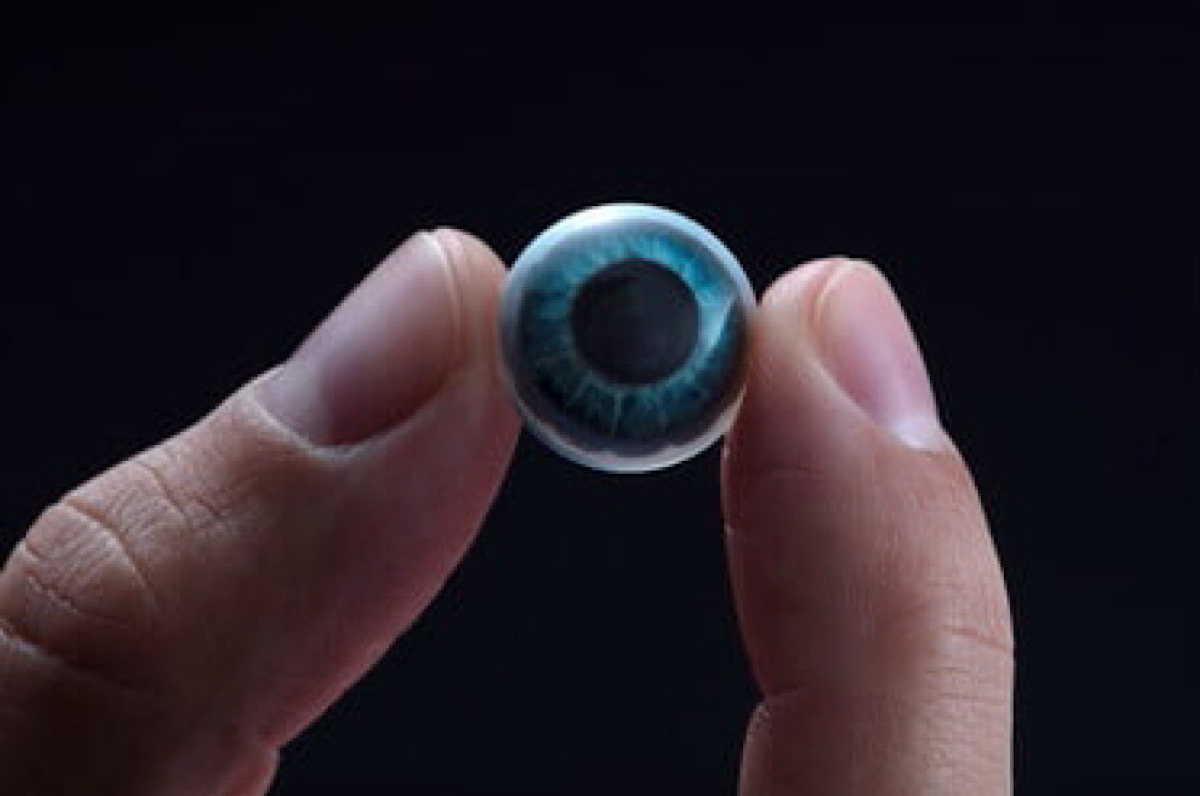
The Future of Vision: Augmented reality contact lenses will make you bionic

Augmented reality contact lenses have been “around the corner” for years. They’re finally set to arrive.

By Jeremy Kaplan

A decade ago, Google’s ambitions seemed unchecked: The company would design self-piloting cars through Waymo, sponsor moonbases, and even conquer death. One of the company’s plans: Smart contact lenses to measure the glucose level of your tears — and perhaps help reduce the damage caused by diabetes. “It’s still early days for this technology, but we’ve completed multiple clinical research studies, which are helping to refine our prototype,” wrote Google’s Brian Otis and Babak Parvizback in 2014.

Seven years later, the company’s ego remains just as inflated, but Verily’s smart contact lenses are nowhere to be seen; the side project of Google parent Alphabet was officially abandoned in 2018. Yet smart lenses are finally becoming a reality, thanks to the efforts of countless scientists and engineers. And the future of this intriguing technology is nothing like what you might expect.

Continue reading… “The Future of Vision: Augmented reality contact lenses will make you bionic”

The Futuristic Car Looks Like a Small Spaceship and Might Be Distributed by the End of the Year

The electric car features an aerodynamic design with only three wheels and two seats.

By Pitney Bowes

Do you remember the futuristic car that we could set aside with 2,000 Mexican pesos? It looks like we will soon see Aptera Motors start distributing them.

The vehicle manufacturing company has just closed a round of four billion dollars and now its plans to start its distribution at the end of this year 2021 seem more real, as we mentioned in December of last year.

“The Aptera must undergo safety testing before the company can begin distribution, which it hopes to do later this year. Even then, it is not clear that consumers want to buy something that looks like a cross between the Batmobile and a beetle,” wrote The Washington Post .

Continue reading… “The Futuristic Car Looks Like a Small Spaceship and Might Be Distributed by the End of the Year”

NASA’s Experimental Electric Airplane Edges Closer to Its First Flight

Concept art of the electric, 14-motor X-57 Maxwell in flight.


By Isaac Schultz

Looking every bit like a winged tube of toothpaste, NASA’s X-57 Maxwell experimental plane sits in a hangar at Edwards Air Force Base in California. The is NASA’s first crewed experimental plane in 20 years; it runs solely on electric power, an agency first, and it’s about to undergo high-voltage functional testing in advance of its first flight, scheduled for later this year.

“Currently, we have a battery emulator that we’re using to provide power to the aircraft,” said Nick Borer, an aerospace engineer at NASA’s Langley Research Center, in a video call. “But this is the first time we’ve had the low-voltage and high-voltage systems operating together.”

NASA’s compendium of experimental aircraft, or X-planes, speaks to the agency’s long history of sussing out the future of flight. They range from kite-shaped, Bush-era combat drones to the Eisenhower administration’s autogyro, which sounds like a Greek dish that eats itself but looks more like a tricked-out tricycle combined with a helicopter. The new electric craft certainly looks more like a plane than any of them, and will have 14 propellers.

Continue reading… “NASA’s Experimental Electric Airplane Edges Closer to Its First Flight”

Artificial ‘Magnetic Texture’ in Graphene May Add New Spin to Quantum Computers

The image shows eight electrodes around a 20-nanometer-thick magnet (white rectangle). The graphene, not show, is less than 1 nanometer thick and next to the magnet. (Image: University at Buffalo.)

Graphene is incredibly strong, lightweight, conductive … the list of its superlative properties goes on.

It is not, however, magnetic — a shortcoming that has stunted its usefulness in spintronics, an emerging field that scientists say could eventually rewrite the rules of electronics, leading to more powerful semiconductors, computers and other devices.

Now, an international research team led by the University at Buffalo is reporting an advancement that could help overcome this obstacle. The researchers added that the advance may lead to powerful spintronic devices, such as semiconductors and quantum computers.

In a study published today in the journal Physical Review Letters, researchers describe how they paired a magnet with graphene, and induced what they describe as “artificial magnetic texture” in the nonmagnetic wonder material.

Continue reading… “Artificial ‘Magnetic Texture’ in Graphene May Add New Spin to Quantum Computers”

Kentucky firm plans orbital mini space station in two years

by Paul Brinkmann

A Kentucky space firm that conducts science experiments on the International Space Station has plans to launch its own miniature, automated orbital research platform in about two years.

Lexington-based Space Tango has small research containers, or CubeLabs, on the space station. Bustling business and growing need for such experiments in microgravity led the company to plan its own space station, founder and CEO Twyman Clements said.

“As the scale of our business grows across a number of uses, having a dedicated spacecraft for manufacturing is the way to go,” Clements said in an interview Friday.

He declined to say how much the company would spend on the project or how much each spacecraft might cost.

Continue reading… “Kentucky firm plans orbital mini space station in two years”