Drones could help create a quantum internet

A fleet of drones could create a quantum network by transmitting quantum particles among the fleet’s formation and relaying the particles to ground stations at various locations within a city (illustrated).XIAO-HUI TIAN, HUA-YING LIU AND ZHENDA XIE

By Emily Conover

The quantum internet may be coming to you via drone.

Scientists have now used drones to transmit particles of light, or photons, that share the quantum linkage called entanglement. The photons were sent to two locations a kilometer apart, researchers from Nanjing University in China report in a study to appear in Physical Review Letters.

Entangled quantum particles can retain their interconnected properties even when separated by long distances. Such counterintuitive behavior can be harnessed to allow new types of communication. Eventually, scientists aim to build a global quantum internet that relies on transmitting quantum particles to enable ultrasecure communications by using the particles to create secret codes to encrypt messages. A quantum internet could also allow distant quantum computers to work together, or perform experiments that test the limits of quantum physics.

Continue reading… “Drones could help create a quantum internet”

Now In China, Smart Roads That Talk To Driverless Cars

Shenzhen-based Huawei, with its main network business facing global pressure after the U.S. designated it a threat to national security, is targeting new growth areas such as transport.

Huawei is running a pilot project for autonomous vehicle road networks in China.

On a four-kilometer (2.5-mile) road in the city of Wuxi in Jiangsu province, a self-driving bus travels back and forth, making stops, swerving past obstacles, accelerating and decelerating, based on information it constantly receives from its surroundings. Embedded in the road, traffic lights, street signs and other infrastructure are sensors, cameras and radars that talk with the vehicle.

The site, used by telecom-equipment giant Huawei Technologies Co. and partners, is part of China’s first national project for intelligent and connected vehicles. The country wants to make traffic smoother and safer, while ensuring local champions like Huawei benefit from the enormous opportunity of supplying the infrastructure.

“Autonomous driving is an irresistible trend, but any isolated vehicle alone can’t nail it,” Jiang Wangcheng, a president at Huawei’s information and communications technology business, said in an interview. “The only solution is to get more information from the roads.”

Continue reading… “Now In China, Smart Roads That Talk To Driverless Cars”

Best products from CES 2021


By KATIE RESEBURG
 

The Consumer Electronics Show was fully virtual this year, and while we’d rather get our hands on physical products, we’re excited about what we saw in online demos, presentations, and the expo “floors.” Some of the biggest names in tech made big announcements about their recent innovations and what they have in store this year for consumers like you.

We’ve selected 10 products that we think will change your life for the better when they’re released later this year (if they’re not out already). Here are the stand-outs we awarded Best of CES 2021.

Continue reading… “Best products from CES 2021”

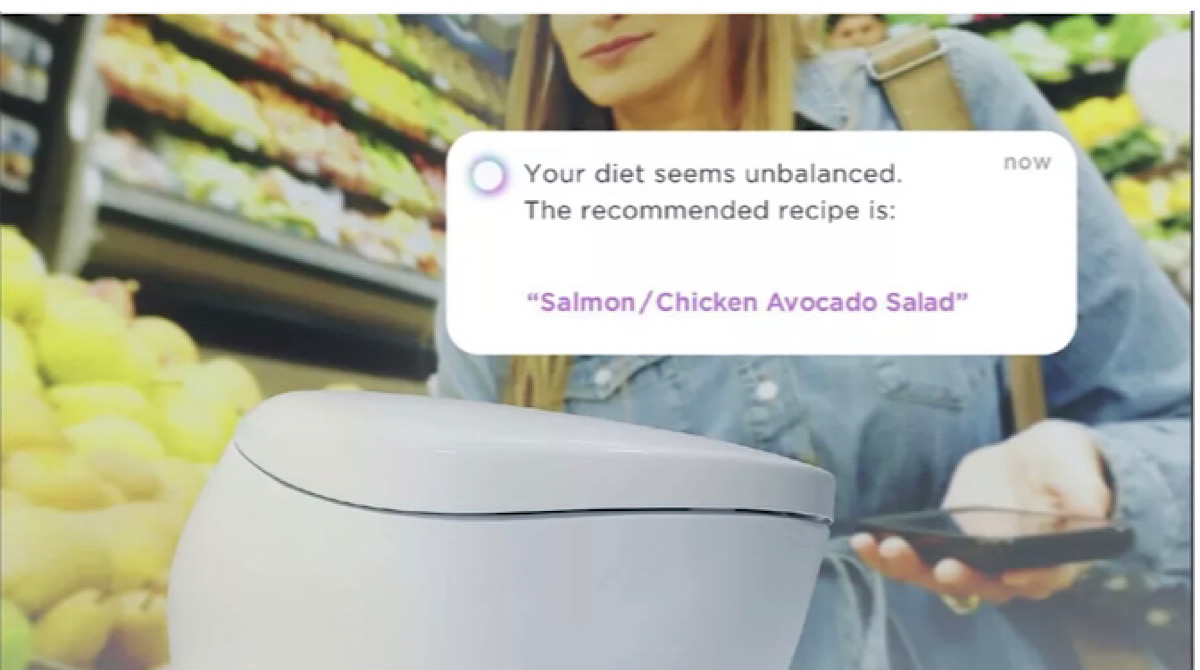
Toto expands touchless bathroom tech and debuts a health-analyzing toilet at CES 2021

Toto is working on a wellness toilet that analyzes human skin and waste with each use. 

If you’re on the fence about adding fiber-rich bran flakes to your diet, let your toilet make the call with one look at your poop.

The Toto Wellness Toilet is a concept that analyzes your waste.TotoThis story is part of CES, where our editors will bring you the latest news and the hottest gadgets of the entirely virtual CES 2021.

Toto is a staple in the bathroom fixture market, and this year at CES the company highlighted new models of touchless technology, as well as the concept of a wellness toilet that analyzes your, ahem, output. 

Continue reading… “Toto expands touchless bathroom tech and debuts a health-analyzing toilet at CES 2021”

GM’s BrightDrop is building an EV ‘ecosystem’ for delivery companies

By Nick Summers

The company is starting with an electric van and pallet.

GM wants a piece of the battery-powered logistics market. The company, which owns Chrysler and Cadillac, has announced a new business unit today called BrightDrop. It’s starting with two vehicles, the first of which is an electric van that can drive up to 250 miles on a single charge. It’s called the EV600 and has up to 600 cubic feet of space inside, or an estimated 2,200 lbs of payload capacity. The all-wheel-drive vehicle is also fitted with a security system in the cargo area, an auto-locking door and motion-activated interior lighting. On the road, drivers will benefit from automatic emergency breaking and parking assistance, among other features. 

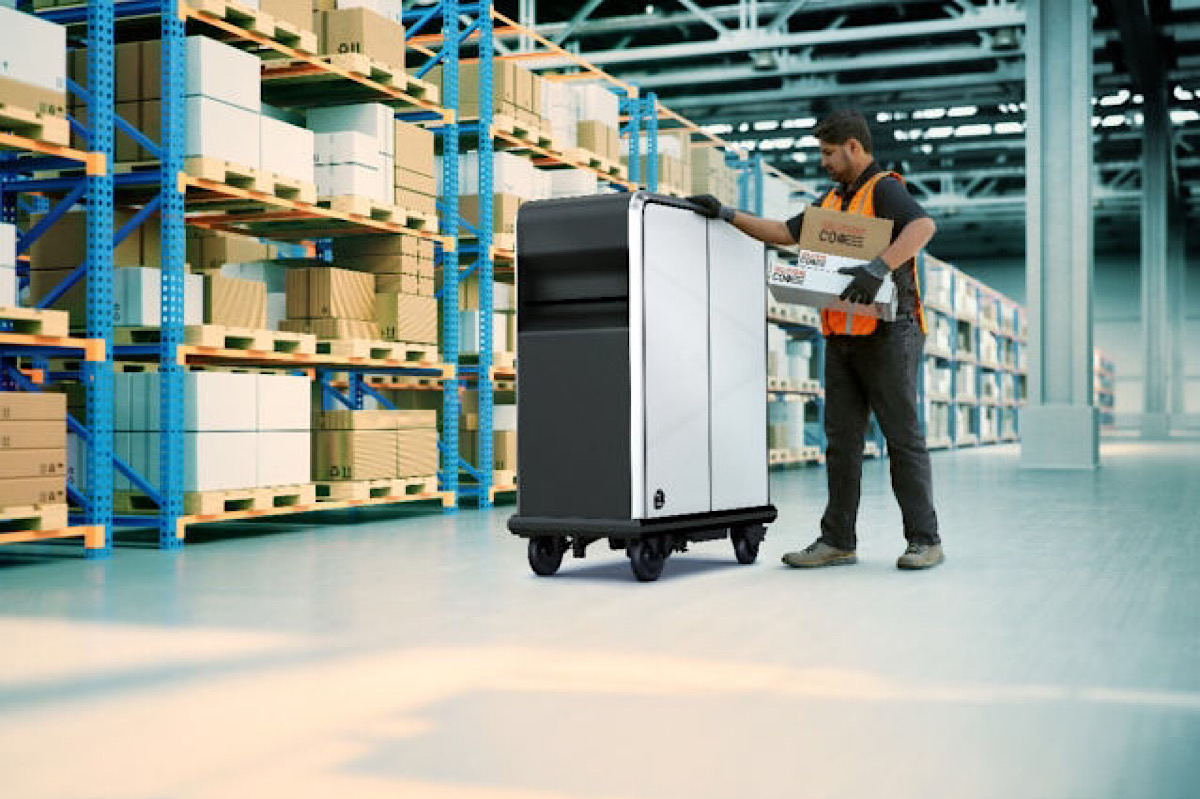
Before the EV600 hits the road, BrightDrop will be launching a smaller vehicle called the EP1. It’s a pallet — the kind of trolley that’s often found in stores and warehouses — with an electric motor that makes it easier to move heavy objects around. The included container offers 23 cubic feet of space, or a total payload up to 200 pounds. According to GM, the doors are lockable and there’s a modular shelving system inside so that workers can easily organize goods. The hope is that delivery drivers will use them to shuffle cumbersome items between their van and customers’ front doors.

These two are the first in a BrightDrop “ecosystem” that will include both vehicles and software. The company will provide customers with a cloud-based platform, for instance, that can be used to monitor their operations and improve their fleet’s efficiency. The EP1 will also offer location tracking and battery status, remote locking and unlocking, and other features via over-the-air updates. The EV600, meanwhile, will have location tracking, remote battery and charging management, incident recording, and more. Like the EP1, it will also benefit from over-the-air updates.

Continue reading… “GM’s BrightDrop is building an EV ‘ecosystem’ for delivery companies”

Mercedes-Benz integrates its front-of-car technology into one single AI screen

 BY: IRMA VENTER

From a manual radio, to a single in-car touch screen, to a large, easy to operate, curved 141-cm screen that reaches from one side of the car to the other. Also add to this the fact that the system is willing to learn through the use of artificial intelligence (AI). 

This is the evolution of the in-car information and entertainment system, incorporating the instrument panel, traditional centre screen, and a new added screen for the front passenger, into one continuous digital screen.

The Mercedes-Benz’s MBUX Hyperscreen is set to make its debut in the new EQS electric vehicle, set to launch later this year in selected global markets.

“With our MBUX Hyperscreen a design vision becomes reality,” says Daimler group chief design officer Gorden Wagener. “We merge technology with design in a fascinating way that offers the customer unprecedented ease of use.”

Continue reading… “Mercedes-Benz integrates its front-of-car technology into one single AI screen”

Indy has selected the AI-powered cars for its autonomous challenge race

By Mariella Moon

Indy-has-selected-AI-powered-cars-autonomous
It’s the first autonomous vehicle race to be held at the Indianapolis Motor Speedway.

The Indy Autonomous Challenge has revealed the vehicle participating universities will have to program and race in October 2021: the Dallara IL-15 racecar. IAC has made the announcement during its press conference for CES 2021, where it also hosted discussions about the commercialization of autonomous vehicles and technology in motorsports. The competition, which has a $1.5 million prize purse, challenges universities to build AI algorithms that can power an IL-15 that has been fitted with hardware and controls that enable automation.

Back in 2020, IAC announced that 37 universities from 11 countries registered to compete, with teams being composed of members with varying expertise. There are undergraduate and graduate student participants, as well as faculty and industry experts in AI, machine learning and robotics. To win, their AI-powered car must be able to beat all other participants in a 20-lap race around the 2.5-mile Indianapolis Motor Speedway oval. The winning team will get $1 million, while the rest of the purse will go to the hackathon and simulation race winners before the main event in October.

Continue reading… “Indy has selected the AI-powered cars for its autonomous challenge race”

Cadillac shows off a single-seater VTOL drone concept

By Daniel Cooper

Cadillac-shows-off-single-eater-VTOL-1
It’s an escalade, but in the air. 

At GM’s CES keynote, the company showed off a number of Cadillac vehicles, both real and imagined, to explain its vision for the future of transport. On the fantastic side, the company presented two concept vehicles that it says will exemplify its “halo portfolio.” First up is a single-seater drone, a VTOL craft with a 90kW battery, that can travel from rooftop-to-rooftop at up to 90 kilometers (56 miles) per hour.

Continue reading… “Cadillac shows off a single-seater VTOL drone concept”

Top Global Oil Exporter Saudi Arabia Launches Car-free City

By AFP News  

Top-oil-exporter-Saudi-Arabia-launches-car-free-city
A handout picture provided by the Saudi Royal Palace on March 19, 2020 in the capital Riyadh shows Saudi King Salman bin Abdulaziz, who will chair the G7 meeting “to advance a coordinated global response to the COVID-19 pandemic” 

Saudi Arabia, the world’s top crude exporter, announced Sunday the launch of an eco-city “with zero cars, zero streets and zero carbon emissions” at its futuristic NEOM mega development.

The $500 billion NEOM project, set to be built from scratch along the kingdom’s picturesque Red Sea coast, is billed as a development evocative of a sci-fi blockbuster.

Crown Prince Mohammed bin Salman unveiled plans for a city, dubbed “THE LINE”, in a presentation broadcast on state TV.

Continue reading… “Top Global Oil Exporter Saudi Arabia Launches Car-free City”

Google’s quantum computing division will help develop new drugs

By Steve Dent

Google's-Quantum-computing-division-develop-new-drugs
A handout picture from October 2019 shows Sundar Pichai and Daniel Sank (R) with one of Google’s Quantum Computers in the Santa Barbara lab, California, U.S. Picture taken in October 2019. .

It teamed with Boehringer Ingelheim to do molecular dynamics simulations. 

Google’s Quantum AI division is teaming with pharmaceutical company Boehringer Ingelheim to develop new types of drugs, the companies announced. The idea is to research and develop quantum computing tech to do “molecular dynamics” simulations, or the study of how molecules and atoms move. Boehringer Ingelheim has developed a new quantum lab for the three-year project, saying it’s the “first pharmaceutical company worldwide to join forces with Google in quantum computing.”

Continue reading… “Google’s quantum computing division will help develop new drugs”

New Research Could Enable Direct Data Transfer From Computers to Living Cells

New-research-could-enable-direct-data-transfers-computers-living-cells

As the modern world produces ever more data, researchers are scrambling to find new ways to store it all. DNAholds promise as an extremely compact and stable storage medium, and now a new approach could let us write digital data directly into the genomes of living cells.

Efforts to repurpose nature’s built-in memory technology aren’t new, but in the last decade the approach has gained renewed interest and seen some major progress. That’s been driven by an explosion of data that shows no signs of slowing down. By 2025, it’s estimated that 463 exabytes will be created each day globally.

Storing all this data could quickly become impractical using conventional silicon technology, but DNA could hold the answer. For a start, its information density is millions of times better than conventional hard drives, with a single gram of DNA able to store up to 215 million gigabytes.

Continue reading… “New Research Could Enable Direct Data Transfer From Computers to Living Cells”