Sperm-on-a-Postcard Breakthrough Opens Door to Massive ‘Sperm Books’

Scientists mailed freeze-dried mouse sperm on a postcard and birthed pups on the other side, a major advance for affordable long-distance sperm transfer.

By Becky Ferreira

It’s always a delight to receive a thoughtful letter in the mail, but scientists in Japan have added a whole new layer to the experience by sending each other postcards containing freeze-dried mouse sperm. What’s more, the researchers were able to produce viable mouse offspring with the sperm that landed in their mailboxes after days in the post.

The unprecedented experiment could transform the way that sperm from many different species is transported, pioneering applications for “infertility treatments, livestock production, maintenance of strains of genetically modified individuals, and conservation of genetic resources, including those of endangered species,” according to a study published on iScience on Thursday.

“This is the first report in the world [to show] that freeze-dried mouse sperm can be preserved in a thin plastic sheet (0.2 millimeters) instead of conventional glass ampoules,” said Daiyu Ito, a PhD student at the University of Yamanashi who led the new study, in an email. 

“We went through various trials and errors and finally succeeded,” he continued. “When we were able to develop a method of preservation of mouse sperm freeze-drying on a sheet, we thought that mouse sperm should be able to be mailed on a postcard by this method” which is the “absolute cheapest” technique ever developed to transport sperm.

Continue reading… “Sperm-on-a-Postcard Breakthrough Opens Door to Massive ‘Sperm Books’”

How Ground-Penetrating Radar Could Help Self-Driving Cars ‘See’ Better

This could be the next frontier in autonomous tech, but it has a lot of mapping to do. 

BY KRISTIN V. SHAW

First patented in the early 1900s, ground-penetrating radar has been used by geologists, archaeologists, and aeronautics engineers ever since. Notably, the Apollo 17 mission used a GPR to record depth information about the moon. GPR is not new technology, but it’s new to the application of advanced driver-assistance systems (ADAS).

Some companies are betting on GPR to get ahead of their competitors in the field by improving the reliability and accuracy of autonomous features. Within the hot ADAS segment, everyone is looking for the panacea that will make billions of dollars and solve all of the autonomous driving challenges.

Continue reading… “How Ground-Penetrating Radar Could Help Self-Driving Cars ‘See’ Better”

Cleveron Rolls Out Semi-Autonomous Last-Mile Delivery Vehicle


Concept:
 Estonia-based parcel delivery robotics company Cleveron has launched a new unmanned semi-autonomous robotic last-mile delivery vehicle, the Cleveron 701. It is designed for retailers and logistics companies that intend to boost last-mile delivery efficiencies. The company aims to allow businesses to meet the mounting demand for same-day delivery or same-hour delivery cost-effectively.

Nature of Disruption: Cleveron  701 is a lightweight electric vehicle with an option to use different rechargeable batteries. The maximum speed of the vehicle is 30 miles per hour and it can carry a load of a maximum of 500 pounds. It can drive in low traffic areas like suburbs to deliver within a 15 to 30 minutes drive radius of a retailer, fulfillment center or a dark store. It can deliver goods from a warehouse or a store to customers staying nearby within an hour when administered remotely. It reduces labor costs as only one teleoperator can supervise 10 vehicles simultaneously.  Moreover, vehicle operators can customize the Cleveron  701’s adaptable, semi-autonomous platform as per diverse delivery needs. For instance, Cleveron 701 can be customized to function as a grocery delivery robot with temperature-controlled sections, a parcel delivery vehicle, an ice cream truck or even a high-tech coffee robot.

Continue reading… “Cleveron Rolls Out Semi-Autonomous Last-Mile Delivery Vehicle”

Insulin-Producing Implant Created for Type 1 Diabetes

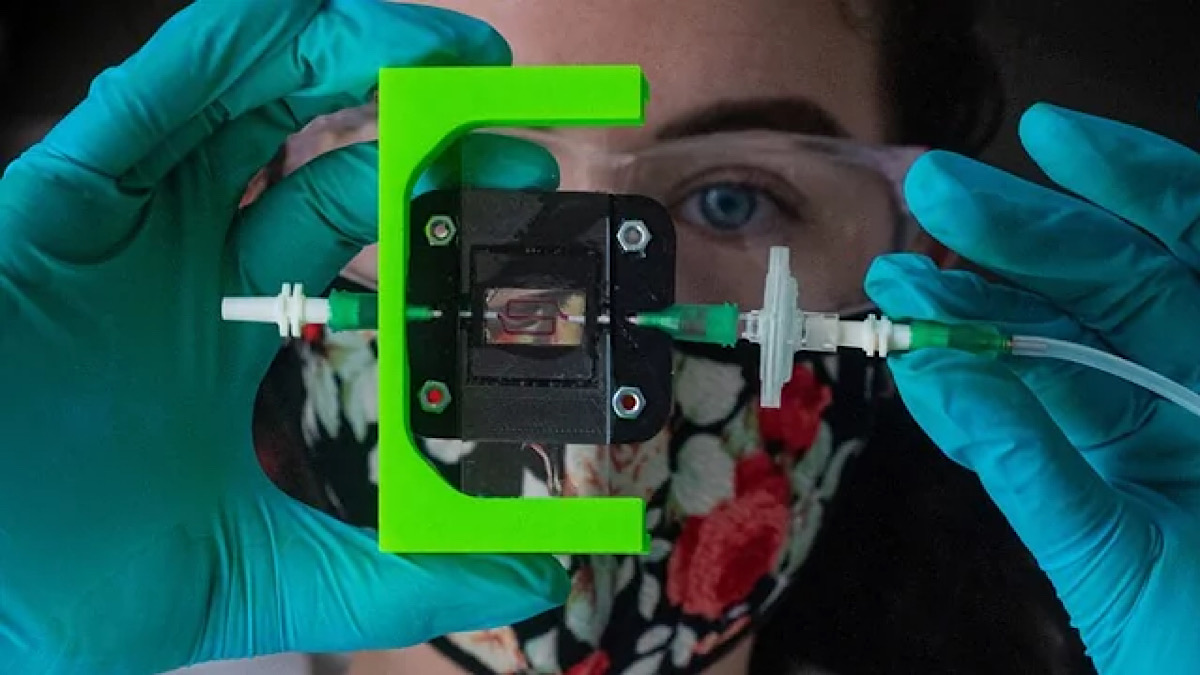
Rice University bioengineers are designing a vascularized, insulin-producing implant for Type 1 diabetes. Graduate student Madison Royse demonstrates a laboratory setup for testing blood flow through 3D-printed hydrogels that can be turned into living tissue.

Rice University bioengineers are using 3D printing and smart biomaterials to create an insulin-producing implant for Type 1 diabetics.

The three-year project is a partnership between the laboratories of Omid Veiseh and Jordan Miller that’s supported by a grant from JDRF, the leading global funder of diabetes research. Veiseh and Miller will use insulin-producing beta cells made from human stem cells to create an implant that senses and regulates blood glucose levels by responding with the correct amount of insulin at a given time.

Veiseh, an assistant professor of bioengineering, has spent more than a decade developing biomaterials that protect implanted cell therapies from the immune system. Miller, an associate professor of bioengineering, has spent more than 15 years researching techniques to 3D print tissues with vasculature, or networks of blood vessels.

“If we really want to recapitulate what the pancreas normally does, we need vasculature,” Veiseh said. “And that’s the purpose of this grant with JDRF. The pancreas naturally has all these blood vessels, and cells are organized in particular ways in the pancreas. Jordan and I want to print in the same orientation that exists in nature.”

Continue reading… “Insulin-Producing Implant Created for Type 1 Diabetes”

USAF Pumps $60 Million in Quarterhorse, the Future 4,000 mph Autonomous Aircraft

· by Otilia Drăgan

Supersonic flight is old news, hypersonic is the future – we could be able to cross the Atlantic in 90 minutes sooner that we might think. Plus, the line between military and civilian applications is also getting blurred. Game-changing technology is not only available for top defense projects, but can serve a dual purpose and bring forth benefits that we can all enjoy. 

If you were impressed by Virgin Galactic’s Mach 3 speed, hear this – there’s another hypersonic aircraft on the block, that takes it up to 5. That’s more than 3,800 mph (6,100 km/h), meaning that it could get from New York to London almost 7 times faster than current commercial airlines. 

The small team at Hermeus Corporation, a Georgia-based aerospace start-up, wanted to develop a groundbreaking Mach 5 commercial aircraft, and they already scored partnerships with none other than NASA and the U.S. Air Force(USAF). After successfully demonstrating their Mach 5 engine last year, now it’s time for another milestone, flight testing this cutting-edge aircraft, under a $60 million contract with USAF.

Not too many details have been revealed about the Quarterhorse, other that it will become the world’s fastest aircraft (flying at Mach 5 hypersonic speeds), it will be fully reusable, and it will also be autonomous (with the option of being remotely piloted), with an outstanding 4,600-mile (7,403 km) range. 

Continue reading… “USAF Pumps $60 Million in Quarterhorse, the Future 4,000 mph Autonomous Aircraft”

Scientists Discover a Powerful Natural Immune-Regulating Molecule

cells behind a microscope lens

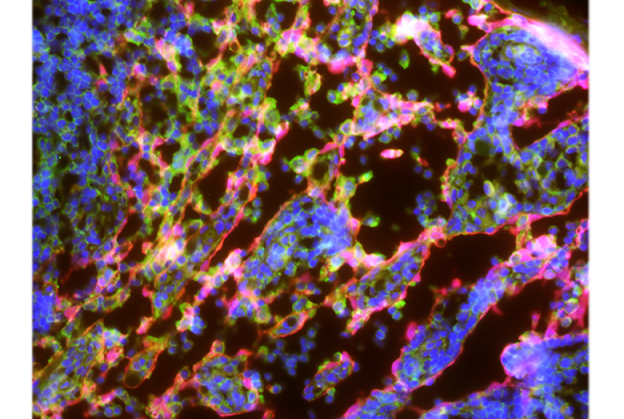
Immunofluorescence of a lymph node shows lymphatic endothelial cells contain the enzyme (labeled in green) that generates 3HKA. Image courtesy of Dr. Laura Santambrogio.

A powerful immune-suppressing molecule produced by the body may hold the key to better treatments for autoimmune and inflammatory diseases, as well as for some cancers, according to a study by researchers at Weill Cornell Medicine and the University of Perugia.

In the study, published July 21 in Nature Communications, the researchers described the properties of the newly discovered molecule, called 3-HKA. They showed that in immune cells called dendritic cells 3-HKA is produced from the amino acid tryptophan and can protect against inflammation in animal models of the skin disorder psoriasis and a degenerative kidney condition called nephrotoxic nephritis.

“Right now, there is an acute need for new ways to treat autoimmune and inflammatory diseases, and we are very excited by the possibilities opened up by the discovery of this potent molecule,” said study co-senior author Dr. Laura Santambrogio, who is professor of radiation oncology and of physiology and biophysics and associate director for precision immunology at the Caryl and Israel Englander Institute for Precision Medicine at Weill Cornell Medicine.

Continue reading… “Scientists Discover a Powerful Natural Immune-Regulating Molecule”

Electric Vehicles Could Make Up 50% of Total Car Sales by 2030


Major automakers are making changes backed by the Biden administration, pledging that half of all cars and light trucks sold in the U.S. by 2030 will be either electric, hydrogen-fuel cell, or plug-in hybrid vehicles.

General Motors Co., Ford Motor Co. , and Chrysler maker Stellantis NV will be aggressively pushing out cleaner fuel vehicles and stated that their green commitment will be contingent on federal funding for manufacturing and supply-chain research and development, purchase incentives, and a national electric vehicle charging network, the Wall Street Journal reports.

“This industry’s going to spend $330 billion over the next five years on electrification alone,” John Bozzella, president of the Alliance for Automotive Innovation, the lobbying group for auto makers and suppliers, said at a conference. “Even in Washington, D.C., that is real money.”

The auto company executives and the United Auto Workers attended a White House event Thursday afternoon where the Biden administration announced more stringent fuel-efficiency standards for the industry.

Continue reading… “Electric Vehicles Could Make Up 50% of Total Car Sales by 2030”

CUPID’S ALGORITHM: ARTIFICIAL INTELLIGENCE IS BEING USED FOR MATCHMAKING

Artificial intelligence has found yet another valuable use case, finding dates! 

by Apoorva Komarraju

Artificial Intelligence is an astounding technology that is transforming many aspects of our lives, even dating! Over the last decade, online dating has become an everyday reality. Human lives are only becoming hectic and people are seeking online options to find companionship. Hence, dating app development has picked up the pace. Artificial intelligence and machine learning are making the process of finding the right match easier. Users often complain about the mismatch of profiles, but with these technologies, the searching process becomes more personalized and accurate. 

Continue reading… “CUPID’S ALGORITHM: ARTIFICIAL INTELLIGENCE IS BEING USED FOR MATCHMAKING”

Radio-wave Therapy Is Safe for Liver Cancer Patients and Shows Improvement in Overall Survival

Newswise — Researchers at Wake Forest School of Medicine have shown that a targeted therapy using non-thermal radio waves is safe to use in the treatment of hepatocellular carcinoma (HCC), the most common type of liver cancer. The therapy also showed a benefit in overall survival.

The study findings appear online in 4Open, a journal published by EDP Sciences.

“HCC accounts for nearly 90% of all liver cancers, and current survival rates are between six and 20 months,” said Boris Pasche, M.D., Ph.D., chair of cancer biology and director of Wake Forest Baptist’s Comprehensive Cancer Center. “Currently, there are limited treatment options for patients with this advanced liver cancer.”

For the study researchers used a device called TheraBionic P1, invented by Pasche and Alexandre Barbault of TheraBionic GmbH in Ettlingen, Germany, that works by delivering cancer-specific, amplitude-modulated radiofrequency electromagnetic fields (AM RF EMF) programmed specifically for HCC. 

Continue reading… “Radio-wave Therapy Is Safe for Liver Cancer Patients and Shows Improvement in Overall Survival”

Officials Approve World’s First Patent to Credit an AI as Inventor

The patent was granted, oddly enough, for the creation of a fractal-based food and beverage container that might improve on currently available designs like the one pictured.

Intellectual property (IP) officials in South Africa have made history in a landmark decision to award a patent that names an artificial intelligence (AI) as the inventor.

The patent—which was filed by an international team of lawyers and researchers led by the University of Surrey’s, Professor of Law and Health Sciences, Ryan Abbott —is for a food container based on fractal geometry. This container was designed and created by an AI called DABUS (“device for the autonomous bootstrapping of unified sentience”).

Historically, an “inventor” of a patent had to be a human being, although the ownership of that patent is commonly given to the company that employs the inventor. While patent law in many jurisdictions is very specific in how it defines an inventor, the DABUS team is arguing that the status quo is not fit for purpose in the Fourth Industrial Revolution.

Continue reading… “Officials Approve World’s First Patent to Credit an AI as Inventor”

Elon Musk’s Neuralink wants to embed microchips in people’s skulls and get robots to perform brain surgery

By Isobel Asher Hamilton

  • Neuralink is one of Elon Musk’s strange and futuristic portfolio of companies.
  • Neuralink developing neural interface technology — a.k.a. putting microchips into people’s brains.
  • The technology could help study and treat neurological disorders. 

Elon Musk is known for his high-profile companies like Tesla and SpaceX, but the billionaire also has a handful of unusual ventures. One them, he says, he started to one day achieve “symbiosis” between the human brain and artificial intelligence.

Neuralink is Musk’s neural interface technology company. The company is building a device that could be embedded in a person’s brain, where it could both record brain activity and potentially stimulate it. Musk has compared the technology to a “FitBit in your skull.”

While Musk likes to talk up his futuristic vision for the technology, the tech has plenty of near-term potential medical applications.

Continue reading… “Elon Musk’s Neuralink wants to embed microchips in people’s skulls and get robots to perform brain surgery”

This Solar-Powered Electric Ferry Is the First Maritime Robotaxi in Europe

By Otilia Drăgan

Robotaxis are not news anymore, with several self-driving car services all over the world. But transferring this concept to water-based transportation is something to talk about. This pioneering ferry isn’t just an autonomous vessel for transportation, but it’s also solar-powered and available for ridesharing.

Startups are really taking a leading role in this new automotive wave based on electrically-powered, autonomous vehicles. Buffalo Automation might not sound familiar, but this American company has already achieved a lot since 2015, when it was founded. Specializing in AI solution for autonomous transport and navigation, it has developed a predictive marine navigation system, AutoMate, which is adapted for large commercial ships.

In 2020, Buffalo Automation launched a new product line based on the Greycraft autonomous navigation technology. Greycraft made its debut in Knoxville, Tennessee, and it’s the concept behind this first European commercial robotaxi service.

Continue reading… “This Solar-Powered Electric Ferry Is the First Maritime Robotaxi in Europe”