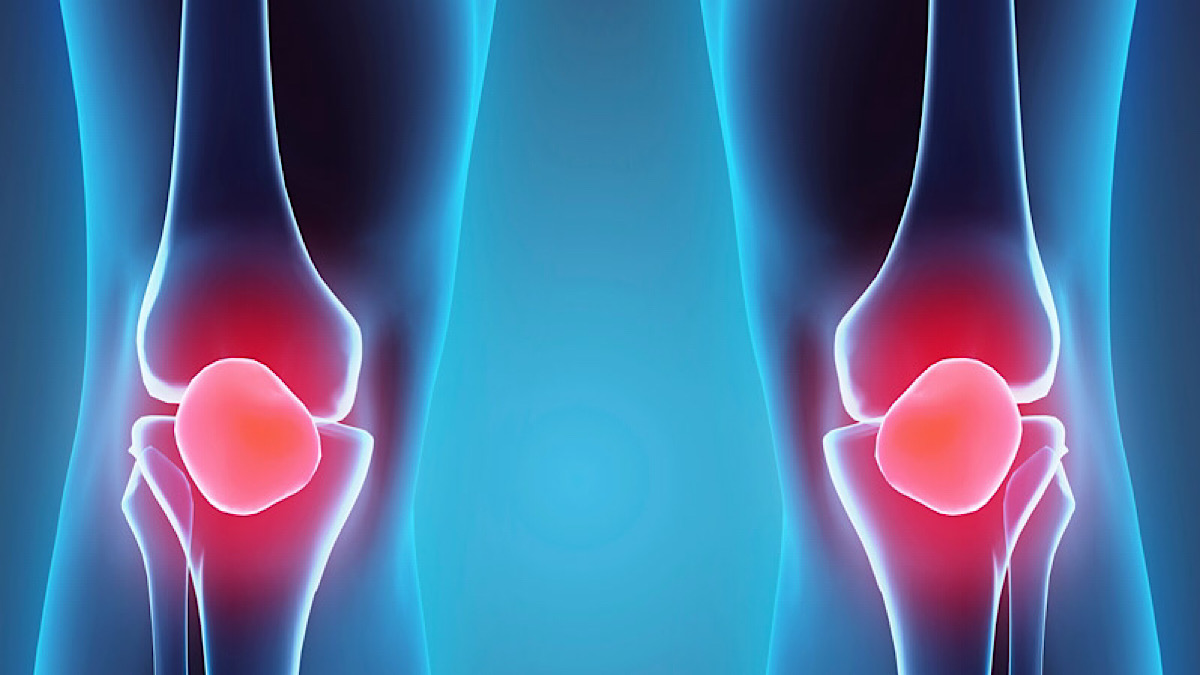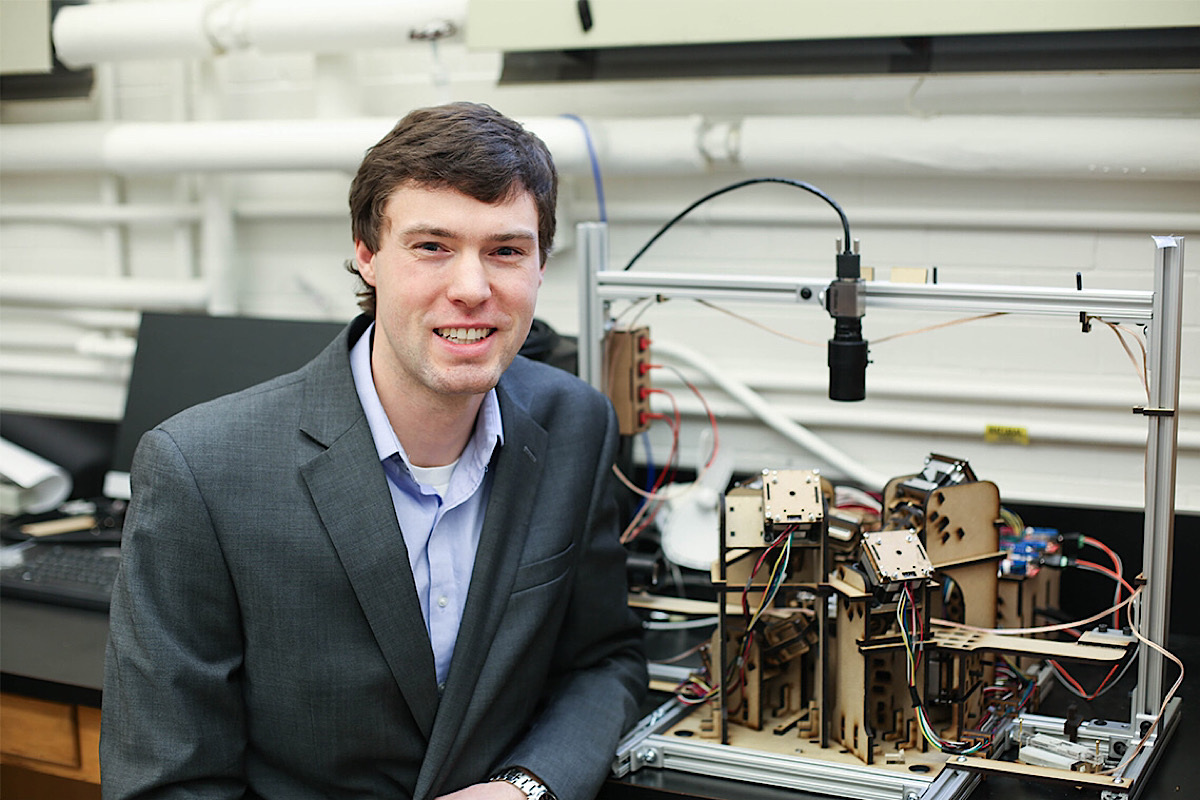
Smart magnetic soft materials to develop artificial muscles and therapeutic robots

Interaction forces between magnetic particles translate into macroscopic transformations of the smart polymers

by Carlos III University of Madrid

Developing a new generation of artificial muscles and soft nanorobots for drug delivery are some of the long-term goals of 4D-BIOMAP, an ERC research project being undertaken by the Universidad Carlos III de Madrid (UC3M).This project develops cross-cutting bio-magneto-mechanical methodologies to stimulate and control biological processes such as cell migration and proliferation, the organism’s electrophysiological response, and the origin and development of soft tissue pathologies.

“The overarching idea of this research project is to influence different biological processes at the cellular level (i.e., wound healing, brain synapses or nervous system responses) by developing timely engineering applications,” explains 4D-BIOMAP’s lead researcher, Daniel García González from the UC3M’s Department of Continuum Mechanics and Structural Analysis.

Continue reading… “Smart magnetic soft materials to develop artificial muscles and therapeutic robots”

Dutch Firm Builds First Commercial House Printed With 3D Technology

Shaped like a boulder, the house is surrounded by greenery and open space on each side

The three-room single-storey house is spread across 1,000 square feet and has a wooden roof.

HIGHLIGHTS

  • These houses are intended to be occupied for at least several decades
  • 3D concrete printing allows builders to design fine concrete structures
  • The work on the project began during the 2016 Dutch Design Week
Continue reading… “Dutch Firm Builds First Commercial House Printed With 3D Technology”

IBM Opens A New Frontier For Semiconductors, Unveils World’s First 2 Nanometer Chip Technology

IBM today unveiled the development of the world’s first chip announced with 2 nanometer (nm) nanosheet technology. According to reports, new 2 nm chip technology helps advance the state-of-the-art in the semiconductor industry, addressing the growing demand for increased chip performance and energy efficiency.

Continue reading… “IBM Opens A New Frontier For Semiconductors, Unveils World’s First 2 Nanometer Chip Technology”

Precision farming company raises $20M to deploy herbicide-spraying AI drone swarms

Canada-based agritech startup Precision AI has raised seed funding of $20 million to help the agriculture industry reduce its chemical footprint. Its solution? Deploying swarms of artificially intelligent drones to bring down the use of herbicides in agriculture dramatically.

Continue reading… “Precision farming company raises $20M to deploy herbicide-spraying AI drone swarms”

The digital divide has left millions of school kids behind

US schools are going back to in-person learning as COVID ebbs, but the so-called homework gap will persist.

By Marguerite Reardon

The coronavirus shined a light on the homework gap, or the disparity between the haves and have-nots when it comes to those students with laptops, tablets and high-speed internet and those without even basic online access. But the waning of the pandemic’s threat is a stark reminder that this aspect of the larger digital divide was a problem long before, and will remain one even as things return to normal. 

But the seismic shift sparked by the coronavirus has some optimistic that more change is on the way. 

Continue reading… “The digital divide has left millions of school kids behind”

Researchers use 3-D bioprinting to create custom-shaped cartilage for use in surgical procedures

A team of University of Alberta researchers has discovered a way to use 3-D bioprinting technology to create custom-shaped cartilage for use in surgical procedures. The work aims to make it easier for surgeons to safely restore the features of skin cancer patients living with nasal cartilage defects after surgery.

The researchers used a specially designed hydrogel–a material similar to Jell-O–that could be mixed with cells harvested from a patient and then printed in a specific shape captured through 3-D imaging. Over a matter of weeks, the material is cultured in a lab to become functional cartilage.

Continue reading… “Researchers use 3-D bioprinting to create custom-shaped cartilage for use in surgical procedures”

You can bid for a seat on Blue Origin’s first human spaceflight on July 20


Aria Alamalhodaei

Jeff Bezos’ Blue Origin is offering up one seat on the inaugural flight of its suborbital rocket New Shepard, set to take place July 20 — but instead of a fixed-price ticket sale, the seat will go to the highest bidder.

It’ll work like this: From May 5-19, bidders will be able to bid any amount on an auction website. From May 19, the bids will be made “unsealed,” or made visible, and bidders must continually exceed the highest bid to remain in the running for the seat. Bidding will conclude June 12 with a live online auction.

From Blue Origin’s website, it looks like the overall flight will be relatively quick, with the craft reaching apogee, or its highest point, four minutes after takeoff. The capsule containing the astronauts (and the lucky bidder) will land 10 minutes after takeoff near its launch site in West Texas.

Blue Origin said the winning bid will be donated to its charitable foundation, Club for the Future.

Continue reading… “You can bid for a seat on Blue Origin’s first human spaceflight on July 20”

World’s Largest Airplane Successfully Conducts Second Flight; Edges Closer to Space Vehicle Usage

Stratolaunch, the world’s largest airplane.

By IANS

In 1941, the US government hired billionaire entrepreneur Howard Hughes to build a massive airplane to take some 700 American soldiers into combat. Hughes’ legendary “Spruce Goose” had a wingspan of 97.5 metres.

Last week, 80 years later, an even bigger aircraft, the “Stratolaunch,” took to the skies over southern California’s Mojave Desert, in a second successful test flight that awed onlookers marvelling at its wingspan of 117.3 metres and six Boeing engines that roared in synchronicity, Xinhua news agency reported on Tuesday.

The second successful test flight lasted 2.5 hours and the vehicle reached an altitude of 14,000-feet.

This massive aircraft, resembling two giant Boeing jets flying side-by-side, will not be transporting troops. Its use will be to launch rockets and space vehicles from high atmospheric locations, into the stars.

“Stratolaunch is advancing our nation’s ability to be a worldwide leader in the hypersonic market,” Stratolaunch Systems Chief Technology Officer Daniel R. Millman said in a statement.

“Our flight today gets us another step closer to our promise of delivering the world’s premier hypersonic flight test service.”

Continue reading… “World’s Largest Airplane Successfully Conducts Second Flight; Edges Closer to Space Vehicle Usage”

U of T researchers develop microrobots to conduct minimally invasive brain surgery

Eric Diller of U of T’s Faculty of Applied Science & Engineering is collaborating with medical researchers to develop dexterous, magnetically controlled microrobots that could perform minimally invasive brain surgery on children

Researchers at the University of Toronto are developing microrobots, precisely controlled by magnetic fields, that could one day be used to perform minimally invasive brain surgery on children.

The research team – co-led by Eric Diller, an associate professor of mechanical engineering in the Faculty of Applied Science & Engineering, and James Drake, a professor in the department of surgery in the Temerty Faculty of Medicine and a pediatric neurosurgeon at the Hospital for Sick Children (SickKids) – says the technology represents a departure from the rigid, wired designs of most micro-surgical tools.

“Advancing surgery through an endoscope in the pediatric brain requires miniaturized versatile tools which can be precisely controlled,” says Drake. “This novel concept of using tiny, magnetized tools, controlled by robotic external magnets, shows great promise in addressing this need for both pediatric and adult patients.”

Each year 24,000 malignant brain tumours are detected in the United States. These tumours are the most common form of solid cancer in children, and surgery to remove the tumour is often the first recommended course of treatment. The surgeries can be highly invasive with a long recovery process. In some cases, when surgery via endoscope is possible, the tools may not be small or dexterous enough to perform the treatment.

Continue reading… “U of T researchers develop microrobots to conduct minimally invasive brain surgery”

What if you could condense all your pills into one? With 3D printing, you can

Researchers debut a new technique that proves pills can be designed for individual patients.

BY MARK WILSON

The objects are almost beautiful. The surfaces appear faceted and woven, catching the light like ornate jewelry. But they are not jewelry. They are pills, and possibly the most high-tech pills ever designed, in fact. These tablets are artisanal, tuned for just one person, to release a small medicine cabinet of different drugs at the right time.

Developed by researchers at the University of East Anglia (UEA), these pills are produced by a breakthrough in 3D printing. Today, that printing is done in a lab. Tomorrow, scientists suggest, the work might be done by a pharmacist, hospital, or almost any entity other than separate pharmaceutical companies, each of which currently churns out millions of doses of the same drugs in one-size-fits-all pill formats.

Continue reading… “What if you could condense all your pills into one? With 3D printing, you can”

Will quantum computing deliver a big leap forward for battery cells?

By Michelle Lewis 

The Cologne-headquartered German Aerospace Center (DLR) and Cambridge Quantum Computing(CQC) in the UK is the latest pair to explore how quantum computing could help create better simulation models for battery development. The DLR is Germany’s research center for aeronautics and space.

As IBM defines it, “Quantum computing harnesses the phenomena of quantum mechanics to deliver a huge leap forward in computation to solve certain problems.”

DLR will use CQC’s quantum algorithms for solving partial differential equation systems to render a one-dimensional simulation of a lithium-ion battery cell.

This will lay the groundwork for exploring multi-scale simulations of complete battery cells with quantum computers, which are considered a viable alternative for rendering full 3D models. A multi-scale approach incorporates information from different system levels (e.g., atomistic, molecular, and macroscopic) to make a simulation more manageable and realistic. That, in turn, will potentially accelerate battery research and development for a variety of sustainable energy solutions.

DLR has previously used classical computer modeling to research a range of different battery types, including lithium-ion and other technologies.

Continue reading… “Will quantum computing deliver a big leap forward for battery cells?”