How psychologists are using VR to profile your personality

TECH NEWS) VR isn’t just for gamers. Psychologists are using it to research how people emotionally respond to threats. But does it come at the cost of privacy?

ByVeronica Garcia,

When you put on a VR headset for the first time, most people have that ‘whoa’ moment. You’ve entered an enchanting otherworldly place that seems real, but you know it isn’t. You slowly tilt your head up to see a nicely lit blue sky. You turn your head around to see mountains and trees that weren’t there before. And, you finally look down to stare at your hands. Replaced by bright-colored gloves, you flex your hands to form a fist, then jazz hands, and back.

Playing VR games is exciting and interesting for a lot of gamers, and you would (or maybe wouldn’t) be surprised to know that psychologists think so, too. According to The Conversation, psychologists have started researching how people emotionally respond to potential threats using VR.

Continue reading… “How psychologists are using VR to profile your personality”
3D printing stem cells to transform neuroscience

by Barbara Ricco

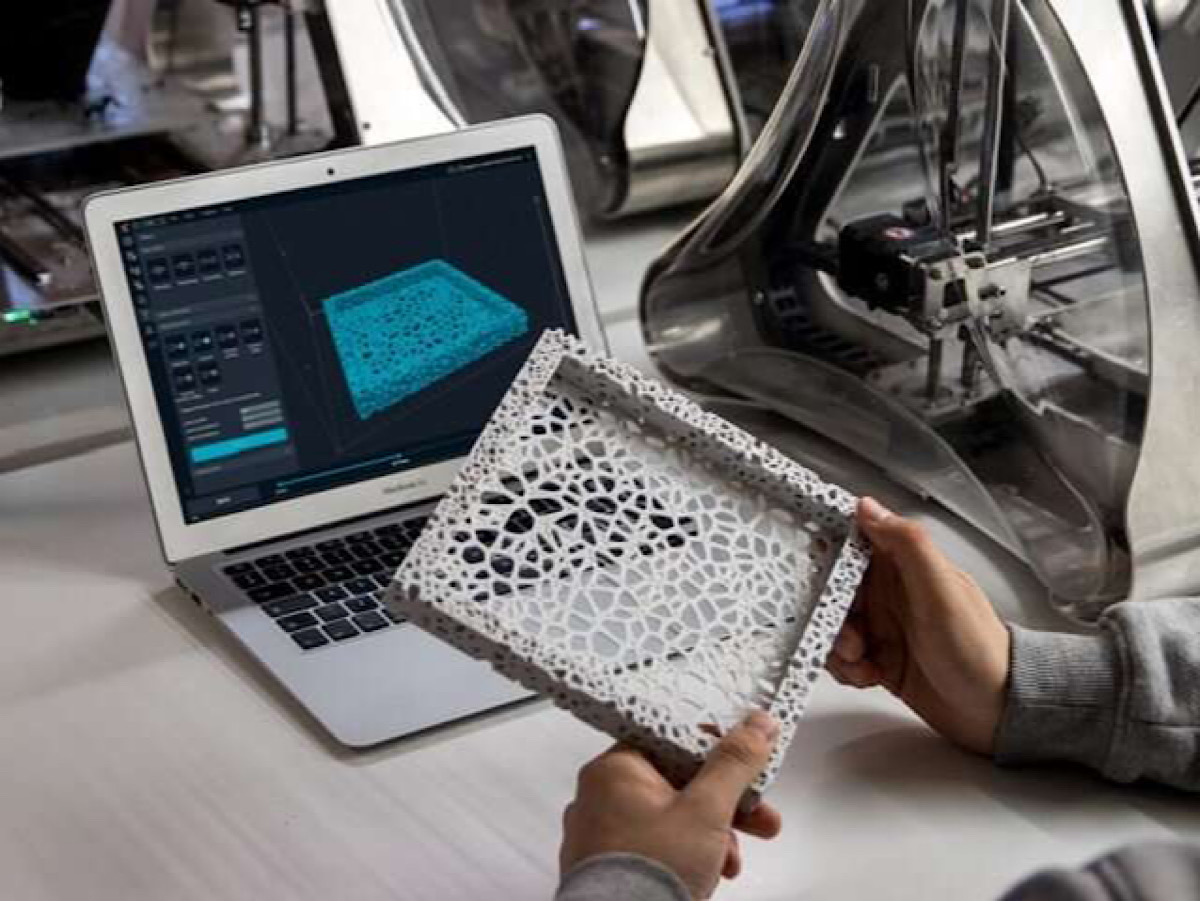
3D printing, also called additive manufacturing, has become widespread in recent years. By building successive layers of raw material such as metals, plastics, and ceramics, it has the key advantage of being able to produce very complex shapes or geometries that would be nearly impossible to construct through more traditional methods such as carving, grinding, or molding.

The technology offers huge potential in the health care sector. For example, doctors can use it to make products to match a patient’s anatomy: a radiologist could create an exact replica of a patient’s spine to help plan surgery; a dentist could scan a patient’s broken tooth to make a perfectly fitting crown reproduction. But what if we took a step further and apply 3D printing techniques to neuroscience?

Stems cells are essentially the body’s raw materials; they are pluripotent elements from which all other cells with specialized functions are generated. The development of methods to isolate and generate human stem cells, has excited many with the promise of improved human cell function understanding, ultimately utilizing them for regeneration in disease and trauma. However, the traditional two-dimensional growth of derived neurones—using flat petri dishes—presents itself as a major confounding factor as it does not adequately mimic in vivo three-dimensional interactions, nor the myriad developmental cues present in real living organisms.

Continue reading… “3D printing stem cells to transform neuroscience”

The Perseverance rover split CO2 on Mars to make breathable air

The MOXIE instrument, shown here being lowered into the Mars Perseverance rover while still on Earth, is a small “electrical tree” that converts carbon dioxide into oxygen on Mars.JPL-CALTECH/NASA

By Lisa Grossman

The test also shows astronauts could also make oxygen this way to fuel their trip home.

The Perseverance rover has created a breath of fresh air on Mars. An experimental device on the NASA rover split carbon dioxide molecules into their component parts. This created enough breathable oxygen to sustain a person for about 10 minutes. It was also enough oxygen to make tiny amounts of rocket fuel.

The toaster-size instrument that did this is called MOXIE. The acronym stands for Mars Oxygen In-Situ Resource Utilization Experiment. Carbon dioxide, or CO2, is the primary gas in the atmosphere on Mars. MOXIE’s job is to break the chemical bonds in CO2, releasing oxygen

Continue reading… “The Perseverance rover split CO2 on Mars to make breathable air”

Experts are convinced that self-flying planes will roam the skies by 2025 — here’s how one startup is working to win over the FAA and the public

A Boeing 787 Dreamliner taking off

By Thomas Pallini 

  • Xwing, founded by Marc Piette, is one of the startups working to make self-flying planes a reality. 
  • Its Cessna 208B Grand Caravan can already fly on its own, as Insider found on a demonstration flight. 
  • Self-flying planes will start by flying cargo and then regional passenger flights as early as 2025. 

Teaching a 27-year-old aircraft how to fly on its own was the easy part for Marc Piette and his team at Xwing. The real challenge is how to get the technology flying on commercial aircraft, and accepted by the public.

Piette had the idea to conquer self-flying aircraft when driving from San Francisco to Eureka, California, a near-300 mile journey that takes five hours by car. As a student pilot taking flight lessons at Palo Alto Airport at the time, he couldn’t accept that driving was the most efficient way to travel regional distances for the average person. 

“The time it takes me to get to places like [Eureka] from San Francisco is about the same time it takes me to get to New York,” Piette, the founder and CEO of Xwing, told Insider. “It’s absurd. Traveling 250 miles shouldn’t take me the same amount of time it takes to travel across the cross country.”

And the idea for Xwing was born. The vision was to use the vast aviation infrastructure that already exists but make it more accessible and bring costs down by using autonomous technology. 

“The only way to travel fast on the ground is through massive infrastructure investment … which isn’t happening anytime soon,” Piette said.

Continue reading… “Experts are convinced that self-flying planes will roam the skies by 2025 — here’s how one startup is working to win over the FAA and the public”

Europe’s biggest concrete 3D printer creates the home of tomorrow

By Julian GOMEZ  

The campus of experimental Architecture in Belgium is home to the World’s ´first single-piece concrete 3D printed house.

Europe’s largest concrete 3D printer was used to build the two-storey, 90 square metre dwelling.

The very same printer is now being used by students to develop new sustainable building solutions for Europe’s construction industry.

Charlotte Van Antenaeken a student on a project using this printer from the Thomas More Hogeschool in Belgium tells us that “with this technology, we were able to print a whole house. Now we want to move on, and use this 3D printer in efficient ways to create new proposals”.

Her project is focusing on how they can print surfaces with stronger architectural structures that can withstand more weight.

Continue reading… “Europe’s biggest concrete 3D printer creates the home of tomorrow”

The New Science Of “Micro Self-Care”

Taking small steps for our well-being can help us combat virtual fatigue and burnout.

By Bryan Robinson, Ph.D.

For many people, burnout from virtual fatigue has been a built-in feature of the pandemic. A new study from Superhuman found “email fatigue” to be the cause of rising dissatisfaction with remote work.More than one-third of employees said email and message overload may lead them to quit their jobs. The survey found half of remote workers (50%) spent their own money on tools to help manage their productivity, and another 17% plan to do so in the future. Plus, new Stanford research reveals how the shift from in-person meetings to virtual ones has taken its toll, particularly among women. Overall, one in seven women (13.8%) compared with one in 20 men (5.5%) reported feeling “very” to “extremely” fatigued after Zoom calls. Researchers found what contributed most to the feeling of exhaustion among women was an increase in what social psychologists describe as “self-focused attention” triggered by the self-view in video conferencing.

Continue reading… “The New Science Of “Micro Self-Care””

Swarms of robots could dig underground cities on Mars

Concept of a underground habitat and the robots and energy sources that will build and power it.

by Andy Tomaswick , Universe Today

Underground habitats have recently become a focal point of off-planet colonization efforts. Protection from micrometeorites, radiation and other potential hazards makes underground sites desirable compared to surface dwellings. Building such subterranean structures presents a plethora of challenges, not the least of which is how to actually construct them. A team of researchers at the Delft University of Technology (TUD) is working on a plan to excavate material and then use it to print habitats. All that would be done with a group of swarming robots.

The idea stems from a grant opportunity posted by the European Space Agency. Students at the Robotic Building lab (RB) at TU Delft, led by Dr. Henriette Bier, were enthusiastic to participate in the challenge that focuses on in-situ resource utilization for off-Earth construction. The RB team, together with experts in material science, robotics, and aerospace engineering submitted an idea that was granted €100k to develop a preliminary proof of concept. 

The proposed approach focuses on the lab’s specialty—robotic building—and has four main components—digging out the regolith, printing a new habitat using an additive manufacturing process, coordinating the work between all the robots that would be needed to complete the tasks, and powering them as well as the habitat.

Excavating regolith with robots has been explored previously, but usually in the context of the moon. Different patterns of excavation are useful for building different structures, and the pattern the RB team focused on was a downwards sloping spiral. Such a structure could create a stable, safe structure within a relatively small footprint on the surface.

Continue reading… “Swarms of robots could dig underground cities on Mars”

Korea launches ‘metaverse’ alliance

South Korea’s ICT ministry said Tuesday the country has launched an industry alliance to bolster the development of “metaverse” technology and ecosystems.

The metaverse refers to a shared virtual space, in which users interact with each other through digital avatars and experience a virtual reality (VR) world.

The new alliance is composed of 17 companies, including major wireless carrier SK Telecom Co, as well as auto giant Hyundai Motor Co., and eight industry groups, such as the Korea Mobile Internet Business Association, according to the Ministry of Science and ICT.

The companies and industry groups will work together to share metaverse trends and technology, and form a consultative group for ethical and cultural issues related to the metaverse market. The alliance will also undertake joint metaverse development projects.

Continue reading… “Korea launches ‘metaverse’ alliance”

Virgin Galactic unveils new spaceship ahead of 1st manned flight this year

After unveiling Virgin Galactic’s third spacecraft, SIR Richard Branson is installing rocket boosters as part of his cosmic plans.

The VSS Imagine sports a mirror-like coating that reflects the surrounding environment, allowing it to change color and appearance when traveling from Earth to space.9Virgin Galactic’s third spacecraft was unveiled on TuesdayCredit: Reuters

It is faster and easier to maintain than the previous two spaceships of the New Mexico-based firm.

Speaking after the craft’s unveiling on Tuesday, 70-year-old billionaire Sir Richard praised Virgin Galactic’s “growing fleet of spacecraft”.

VSS Imagine is part of the company’s third-generation rocket aircraft – which the group says will “lay the foundation for the design and manufacture of future vehicles”.

Virgin Galactic said the aircraft was “built to enable improved performance in terms of maintenance reach and flight rate”.

Continue reading… “Virgin Galactic unveils new spaceship ahead of 1st manned flight this year”

In new study, stem cells self-organize into a mini model of a beating heart

A collection of cardioids


By
 Shraddha Chakradhar  

Researchers have worked for years to create organoids — miniature cellular structures that recapitulate features of larger organs — for nearly every organ in the body, in the hope that these tissue samples can serve as models in which to study everything from how diseases develop to which drugs could potentially work to combat a host of conditions.

In a new study published Thursday in Cell (and previously posted to the preprint server bioRxiv), researchers describe a new mini model of the heart, one they call a cardioid. In a departure from other efforts to recreate heart muscles and function in a dish, this latest attempt did not use external scaffolding around which heart cells organized themselves.

Instead, scientists relied on self-organization, in which stem cells that usually precede the creation of heart muscle were coaxed into becoming heart cells, also known as cardiomyocytes, with the help of six known signaling pathways. 

To the scientists’ surprise, not only did this approach yield heart cells, but the cells organized themselves into a three-dimensional structure, complete with a single chamber reminiscent of a human heart (although a real one has four chambers) and a heartbeat that showed liquid being pumped around the chamber. The proof of concept came when the team injured these structures to mimic a heart attack: Cells tasked with repair migrated to the site of the injury to rebuild damaged tissue, much like what happens with full-fledged hearts. 

Continue reading… “In new study, stem cells self-organize into a mini model of a beating heart”

Get to know Google’s Starline project to make video calls with life-size 3D holograms

Soon you could talk ‘face to face’ with other people at a distance, thanks to the Starline project, the system that Google is developing to project 3D holograms in video calls.

Technology is getting closer to realizing what once seemed like futuristic fantasies in the style of ‘Star Wars’, ‘Back to the Future’ and ‘The Jetsons’. Google is already working on the Starline project , a system for making video calls that project 3D holograms of people in real size.

Project Starline was unveiled this week, during the Google I / O event , where the ‘Big Tech’ presented its next news. The company assured that it is a step towards approaching the future of conversations, as it seeks to make the most realistic video calls in the history of humanity.

Google indicated that Project Starline is made up of hardware comprised of multiple cameras, sensors, and a screen or frame. Of course, it will also include revolutionary smart software.

Continue reading… “Get to know Google’s Starline project to make video calls with life-size 3D holograms”

CRISPR Study Is First to Change DNA in Participants


Written by Meagan Drillinger 

  • For the first time, scientists are altering DNA in a living human.
  • With more research this study could help lead to the development of procedures that can help to correct other genetic disorders.
  • The study uses CRISPR technology, which can alter DNA. 

Researchers from the OHSU Casey Eye Institute in Portland, Oregon, have broken new ground in science, medicine, and surgery — the first gene editing procedure in a living person.

For the first time, scientists are altering DNA in a living human. With more research the study could lead to the development of procedures that can help to correct other genetic disorders.

Known as the BRILLIANCE clinical trial, the procedure is designed to repair mutations in a particular gene that causes Leber congenital amaurosis type 10, also known as retinal dystrophy. It is a genetic condition that results in vision deterioration and has previously been untreatable.

“The Casey Eye Institute performed the first gene editing surgical procedure in a human being in an attempt to prevent blindness from a known genetic mutation,” said Dr. Mark Fromer, ophthalmologist at Lenox Hill Hospital in New York. “The abnormal DNA is removed from a cell with the generating mutation. This will potentially offer sight to people with a form of previously untreatable blindness.”

Continue reading… “CRISPR Study Is First to Change DNA in Participants”