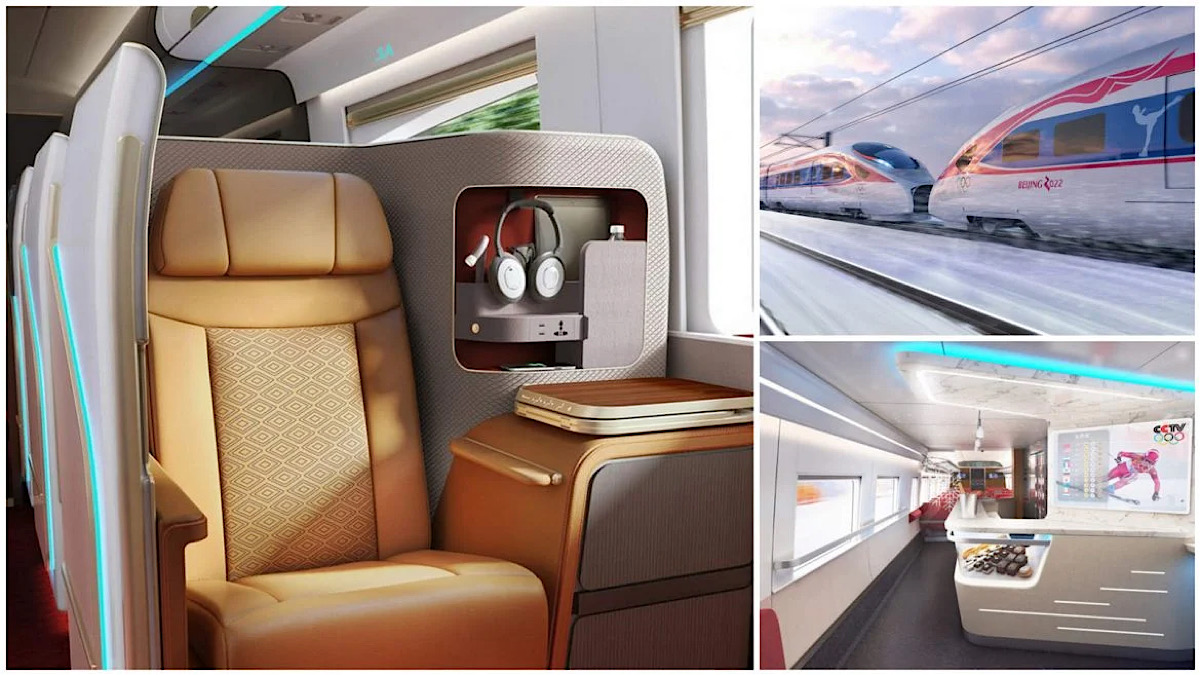
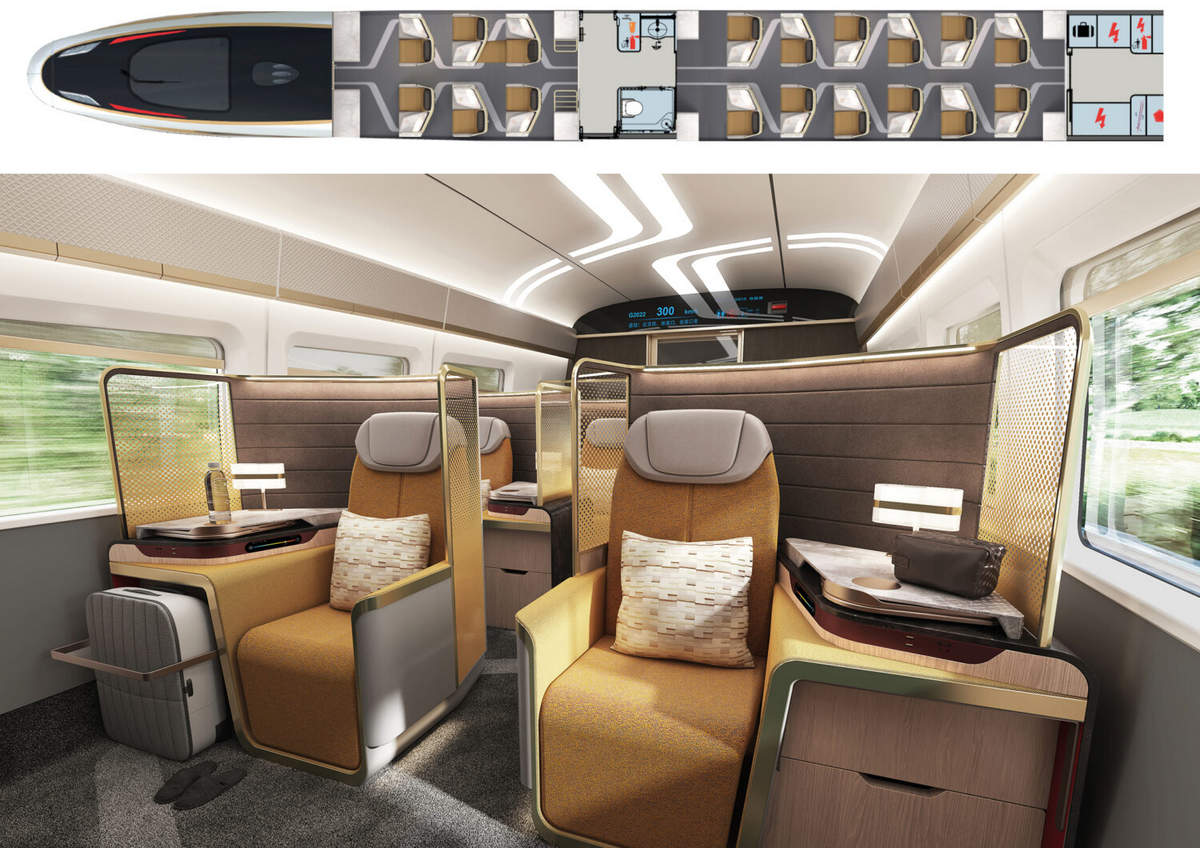
The space is designed to appear like a private booth done up as a leather-clad recliner flanked by a large television screen, a folding timber-look tray table, a seat-side storage compartment, and a reading lamp.

The space is designed to appear like a private booth done up as a leather-clad recliner flanked by a large television screen, a folding timber-look tray table, a seat-side storage compartment, and a reading lamp.
A recent study by crypto exchange platform Bitstamp finds that institutional investors are actively recommending digital assets to their clients.
The Bitstamp Crypto Pulse report, which surveyed over 5,500 professional investors and 23,000 retail investors from 23 countries across the globe, reveals that the majority of institutional investment decision-makers are endorsing crypto assets as investments to their clientele.
“Institutional investors are now actively recommending crypto to their clients and retail investors are beginning to use crypto beyond a simple trade. This is a key area to watch in subsequent waves to gauge how the current financial climate drives adoption of crypto outside the original ecosystem.”
According to the research, 68% of institutional investors surveyed say they are actively recommending crypto while 15.2% say that are doing so with caution. Just 6.4% say they are not recommending virtual assets to their clients.
Continue reading… “Majority of Institutional Investors Are Actively Recommending Crypto Assets to Clients, According to Bitstamp Study”The study suggests future health sensors could work by detecting chemicals released from the skin.
By Tatyana Woodall
NEW RESEARCH POINTS WAY TO MONITORING METABOLIC DISEASES
Scientists have taken the first step to creating the next generation of wearable health monitors.
Most research on measuring human biomarkers, which are measures of a body’s health, rely on electrical signals to sense the chemicals excreted in sweat. But sensors that rely on perspiration often require huge amounts of it just to get a reading.
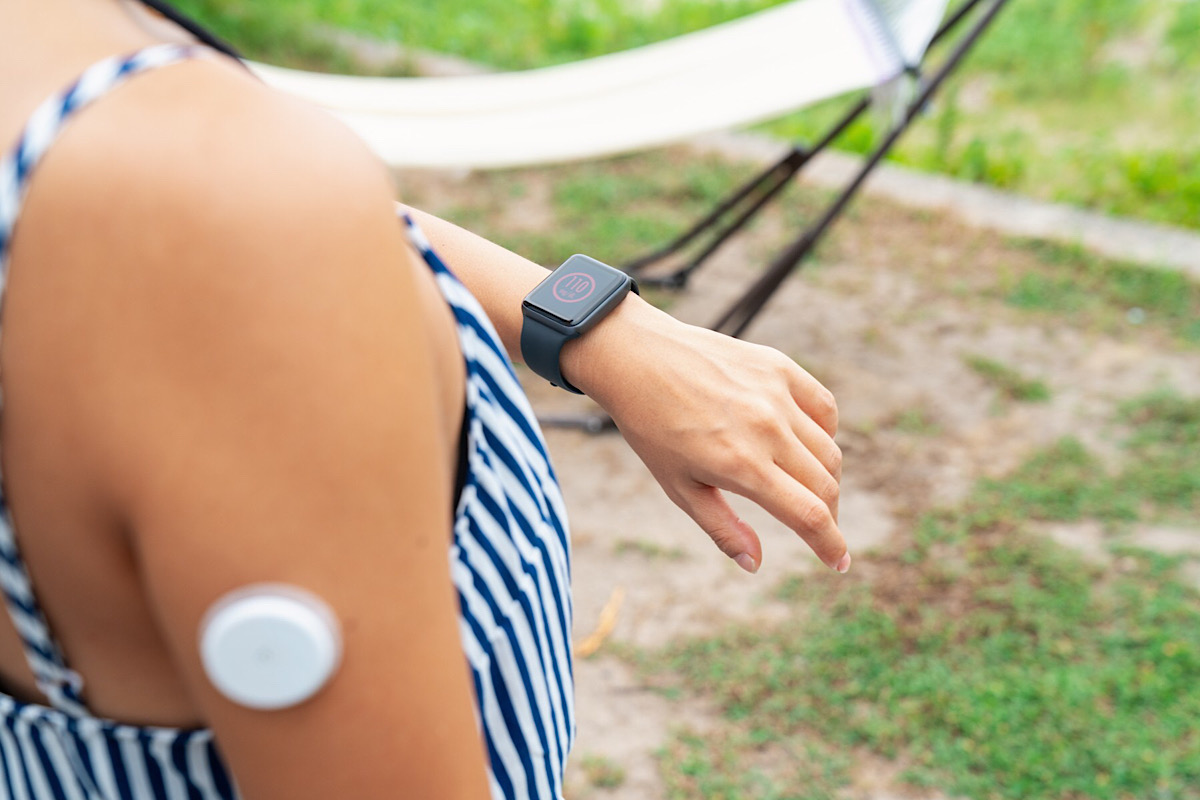
A new study suggests that a wearable sensor may be able to monitor the body’s health by detecting the gases released from a person’s skin.
“It is completely non-invasive, and completely passive on the behalf of the user,” said Anthony Annerino, lead author of the study and a graduate student in materials science and engineering at The Ohio State University.
Continue reading… “Future wearable health tech could measure gases released from skin”The SpaceX Crew-4 mission took some DNA to space on April 27
SPACEX just launched a lot of human DNA to the International Space Station.
The Crew-4 mission blasted off on April 27 and part of the cargo was a biobank containing DNA from 500 different species.
One of those species was humans and there are now over 2,000 different DNA samples from lots of different people in space.
A company called LifeShip is behind the DNA collection.
It hopes to one day create an off-world genetic human seed bank on the Moon.
The idea is similar to the Global Seed Vault we have on Earth.
Continue reading… “INSIDE PLANS FOR ‘OFF-WORLD HUMAN DNA SEED BANK’ ON MOON SO ALIEN CIVILIZATION COULD ‘RECREATE’ US”
By Trevor Mogg
Two spacewalkers at the International Space Station (ISS) activated the facility’s new robotic arm for the first time on Thursday, April 28.
Russian cosmonauts Oleg Artemyev and Denis Matveev concluded their spacewalk at 6:40 p.m. ET after 7 hours and 42 minutes outside the ISS, with much of that time spent working on the European Robotic Arm (ERA).
The ERA arrived at the station in July last year but it remained covered with thermal blankets until Thursday.
NASA shared footage (below) of the two cosmonauts some 250 miles above Earth as they worked to release the robotic arm from its restraints ahead of its first workout.
Getting to this stage has been a long time coming. The ERA was designed more than 30 years ago, and various technical issues over the last 20 years caused it to miss three planned missions to the ISS.
But now European Space Agency (ESA) engineers can finally celebrate the arm’s first activation in space.
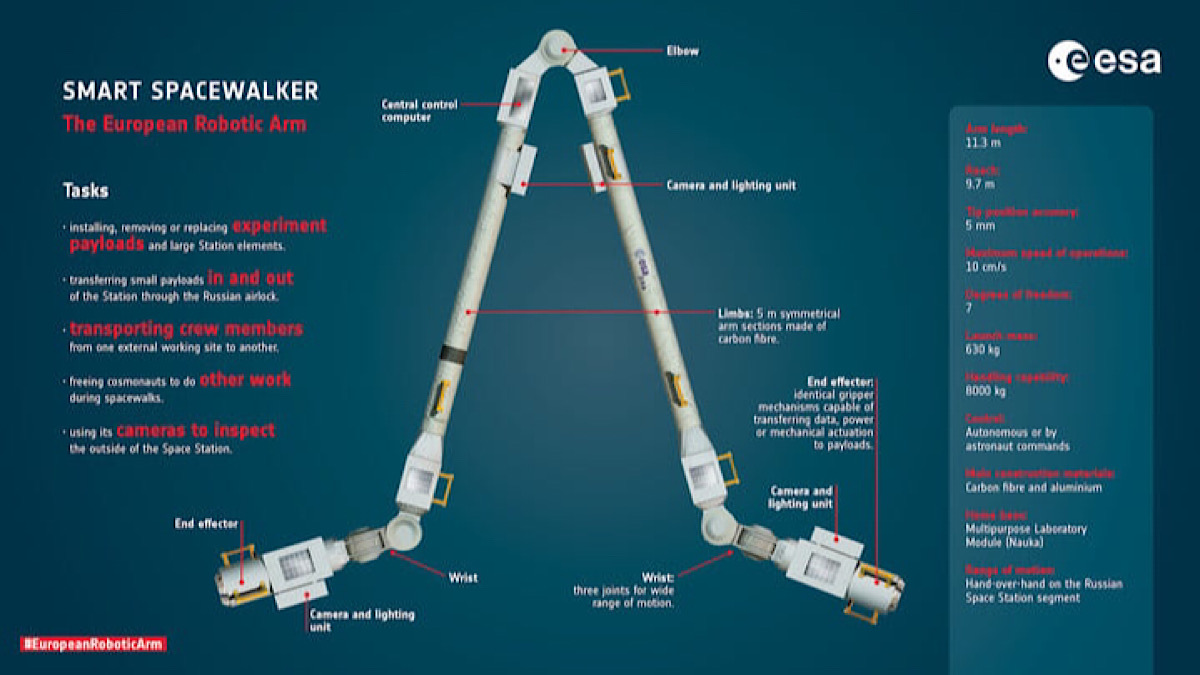
The new robotic arm is about 11 meters long, weighs 1,390 pounds (630 kilograms), and includes seven joints that offer a high degree of maneuverability.
Continue reading… “Space station’s new robotic arm springs to life”The Indy Autonomous Challenge racecar, a Dallara AV-21 programmed by team PoliMOVE from Politecnico di Milano, Italy, and the University of Alabama, USA, has set a new land speed world record of 192.2 mph / 309.3 kph at the historic Kennedy Space Center.
Operating the Dallara AV-21, PoliMOVE set out to push the limits of a boosted engine package during test runs yesterday at Space Florida’s Launch & Landing Facility at Kennedy Space Center.
The upgraded engine package, capable of delivering 30 percent more horsepower than previous models, will be on all IAC racecars moving forward. Future competitions will be announced in the coming months.
Paul Mitchell, president, Indy Autonomous Challenge, says: “The Autonomous Challenge @ CES in January pushed our racecars to their limits and maxed out what was possible at the time.
“Yet here we are just four months later, in another iconic venue, with an upgraded engine package setting yet another world record.”
Continue reading… “Indy Autonomous Challenge racecar sets new speed record for driverless vehicle”Cruise, Tesla, Alphabet Inc’s Waymo and Aurora Innovation Inc are among many companies aiming to deploy fully autonomous vehicle technology in the United States within the next two to three years.
Self-driving vehicle companies from Tesla Inc to General Motors Co’s Cruise are racing to start making money with their technology, outrunning efforts by regulators and Congress to write rules of the road for robot-driven vehicles. On Tuesday, Cruise said that SoftBank Group Corp will invest another $1.35 billion in anticipation of Cruise launching commercial robo-taxi operations. Cruise needs one permit, from California’s Public Utilities Commission, to start charging for rides around San Francisco in vehicles with no human driver.
Cruise, Tesla, Alphabet Inc’s Waymo and Aurora Innovation Inc are among many companies aiming to deploy fully autonomous vehicle technology in the United States within the next two to three years, whether or not federal regulators give them a clear legal framework for doing so. Autonomous vehicle (AV) startups and automakers are under pressure to start generating revenue from billions of dollars of engineering investment over the past decade.
Proposed legislation to create a national framework of rules to govern autonomous vehicles remains stalled in Congress, despite the industry’s lobbying. That has left autonomous vehicle companies free to deploy robo-taxis or self-driving trucks in some states, such as Arizona and Texas, but not in others. Waymo has provided thousands of rides in driverless robo-taxis in Phoenix, though the service remains limited.
Continue reading… “Self-Driving Car Companies Zoom Ahead, Leaving U.S. Regulators Behind”Snap takes another stab at hardware with a selfie drone called Pixy
By Alex Heath
MoreMore than five years after it released Spectacles, Snap is back with a second hardware product. And this time it flies.
Yes, Snap made a drone. Called Pixy, the small yellow puck takes off from your hand, follows you around, and captures video that can be sent back to Snapchat. It’s Snap’s attempt at making a drone that’s friendlier and more approachable than other products on the market — and it may hint at the more advanced, AR-powered future Snap is building toward.
Pixy is available online for $230 in the US and France starting Thursday. Unlike most existing drones, it’s small and light enough to fit in a pant pocket. There isn’t a controller; it takes off from and lands on an outstretched palm, and it uses six pre-programmed flight patterns that are accessible through a dial on the top of the device.
Why on earth would Snap, which primarily operates an ephemeral messaging app, make a selfie drone? It’s the first question I pose to CEO Evan Spiegel.
“Because we’re a camera company,” he tells me recently over video chat. Snap has brandished that tagline since 2016 when the company changed its name from Snapchat to Snap and released its first pair of Spectacles. “Our mission is to empower people to express themselves, live in the moment, learn about the world, and have fun together. And this product does exactly that.”
Continue reading… “SNAPCHAT’S FLYING CAMERA”An illustration of the Pioneer-class space station, which is designed to have five modules built around a gravity ring.
The Pioneer-class stations are designed to accommodate 28 guests for up to two weeks.
Orbital Assembly Corporation announced plans to develop a space business park, complete with artificial gravity, that’s designed to accommodate 28 guests in five modules built around a rotating gravity ring.
The startup, which is based in Huntsville, Alabama, is aiming to make its first Pioneer-class space station operational by 2025, in what is an ambitious and likely unrealistic timeline. That said, Orbital Assembly is intent on making this the first commercial, hybrid space station that can be leveraged for both research and leisure.
Continue reading… “Space Startup Aims to Build Space Hotel With Artificial Gravity by 2025”By Jane Thier
The average starting salary for college graduates is $55,000, but current college students think they’ll earn nearly double that amount from their first job out of school.
The students said they expect to make almost $104,000, according to a recent survey of 1,000 undergrads by real estate data company Clever.
The lofty expectations are a fairly new development. The class of 2019, for example, had expected to earn nearly $50,000 less, Danetha Doe, an economist at Clever, tells Fortune. “They’re asking for more, so they can enjoy the financial comfort other generations have been able to afford,” she says, though most students clearly are having to settle for far less.
Continue reading… “This year’s college grads think they’ll earn over $100,000 from their first job. In reality, they’ll make half as much”“Floating infrastructure” and “waterborne urbanism” sound like things from a Sci-Fi movie, but they are being brought to life in a truly groundbreaking project. The world’s first floating city that’s also 100% sustainable was announced a couple of years ago, and its future design was recently unveiled.
As it is in most cases, while some are lobbying for a return to minimalistic, simple dwellings that are as close to nature as possible, others are taking a radically opposite approach, envisioning futuristic urban communities that are unlike anything that’s been done before. Neom is one of the most recent projects of this kind, which is currently being built in the Tabuk province of Saudi Arabia.
But there’s no other floating city concept except for Oceanix Busan. UN-Habitat, the Busan Metropolitan City of the Republic of Korea, and Oceanix (a New York-based blue technology company) teamed up to create this futuristic city that is by no means a simple experiment, but a potential solution to a very serious problem.
Continue reading… “The Design for the World’s First Floating Sustainable City Unveiled”Researchers at ETH Zurich have developed a world map that for the first time uses machine learning to derive vegetation heights from satellite images in high resolution.
by Stéphanie Hegelbach
Using an artificial neural network, researchers at ETH Zurich have created the first high-resolution global vegetation height map for 2020 from satellite images. This map could provide key information for fighting climate change and species extinction, as well as for sustainable regional development planning.
Last year marked the beginning of the UN Decade on Ecosystem Restoration. This initiative is aimed at halting the degradation of ecosystems by 2030, preventing it going forward and, if possible, remedying the damage that has already been done. Delivering on these kinds of projects calls for accurate foundations, such as surveys and maps of the existing vegetation.
In an interview, Ralph Dubayah, the Principal Investigator of NASA’s Global Ecosystem Dynamics Investigation (GEDI) mission, explains: “We simply do not know how tall trees are globally. […] We need good global maps of where trees are. Because whenever we cut down trees, we release carbon into the atmosphere, and we don’t know how much carbon we are releasing.”
Analyzing and preparing precisely this kind of environmental data is what the EcoVision Lab in the ETH Zurich Department of Civil, Environmental and Geomatic Engineering specializes in. Founded by ETH Zurich Professor Konrad Schindler and University of Zurich Professor Jan Dirk Wegner in 2017, this lab is where researchers are developing machine learning algorithms that enable automatic analysis of large-scale environmental data. One of those researchers is Nico Lang. In his doctoral thesis, he developed an approach—based on neural networks—for deriving vegetation height from optical satellite images. Using this approach, he was able to create the first vegetation height map that covers the entire Earth: the Global Canopy Height Map.
Continue reading… “Neural network can read tree heights from satellite images”