2016 was a banner year for artificial intelligence. Alpha Go’s victory over Lee Sedol was perhaps one of the most important, but we saw advancements in self-driving cars, the continued embrace of bots and personal assistants for retail, adoption and competition around in-house assistants like Amazon Echo, along with frequent, sometimes weekly, breakthroughs on the academic side, mainly relating to machine learning. With the biggest tech companies in the world–Google, Facebook, Amazon, Microsoft, and others–devoting more and more resources to AI, the momentum is going to increase.
The patent bubble is ready to pop
I’m certainly not going to win any popularity contests for writing this article. The last thing anybody wants to talk about after a presidential election is a patent bubble. After all, most of us took a nice stock market beat down during the recent housing bubble and mortgage crisis.
Era of the robots
Donald Trump tends to present the labor market as a zero-sum game: companies have shifted production to China and other emerging markets. He’s going to bring those jobs home. Put aside for a moment how moving jobs back to a country with high costs gives companies an incentive to automate. There’s a bigger problem: After displacing U.S. manufacturing workers, robots are poised to do the same in developing economies, too. It will be hard to re-shore jobs that no longer exist.
Fewer car owners and more driverless vehicles in future
Half of today’s car owners will not want to own a vehicle and more and more will want self-driving and electric cars in future, a survey of car manufacturing bosses has found. As fewer people see the need to buy a car, a majority of automotive executives believe the industry will increasingly focus on making money from peripheral digital services to be used with their vehicles.
Continue reading… “Fewer car owners and more driverless vehicles in future”
Students are zapping their brains for a boost
Last October, Matt Herich was listening to the news while he drove door to door delivering pizzas. A story came on the radio about a technology that sends an electric current through your brain to possibly make you better at some things — moving, remembering, learning. He was fascinated.
Continue reading… “Students are zapping their brains for a boost”
IBM releases the annual five innovations that will change our lives within five years
Imagine that you could have superhero vision, seeing in not only what we know as the visible spectrum, but using wavelengths that allow you to see through fog, and detect black ice. Or imagine a Star Trek-like medical tricorder that could take a tiny bit of body fluid and determine what was ailing you.
Japanese company replaces workers with AI
A Japanese company is making 34 employees redundant in order to replace them with IBM’s Watson Explorer AI. Human workers at Fukoku Mutual Life Insurance are set to be replaced by an artificial intelligence that can calculate payouts to policyholders.
Continue reading… “Japanese company replaces workers with AI”
Child care shortage has real consequences for working families
One of the most stressful questions a new parent confronts is, “Who’s going to take care of my baby when I go back to work?” Figuring out the answer to that question is often not easy. When NPR, along with the Robert Wood Johnson Foundation and the Harvard T.H. Chan School of Public Health, surveyed more than 1,000 parents nationwide about their child care experiences, a third reported difficulty finding care.
Continue reading… “Child care shortage has real consequences for working families”
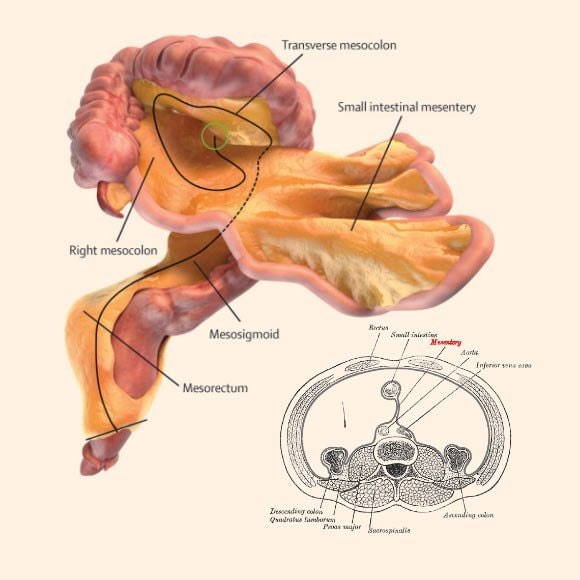
The human body’s 79th organ?
To the 78 organs that make up the human body, a group of scientists says we should add one more: the mesentery. Located in our abdominal cavity, the mesentery is a belt of tissue that holds our intestines in place. While anatomists knew it was there, it was always thought to be composed of several different segments, as opposed to being one single structure. This knocked it out of contention for organ status, as our bodily organs must be continuous, as well as provide some vital function to our anatomy.
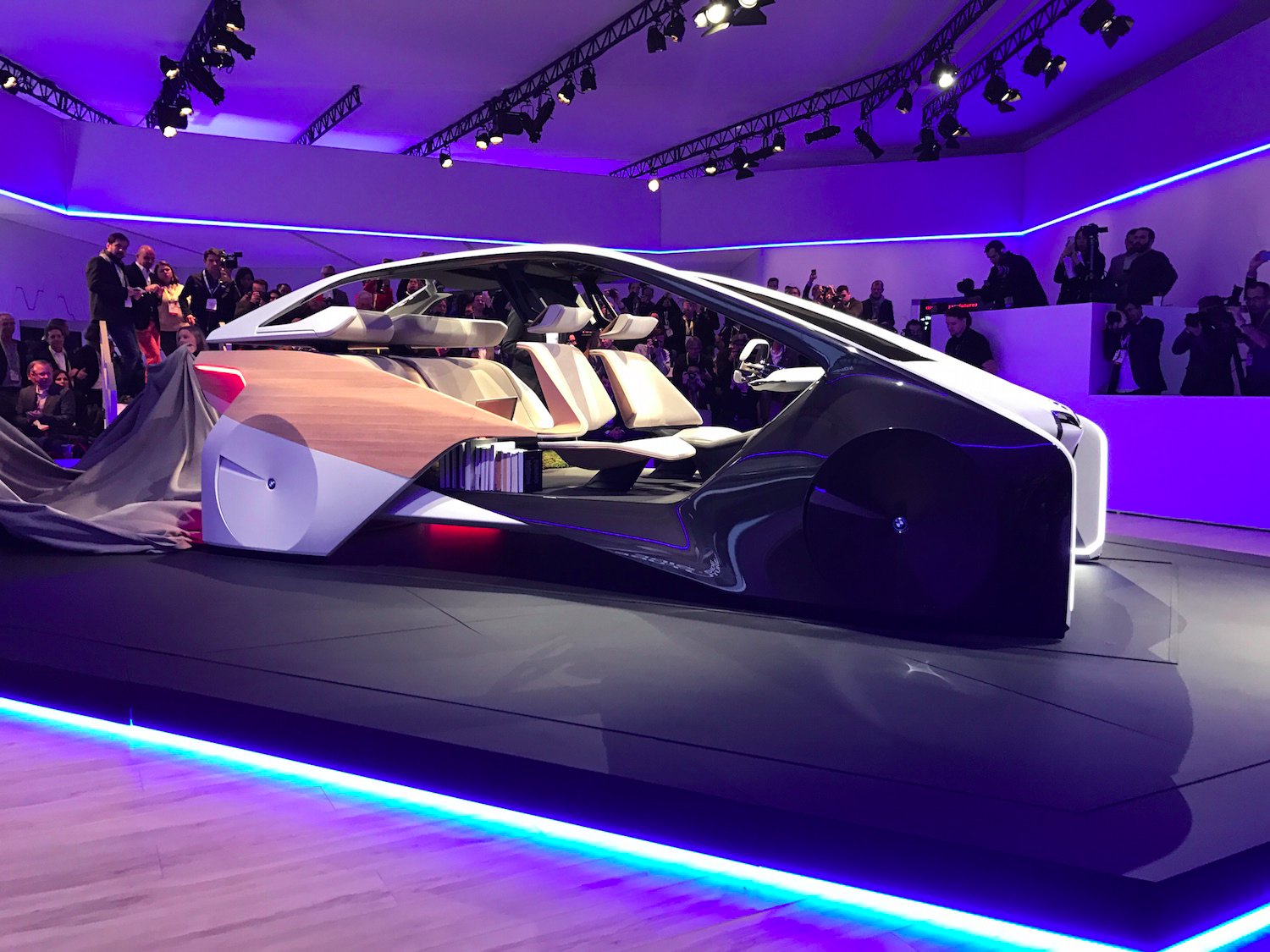
BMW unveils futuristic concept for the interior of its driverless cars
BMW unveiled a concept for the interior of driverless cars on Wednesday at a press conference in Las Vegas at CES. The concept, dubbed the BMWi Inside Future, showcases how BMW envisions its autonomous vehicles may look when they start to hit the market. The interior concept is centered on connectivity and includes a panoramic display that can be operated just like a touchscreen — except physical contact isn’t necessary.
Continue reading… “BMW unveils futuristic concept for the interior of its driverless cars”
Bitcoin is the best-performing currency
The virtual currency has continued its breathtaking rise surging past $1,000, after already winning the crown of the best-performing currency in 2016 by more than doubling its value in the course of the year.
3D-Printed V8 engine works just like the real thing
Remember the guy we featured a few months ago who 3D printed a functional scale model of a Subaru EJ20 flat-four? Well, he’s got another creation, and this one’s even better. It’s a replica of the LS3 V8 found in the last-gen Chevrolet Camaro, and aside from a few fasteners and bearings, it’s entirely 3D printed.
Continue reading… “3D-Printed V8 engine works just like the real thing”