Revolutionary Laser Technology Offers Hope in Landmine Detection

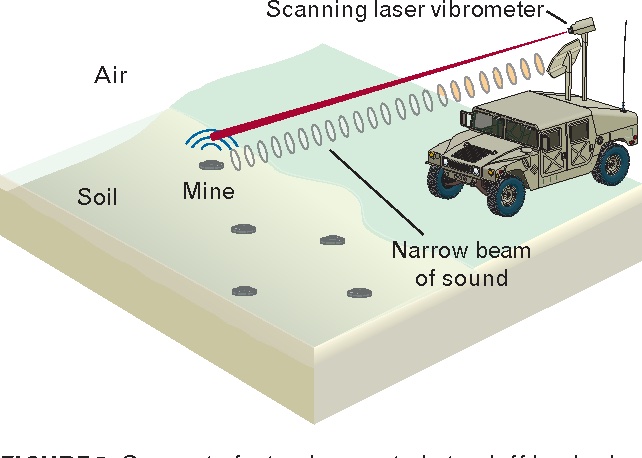
Worldwide, an estimated 110 million landmines remain buried in over 70 countries, a deadly legacy of past and ongoing conflicts. These hidden threats continue to cause devastation, resulting in 4,710 casualties in 2022 alone, with civilians accounting for more than 85% of the victims. Tragically, nearly half of these casualties were children. As new mines are deployed daily in conflict zones, the humanitarian crisis deepens, and the cost of their removal remains exorbitant—while a landmine costs only around $3 to produce, it can take up to $1,000 to safely remove each one.

The challenge of detecting and clearing these dangerous remnants of war is immense. Traditional methods, such as handheld metal detectors and ground-penetrating radar (GPR), are commonly used but often fall short, particularly when it comes to non-metallic landmines made of plastic. Metal detectors, for instance, can trigger false positives, while GPR can be ineffective in certain soil conditions or when faced with complex environmental factors.

Continue reading… “Revolutionary Laser Technology Offers Hope in Landmine Detection”

NASA Engineer Unveils Propellantless Propulsion Breakthrough: A New Era for Space Travel

In a groundbreaking revelation, Dr. Charles Buhler, a veteran NASA engineer and co-founder of Exodus Propulsion Technologies, has announced a revolutionary achievement in propulsion technology: a propellantless drive that can counteract Earth’s gravity, challenging conventional understanding of physics. This breakthrough promises to redefine space travel and propel humanity into a new era of exploration.

With extensive experience from iconic NASA missions such as the Space Shuttle and the International Space Station (ISS), Dr. Buhler and his team see this discovery as a monumental leap forward that will shape the future of space travel for centuries. “The most important message to convey to the public is that a major discovery occurred,” Dr. Buhler stated, highlighting the significance of their work.

Continue reading… “NASA Engineer Unveils Propellantless Propulsion Breakthrough: A New Era for Space Travel”

Unveiling the Mystery of Membraneless Organelles: A New Frontier in Cell Biology

If you’ve ever sat through a high school biology class, you’ve likely learned about the essential organelles that make up a cell—structures like the mitochondria, which produce energy, or the nucleus, which houses DNA. Traditionally, these organelles were understood to be membrane-bound compartments that each performed specific functions. However, this long-standing view of cell organization has been upended by an exciting new discovery: membraneless organelles, or biomolecular condensates.

For years, scientists believed that all cellular structures needed membranes to define their functions and keep everything in order. But in the mid-2000s, this theory was challenged when researchers began discovering that some organelles don’t require membranes to operate. These membraneless organelles, made up of proteins and RNA molecules, can form gel-like droplets inside cells that function as distinct biochemical compartments.

Continue reading… “Unveiling the Mystery of Membraneless Organelles: A New Frontier in Cell Biology”

Revolutionary Water Harvester Prototype Offers Efficient, Portable Solution for Clean Drinking Water

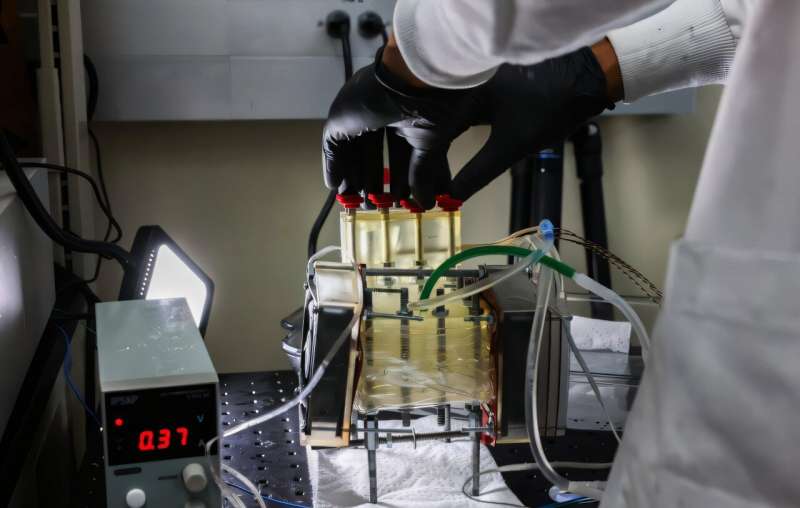
A new prototype water harvester developed by researchers at The Ohio State University is poised to offer a more efficient and portable way to extract drinking water from the air, especially in regions suffering from water scarcity. This innovative device, made from temperature-sensitive materials, could outperform traditional dehumidifiers by collecting more water from the atmosphere within 30 minutes and using roughly half the energy.

As more than 2 billion people around the world are estimated to lack access to clean drinking water, improving current methods of water collection could help make this vital resource more accessible, particularly in water-scarce regions. According to John LaRocco, lead author of the study and a research scientist in psychiatry at Ohio State University College of Medicine, access to clean water is not just essential for survival but also for improving national security, mental health, and sanitation.

Continue reading… “Revolutionary Water Harvester Prototype Offers Efficient, Portable Solution for Clean Drinking Water”

Breakthrough Technology Turns Air into Drinkable Water, Even in Low-Humidity Regions

In a groundbreaking development that could revolutionize water access in arid regions, researchers at the University of Nevada, Las Vegas (UNLV) have unveiled a new technology capable of pulling substantial amounts of water from the air in low-humidity environments. This innovation, which promises to help address water scarcity issues exacerbated by megadroughts, offers a sustainable solution for water-stressed areas like the American Southwest.

Published on October 22 in the Proceedings of the National Academy of Sciences, the research titled “High-yield atmospheric water capture via bioinspired material segregation” represents a significant advancement in atmospheric water harvesting technology. Led by UNLV mechanical engineering professor H. Jeremy Cho, the team’s breakthrough could transform how we think about water generation, particularly in regions where traditional water sources are dwindling.

Continue reading… “Breakthrough Technology Turns Air into Drinkable Water, Even in Low-Humidity Regions”

Amazon Launches Drone Delivery in Arizona, Expanding Prime Air Service

Amazon has officially launched its drone delivery operations at its Tolleson, AZ, fulfillment center, marking a significant milestone in its Prime Air service. Customers in the West Valley Phoenix Metro Area can now receive packages within hours via drones, with access to more than 50,000 everyday essentials, including household items, beauty products, and office/tech supplies. Amazon claims this is its largest selection yet for fast drone deliveries, offering a wide range of items for quick, aerial transport.

This announcement follows Amazon’s decision to shut down its Lockeford, California testing zone, signaling a shift toward integrating drone technology into its operational network. The new Tolleson location will be the first to deploy drones directly from the fulfillment center itself, streamlining the delivery process and bringing Amazon one step closer to scaling its drone service.

Continue reading… “Amazon Launches Drone Delivery in Arizona, Expanding Prime Air Service”

Team Ceres Develops Plasma-Powered Solution to Combat Drought and Crop Failures

A team of five high school students from Türkiye, known as Team Ceres, has developed an innovative device to address the devastating effects of drought on crops. Their creation, Plantzma, harnesses the power of plasma technology to enhance crop resilience and improve irrigation, offering a promising solution to the growing global food security crisis.

The team, consisting of DiyarAdarDilvinMir Baran, and Beyza, was driven by their personal experiences witnessing the severe impacts of drought in their region. “My community is my inspiration,” says 17-year-old Beyza. Her hometown has recently seen a 40% decline in precipitation rates, compounded by rising pollution levels, leading to a staggering 80% loss in crop yields and a growing food shortage.

Continue reading… “Team Ceres Develops Plasma-Powered Solution to Combat Drought and Crop Failures”

KIMS Team Develops World’s First Ultra-Thin Composite Material for Superior Electromagnetic Wave Absorption

A groundbreaking advancement in electromagnetic shielding has been made by a research team led by Dr. Byeongjin Park and Dr. Sang Bok Lee at the Korea Institute of Materials Science (KIMS). They have developed the world’s first ultra-thin film composite material that absorbs over 99% of electromagnetic waves across a wide range of frequency bands, including 5G/6G, WiFi, and autonomous driving radar— all from a single material.

This revolutionary material, measuring less than 0.5 mm thick, features an extraordinary reflectance of under 1% and an impressive absorbance rate of over 99% across three distinct frequency bands. The ability to absorb such a wide spectrum of electromagnetic waves simultaneously is a major breakthrough, addressing a range of technological challenges in electronic devices.

Continue reading… “KIMS Team Develops World’s First Ultra-Thin Composite Material for Superior Electromagnetic Wave Absorption”

Boring Company Nears Completion of “Cybertunnel” at Giga Texas Facility

In a recent video update shared by drone pilot and Giga Texas observer Brad Sloan, workers can be seen painting the interior walls of the Boring Company’s much-anticipated underground “Cybertunnel” beneath the 130 Highway at the Austin, Texas factory. Construction on the tunnel, which began in March, is approaching completion, and Elon Musk has previously indicated that the tunnel will be used to transport Cybertrucks from the factory to the outbound lot, where they will then be picked up by hauling trucks for shipping.

Sloan’s video also highlights several other key developments around the Giga Texas facility, including the installation of more glass panels and tests of the water cooling towers intended to support the site’s supercomputing cluster, known as Cortex. These cooling towers are essential for maintaining the optimal performance of the factory’s advanced computing infrastructure.

Continue reading… “Boring Company Nears Completion of “Cybertunnel” at Giga Texas Facility”

Rwanda Researchers Discover Tree Species That Could Provide Clean Electricity for Rural Communities

Scientists from the Rwanda Forestry Authority have identified two types of trees that hold the potential to generate clean electricity, offering a sustainable energy solution for remote communities. This discovery could play a key role in Rwanda’s goal of achieving universal electricity access by 2030.

Despite significant progress in electrification, rural areas in Rwanda continue to face challenges with limited access to power. In response, researchers are exploring ways to produce electricity from biomass derived from sustainably cultivated plants. They are studying the energy potential of various tree species to find alternatives to conventional energy sources.

Continue reading… “Rwanda Researchers Discover Tree Species That Could Provide Clean Electricity for Rural Communities”

New Findings in Magnetism of Kagome Magnets Could Propel Quantum Computing and Superconductor Technologies

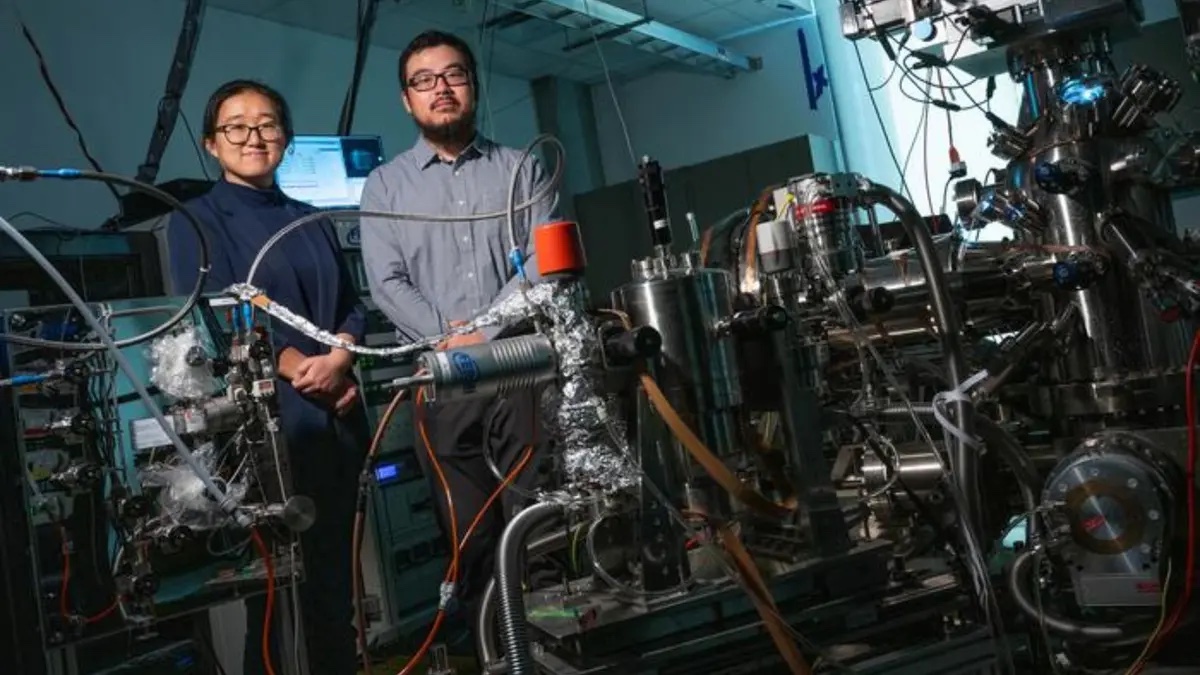
Researchers at Rice University have unveiled groundbreaking insights into magnetism and electronic interactions within advanced materials, potentially revolutionizing fields like quantum computing and high-temperature superconductors. Their study of iron-tin (FeSn) thin films has shifted the understanding of kagome magnets, which are structured in a pattern inspired by traditional Japanese basket weaving. The team discovered that FeSn’s magnetic properties are driven by localized electrons, rather than the previously believed mobile electrons—a revelation that could alter how scientists approach materials in quantum technology.

Despite these advancements, challenges remain in observing magnetic splitting at higher temperatures in kagome magnets. However, in a key development, the team was able to create high-quality FeSn thin films and analyze their electronic structure using a combination of molecular beam epitaxy and angle-resolved photoemission spectroscopy. Their findings showed that the kagome flat bands remained split even at elevated temperatures, a sign that localized electrons drive the material’s magnetic properties. This discovery underscores the complex role electron correlation plays in shaping magnetic behaviors in kagome structures.

Continue reading… “New Findings in Magnetism of Kagome Magnets Could Propel Quantum Computing and Superconductor Technologies”

Japanese Scientists Engineer Hybrid Cells with Plant-Like Photosynthesis in Groundbreaking Study

Japanese scientists have successfully created hybrid cells that combine animal and plant traits, allowing animal cells to produce energy from sunlight through photosynthesis. This novel approach, led by researchers at the University of Tokyo, could have transformative implications for creating lab-grown tissues, organs for transplants, and even cultivated meat.

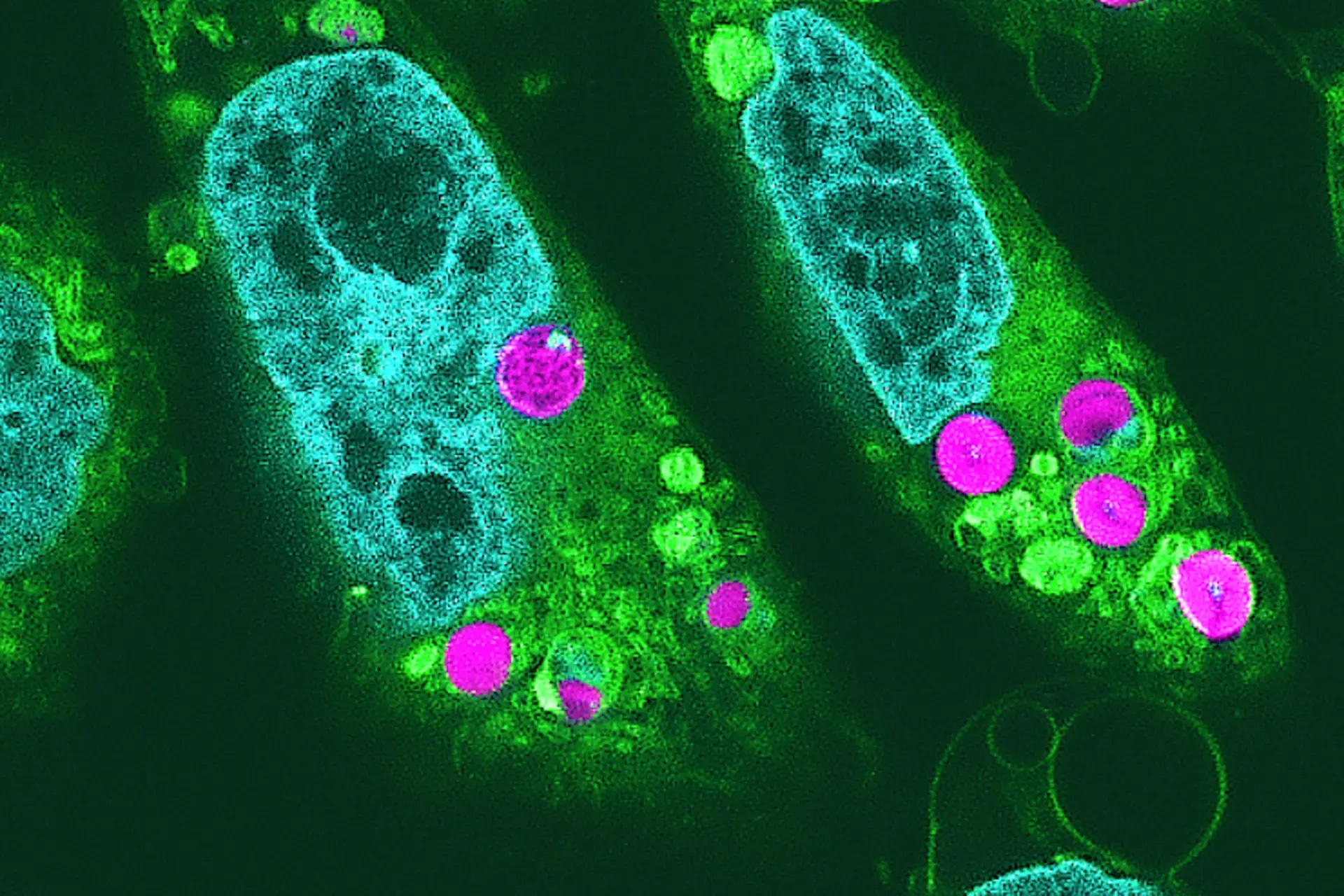
In living organisms, animal cells rely on mitochondria to convert chemical energy from food into usable energy. Plant cells, however, use chloroplasts to perform photosynthesis, converting sunlight into cellular energy. In this study, the team introduced chloroplasts from red algae into cultured hamster cells, enabling them to perform photosynthesis—a feat previously achieved only in yeast, a fungus, but never before in animal cells.

Continue reading… “Japanese Scientists Engineer Hybrid Cells with Plant-Like Photosynthesis in Groundbreaking Study”