Pushing the Boundaries of Computing Speed: How Light Antennas Could Revolutionize Computer Chips

As modern computers approach their physical limits, semiconductor components currently operate at maximum frequencies of just a few gigahertz, performing billions of computing operations per second. To maintain performance, systems often rely on multiple chips to distribute tasks, as the speed of individual chips cannot be further increased. However, a game-changing leap in speed could be achieved if photons (light) were used instead of electrons (electricity) in computer chips, potentially making them up to 1000 times faster.

A promising approach to unlocking this leap in speed is through plasmonic resonators, often called “antennas for light.” These nanometer-sized metal structures allow for interaction between light and electrons, and their performance can vary depending on their geometry. “The challenge,” says Dr. Thorsten Feichtner, a physicist at Julius-Maximilians-Universität (JMU) Würzburg in Germany, “is that plasmonic resonators cannot yet be modulated effectively, unlike transistors in conventional electronics. This limitation prevents the development of fast, light-based switches.”

Continue reading… “Pushing the Boundaries of Computing Speed: How Light Antennas Could Revolutionize Computer Chips”


Electroninks Introduces World’s First Commercial Copper MOD Ink, Revolutionizing Additive Manufacturing

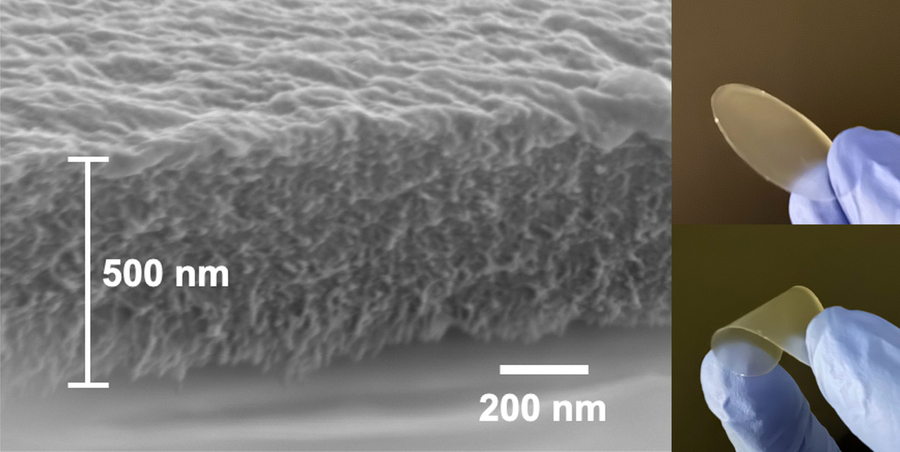
Electroninks, an Austin-based leader in metal organic decomposition (MOD) inks for additive manufacturing (AM) and semiconductor packaging, has unveiled what it claims to be the world’s first commercially available copper MOD ink. This breakthrough ink is generating buzz, particularly for its application in “seed layer printing,” a process where ultra-thin metal layers are deposited onto a substrate, streamlining subsequent plating procedures.

One of the most promising applications for seed layer printing is in solar cells. Electroninks asserts that its copper ink significantly outperforms traditional methods like electroless (e-less) copper plating and physical vapor deposition (PVD), by using far less water and energy. This advancement not only enhances the sustainability of production but also reduces capital expenditures (CAPEX) for manufacturers, making the production of components more efficient and cost-effective.

Continue reading… “Electroninks Introduces World’s First Commercial Copper MOD Ink, Revolutionizing Additive Manufacturing”

Smart Streets: How Utah’s New Tech is Revolutionizing Traffic and Safety

Utah transportation officials have introduced cutting-edge technology that allows vehicles to communicate with traffic lights and each other, a development set to transform traffic flow, reduce congestion, and prevent accidents. This initiative, part of the “Connect the West” project, is supported by a $20 million federal grant and has already begun showing results.

The first milestone of the initiative was achieved by installing radio transmitters in city buses, enabling them to request extended green lights by a few seconds. This small change has already improved traffic flow on these newly designated “smart streets.” These advancements are just the beginning of a series of high-tech upgrades expected to be implemented on U.S. roads in the near future.

Continue reading… “Smart Streets: How Utah’s New Tech is Revolutionizing Traffic and Safety”

Revolutionary EPR Chip Could Transform Food Quality Testing and More

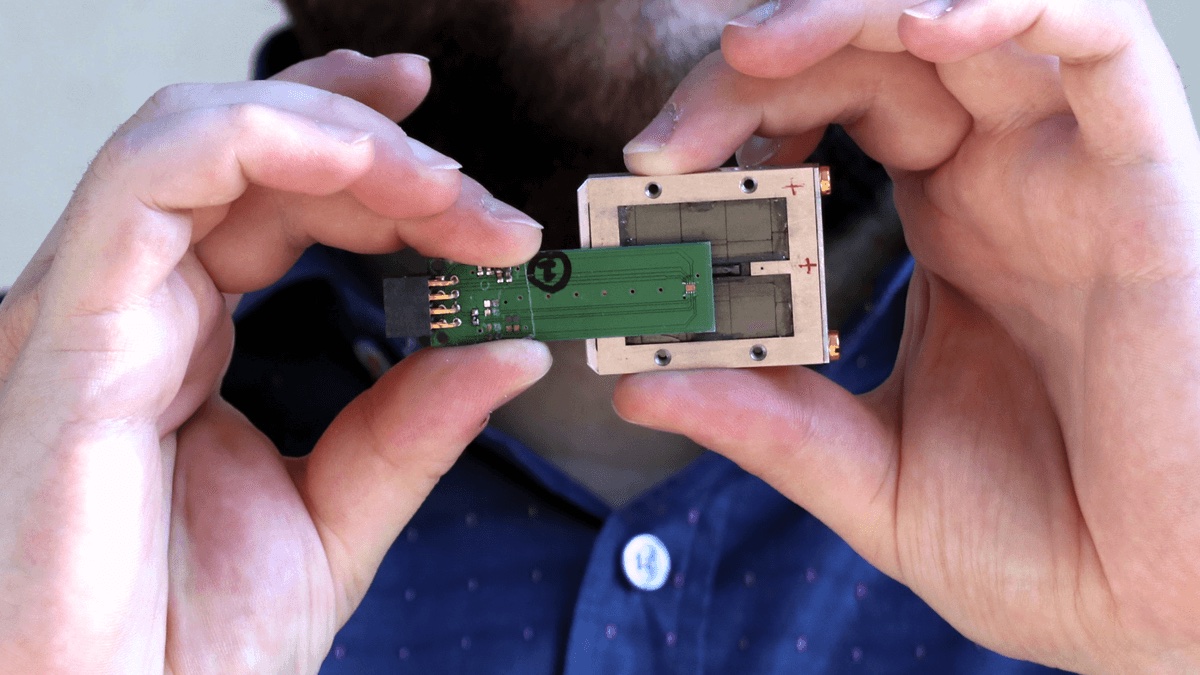
Researchers have developed a groundbreaking electron paramagnetic resonance (EPR) sensor that fits on a microchip, enabling the detection of free radicals in food products even at extremely low concentrations. This innovative “EPR on a chip” (ERPoC) sensor, created by teams from Helmholtz-Zentrum Berlin (HZB) and the University of Stuttgart, is portable, affordable, and small enough to be tailored to specific industry needs. Initially, it will be used to monitor the quality of olive oil and beer.

“We are designing small, portable, and cost-effective EPR devices by integrating a microchip with permanent magnets, customized for various applications,” says Michele Segantini, a physicist from HZB who is nearing the completion of his PhD under Prof. Klaus Lips. Free radicals, highly reactive molecules that indicate spoilage, are difficult to detect. Traditional methods for detecting these molecules in food products require expensive EPR machines that are large and power-hungry, limiting their use.

Continue reading… “Revolutionary EPR Chip Could Transform Food Quality Testing and More”

Breakthrough Silk-Based Filter May Solve Global Water Contamination Crisis

Water contamination caused by chemicals used in modern technology is an escalating global issue. A recent study by the U.S. Centers for Disease Control found that 98% of people tested had detectable levels of PFAS—long-lasting “forever chemicals”—in their bloodstream. However, a new natural filtration material developed by MIT researchers may offer a solution. Made from silk and cellulose, this innovative filter can remove a range of persistent contaminants, including PFAS and heavy metals, while also boasting antimicrobial properties that prevent filter fouling.

The findings, published in ACS Nano, were led by MIT postdoc Yilin Zhang, civil and environmental engineering professor Benedetto Marelli, and their team. The material’s creation originated from Marelli’s lab, which initially sought to combat counterfeit seeds through silk nanofibrils. Zhang suggested the material’s potential for water filtration, leading to the addition of cellulose to the silk structure, enhancing its performance. This hybrid material has shown promise in lab tests, significantly outperforming traditional filters like activated carbon.

Continue reading… “Breakthrough Silk-Based Filter May Solve Global Water Contamination Crisis”

Titanium-Nickel Alloy Breakthrough Paves Way for Shape-Shifting Aircraft and Artificial Muscles

Researchers at Japan’s National Institute of Materials Science (NIMS) have developed a highly flexible alloy made of titanium and nickel that could revolutionize industries by enabling shape-shifting aircraft and ultra-strong artificial muscles. The alloy boasts the strength of steel while remaining as stretchable as rubber when subjected to environmental changes.

Shape-shifting aircraft have long been the stuff of science fiction, primarily due to the challenge of creating a material flexible enough for such transformations yet robust enough to withstand the stresses of flight. Balancing strength and flexibility has been a major obstacle for scientists, as increasing one often comes at the expense of the other. While a shape-shifting aircraft could lead to greater energy efficiency and faster travel, passenger safety remains paramount, requiring materials that do not compromise on durability.

Continue reading… “Titanium-Nickel Alloy Breakthrough Paves Way for Shape-Shifting Aircraft and Artificial Muscles”

LG Display Unveils Stretchable Displays at Seoul Fashion Week, Redefining Fashion and Technology

LG Display, a global leader in display innovation, announced that it is showcasing its groundbreaking Stretchable displays at one of the world’s most anticipated fashion events—2025 S/S Seoul Fashion Week, held at Dongdaemun Design Plaza (DDP). These cutting-edge displays can be freely stretched, folded, and twisted, marking a major fusion of technology and fashion.

Debuting as part of futuristic clothing and bag concepts, LG Display’s Stretchable displays will be featured on the front of garments, sleeves, and clutch bags, designed by renowned Korean designers Youn-Hee Park of GREEDILOUS and Chung-Chung Lee of LIE. The models will showcase these revolutionary designs on the runway on September 5 and 7.

Continue reading… “LG Display Unveils Stretchable Displays at Seoul Fashion Week, Redefining Fashion and Technology”

Hypermotive and Honda Launch XM-1: Hydrogen Fuel Cell Power for the Maritime Industry

Hypermotive Limited, a UK-based leader in sustainable transport solutions, has unveiled the XM-1, a groundbreaking hydrogen fuel cell platform designed to revolutionize power generation in the maritime industry. Backed by Honda, this collaboration marks the Japanese automaker’s entry into hydrogen fuel cell technology in Europe.

As the transportation sector accounts for 20% of global CO2 emissions, efforts to reduce fossil fuel dependency have intensified. Electric vehicles (EVs) have led the way in reducing emissions for road-based and smaller vehicles. However, larger forms of transportation, like long-haul trucks and container ships, still rely heavily on fossil fuels due to their superior power density, ease of refueling, and global availability.

Continue reading… “Hypermotive and Honda Launch XM-1: Hydrogen Fuel Cell Power for the Maritime Industry”

Mobilicom Unveils Cutting-Edge 8-Inch Controller Pro for Ground Control Systems

Mobilicom Ltd., a leading provider of cybersecure robotic and drone solutions, has introduced its next-generation 8-inch Controller Pro, designed to meet the growing demands of the ground control station (GCS) market. The Shoham, Israel-based company announced this latest addition to its product line at the Commercial UAV Expo in Las Vegas, with plans to capitalize on a market expected to grow at a compound annual rate of 22% from 2023 to 2030.

“We believe our 8-inch Controller Pro has the potential to transform the uncrewed systems and robotics sector,” said Oren Elkayam, co-founder and CEO of Mobilicom. “This product combines power, portability, and affordability, providing mission-critical solutions across various applications.”

Continue reading… “Mobilicom Unveils Cutting-Edge 8-Inch Controller Pro for Ground Control Systems”

Revolutionary Helical Magnet Memory Devices May Transform Data Storage

A team of scientists has introduced an innovative approach to magnet-based memory devices, potentially revolutionizing data storage with large-scale integration, non-volatility, and exceptional durability. Their groundbreaking findings, published in Nature Communications, could pave the way for a new generation of memory technology.

Magnetic random access memory (MRAM), a leading example of spintronic devices, utilizes the magnetization direction in ferromagnetic materials to store information. Spintronics, known for its non-volatility and low energy consumption, is anticipated to play a key role in future data storage systems.

Continue reading… “Revolutionary Helical Magnet Memory Devices May Transform Data Storage”

Revolutionizing Computer Simulations: Sandia and Brown University Researchers Unveil a Groundbreaking Accelerator

Researchers at Sandia National Laboratories and Brown University have developed a transformative method to accelerate computer simulations, significantly speeding up scientific research across multiple fields. This new approach, recently published in npj Computational Materials, has the potential to enhance the performance of nearly any type of simulation—from drug discovery to space exploration.

“What’s remarkable is that, from the user’s perspective, there’s no difference in how you run your simulation,” said Rémi Dingreville, a Sandia researcher. “The difference lies in the time it takes to get your results—it’s dramatically faster.”

Continue reading… “Revolutionizing Computer Simulations: Sandia and Brown University Researchers Unveil a Groundbreaking Accelerator”

Revolutionizing Biological Research: Parallel Bio’s Vision for Automation and Organoid Technology

Ari Gesher, the new Head of Technology at Parallel Bio, may be a newcomer to biotech, but he’s already making waves with his ambitious vision for disrupting biological research. The startup is banking on a combination of automation and organoid technology to streamline experiments, making them faster, more efficient, and highly reliable. The aim? Freeing scientists to focus on designing innovative experiments while robots handle the repetitive tasks.

Gesher believes this approach could solve the longstanding biotech dilemma of having to choose between speed, quality, and cost. “There’s this old adage: cheaper, faster, better—pick two,” he said. “Our approach asks, why not have all three?”

Continue reading… “Revolutionizing Biological Research: Parallel Bio’s Vision for Automation and Organoid Technology”