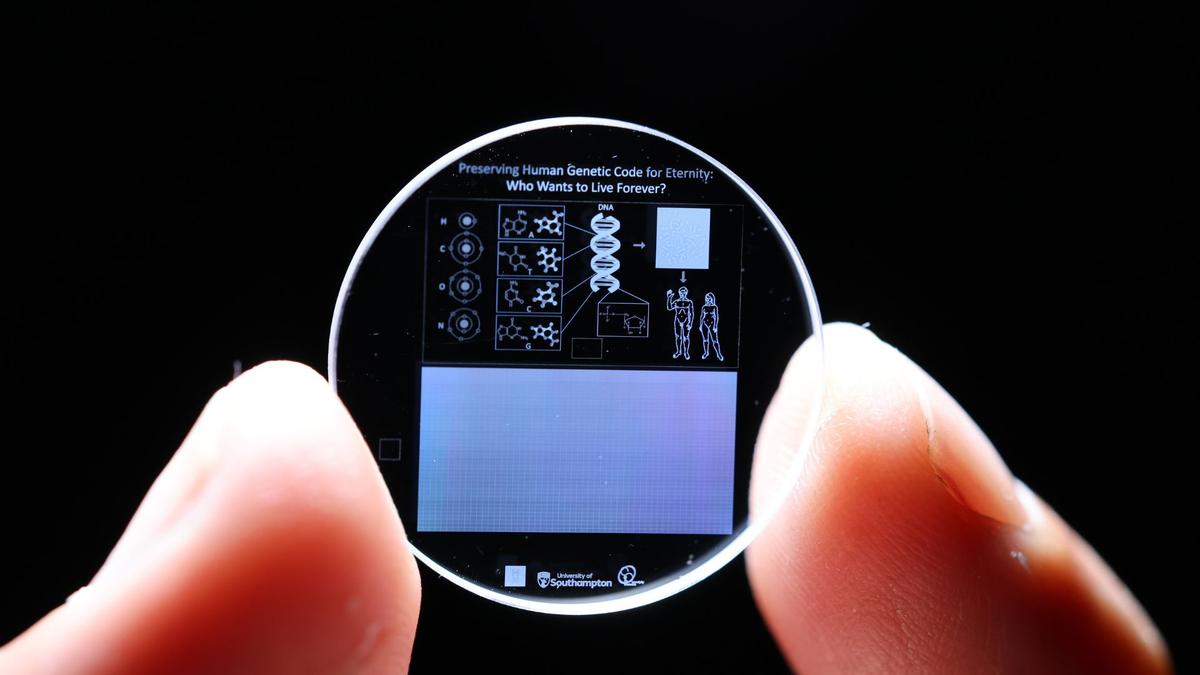
Researchers at the University of Southampton have achieved a groundbreaking milestone by storing the entire human genome on a 5D memory crystal, a technological advancement that could preserve data for billions of years. This development opens the door for future science to potentially revive humanity—or other species—from extinction, should such technology become feasible.
The 5D memory crystal, developed by the University’s Optoelectronics Research Centre (ORC), has the potential to create a permanent repository for the genomic information of endangered species, including plants and animals. “The 5D memory crystal allows us to envision an enduring archive of genomic data,” explained Professor Peter Kazansky, lead researcher in optoelectronics. “In the future, it might be possible to restore complex organisms if the necessary scientific advancements occur.”
Continue reading… “Scientists Store Human Genome on 5D Memory Crystal: A Data Storage Revolution for Billions of Years”