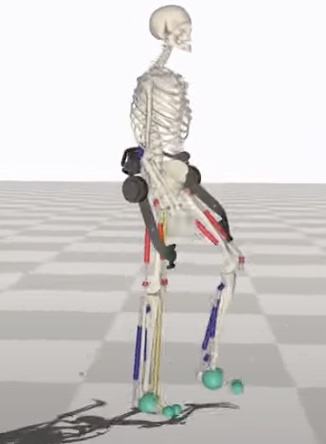
“This work proposes and demonstrates a new machine-learning framework that bridges the gap between simulation and reality to autonomously control wearable robots to improve mobility and health of humans,” says Hao Su, an associate professor of mechanical and aerospace engineering at North Carolina State University.
“Exoskeletons have enormous potential to improve human locomotive performance,” Su, the corresponding author of a new study published in Nature, explains. “However, their development and broad dissemination are limited by the requirement for lengthy human tests and handcrafted control laws.”
Continue reading… “New AI Framework Revolutionizes Wearable Exoskeletons for Enhanced Human Mobility”