An ORNL model using air taxis on the heavily traveled route between downtown Los Angeles and Los Angeles International Airport revealed that fuel consumption is significantly reduced if even a small percentage of commuters switched to air taxis. Credit: Andy Sproles/ORNL, U.S. Dept. of Energy
If air taxis become a viable mode of transportation, Oak Ridge National Laboratory researchers have estimated they could reduce fuel consumption significantly while alleviating traffic congestion.
Air taxis, small aerial vehicles that provide point-to-point, on-demand travel, have proven to save time, but their impact on fuel use remains largely unquantified.
Bill Gates may have his doubts about battery powering heavy vehicles but Elon Musk is claiming Tesla Semi may eventually boast of a four-figure range.
Elon Musk recently highlighted that the upcoming Tesla Semi truck will work towards establishing an on-road range of around 1,000 kilometres, a claim – if proven true – that could contradict Bill Gates’ opinion of heavy battery-powered vehicles being rather unfeasible. The massive per-charge range on the Tesla Semi may be made possible by making use of in-house batteries being developed by the EV-maker.
Musk has been vocal about the range capabilities of its 36,000-kilo capacity vehicle with the initial figure pegged between 480 and 800 kilometres. This figure was ramped up to around 960 kilometres but now, the Tesla CEO is claiming that a 1,000 kilometre-range is also possible and that that could make the Semi a winner in long-haul journeys. “If you want, for long-range trucking, you can take the range up to, we think, easily 800 km, and we see a path over time to 1,000 km range for an heavy duty truck,” he was quoted as saying by Electrek.
“Despite its extensive use in research, clinical implementation is still in its infancy because an effective delivery system is needed to safely and accurately deliver the CRISPR to its target cells,” Peer told Tel Aviv Universitynews. “The delivery system we developed targets the DNA responsible for the cancer cells’ survival. This is an innovative treatment for aggressive cancers that have no effective treatments today.”
The collapse of America’s middle class crushed department stores. Amazon and the pandemic are the final blows.
In a New Jersey suburb seven miles west of Midtown Manhattan, the American Dream is on shaky ground.
The Dream in question isn’t the mythological notion that upward social mobility is within reach for all hardworking Americans. It’s a $5 billion, 3 million-square-foot shopping and entertainment complex in East Rutherford featuring an indoor ski slope, an ice-skating rink, and a Nickelodeon-branded amusement park. The complex finally opened last fall, but it’s now facing huge new challenges.
The development’s complicated 17-year history, marked by ownership changes, false starts, and broken promises, had already put American Dream in a precarious situation. The Covid-19pandemic hitting in March made things much worse. Whether the mall makes it in the long term will hinge in part on how it deals with the collapse of three of the marquee department stores that were to anchor the complex and draw foot traffic — Barneys New York, Lord & Taylor, and Century 21 — which all have gone bankrupt and closed, or are planning to close all their stores in the US.More than half of all mall-based department stores will close by the end of 2021
Scientists have figured out a way to create and cancel magnetic fields from afar.
The method involves running electric current through a special arrangement of wires to create a magnetic field that looks as if it came from another source. This illusion has real applications: Imagine a cancer drug that could be delivered directly to a tumor deep in the body by capsules made of magnetic nanoparticles. It’s not possible to stick a magnet in the tumor to guide the nanoparticles on their journey, but if you could create a magnetic field from outside the body that centered right on that tumor, you could deliver the drug without an invasive procedure. Advertisement
The strength of a magnetic field decreases with distance from the magnet, and a theorem proven in 1842, Earnshaw’s Theorem, says that it’s not possible to create a spot of maximum magnetic field strength in empty space.
“If you cannot have a magnetic field maxima in empty space, it means you cannot create the field of a magnetic source remotely, without placing an actual [magnetic] source at the target location,” said Rosa Mach-Batlle, a physicist at the Istituto Italiano Di Tecnologia Center for Biomolecular Nanotechnologies in Italy who led the new research.
The British industrial designer best-known for his distinctive and much-loved household appliances–vacuum cleaners, hand dryers and hair straighteners–also confirmed long-standing plans to move his global head office from the U.K. to Singapore.
The most likely move for Dyson is further development of the powerful, long-life batteries, intended for its much-hyped but abandoned electric vehicle project that the billionaire was forced to shelve in October last year. Although specifics are yet to be confirmed, Dyson said in a statement today that it will “double” its portfolio of products and enter entirely new fields of innovation including robotics and machine learning by 2025.
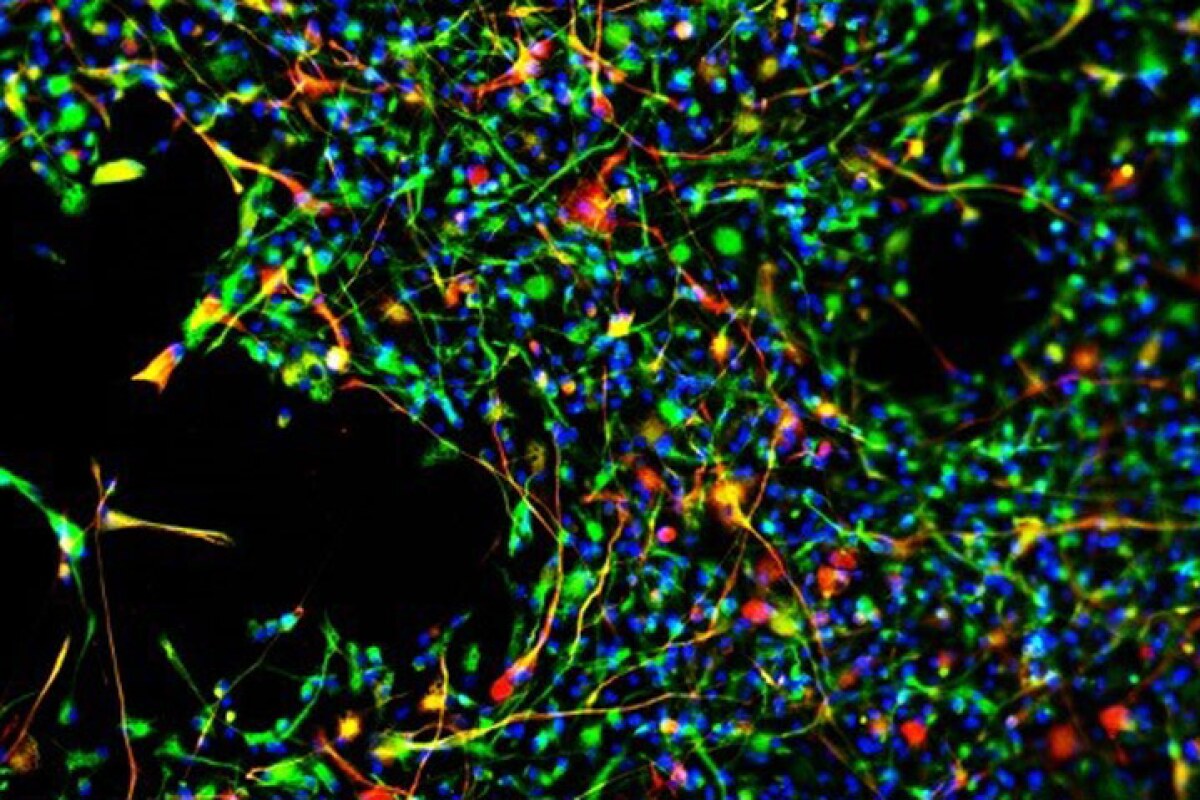
Neural stem cells maturing into brain cells in miceSanford Burnham Prebys Medical Discovery Institute
Researchers have developed a drug that can mimic inflammation signals to lure stem cells to damaged tissue, without causing any further inflammation. The technique could be a boon for regenerative medicine to treat neurological disorders.
Inflammation is the body’s natural response to injury and damage, swelling up to allow better blood flow to the area. It also acts like a “fire alarm” to attract the attention of the immune system to help the healing process, and stem cells are some of the most important responders.
So for the new study, the researchers investigated ways to summon stem cells using inflammation signals without creating further inflammation. The team modified an inflammatory molecule called CXCL12, which had previously been identified as a stem cell attractor. They found that it contains two “pockets” – one that binds to stem cells and one for inflammatory signaling – so they developed a drug that maximizes the binding but minimizes the signaling.
‘This is the only way for DB to be climate neutral in 2050,’ says board member
Deutsche Bahn (DB) has announced it will launch a hydrogen train and accompanying gas station by 2024, in a system set to save 330 tons of carbon emissions in one year.
The German rail company has said it will run a comprehensive year-long trial of the new system, which will replace a diesel engine running between Tübingen, Horb and Pforzheim in the southwest state of Baden-Württemberg.
DB is converting one of its maintenance workshops so that the hydrogen train can be serviced there, alongside developing a new type of filling station that means it will be just as quick to refuel as a diesel train, taking just 15 minutes.
Siemens Mobility is responsible for building the new train, while the Federal Ministry of Transport and Digital Infrastructure (BMVI) is providing the funding.
The hydrogen train should initially be able to run for 600km before needing to be refuelled, roughly equivalent to the distance between London and Edinburgh. Its top speed will be 160km/h.
New research discovered lipogenesis, the process by which digested food is turned into fat by the liver, is switched off by a gut hormone released in the hours following a meal
A fascinating new study, published in the prestigious journal Nature Communications, is shedding light on a previously unknown mechanism by which a hormone released from the gut in the hours after eating effectively switches off the body’s fat production processes. The research also found this regulatory mechanism is defective in obese mice and human patients with non-alcoholic fatty liver disease.
After we eat a meal our body gets down to serious metabolic business. One key process triggered by eating is called lipogenesis, which is when our liver begins converting food into fats for storage across the body.
But then the clouds roll in. The intermittency of the skies has been one of the major challenges for this otherwise valuable renewable energy source. Though we can’t control cloud cover, a new invention has found a way to work around the inconsistency of solar energy by harvesting unseen ultraviolet light that’s present no matter the weather. It could soon be turning the windows and walls of buildings into a rich new source of electricity.
The pandemic is the last straw for some San Francisco-based tech leaders.
Startup investor Keith Rabois recently revealed plans to leave the tech hub in favor of Miami, telling Fortune, “I think San Francisco is just so massively improperly run and managed.” Now Dropbox CEO Drew Houston and Splunk CEO Douglas Merritt reportedly plan to make Austin their new permanent residences, per The Information, and Brex co-founders Henrique Duburgras and Pedro Franceschi have landed in Los Angeles.
Oh, and Palantir co-founder and 8VC Founding Partner Jon Lonsdale has decamped for Austin.
Each has his own motivations—be it the city’s management, the wildfires, the high taxes, or some combination of all of the above—but here’s a notable excerpt from Lonsdale’s op-ed in the Wall Street Journal from earlier this month that explains much of his.
“Politics in the state is in many ways closed off to different ideas. We grew weary of California’s intolerant far left, which would rather demonize opponents than discuss honest differences of opinion.”
Lonsdale’s op-ed tells us more than just the fact that people are leaving the city. While more exits from San Francisco will happen, Lonsdale notes that “few top venture capitalists consider living anywhere other than California and a handful of global financial centers.” While exits from the crowded and troubled city are splashy, it’s worth meditating upon who stays to understand the full impact of the changes on the city.
The state of Nevada has given Motional, the self-driving car company backed by Hyundai and Aptiv, the green light to debut autonomous cars in Las Vegas without a human driver behind the wheel.
Driverless vehicles are still a huge risk. Autonomous technology is still very new, and most cars that claim to be self-driving still need a human behind the wheel to prevent any accidents. Motional’s machines are Level 4 autonomy, which basically means the car can perform the basics of driving, including some safety-critical functions, without driver input. But it’s still not equivalent to a human driver, and the car isn’t capable of predicting and handling every scenario it can run into on the road.
There are only a handful of companies who have debuted driverless cars on public roads, with Waymo and Yandex being the two largest. Motional is looking to come in and further develop the technology while still in its incipient stages.
That doesn’t mean we’re going to see these cars on the road immediately — it just means that, when the company wants to do so, it can.