Why we must teach morality to robots

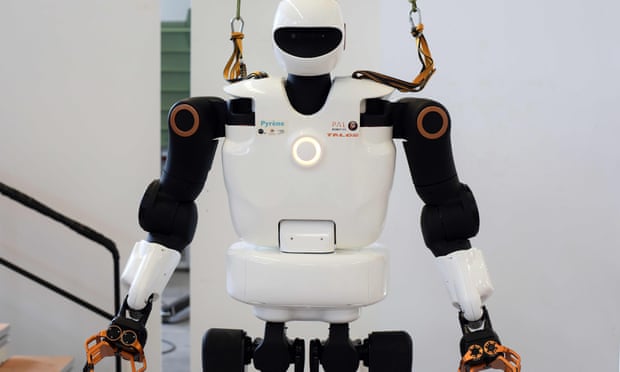
Every week comes a new warning that robots are taking over our jobs. People have become troubled by the question of how robots will learn ethics, if they do take over our work and our planet.

As early on as the 1960s Isaac Asimov came up with the ‘Three Laws of Robotics’ outlining moral rules they should abide by. More recently there has been official guidance from the British Standards Institute advising designers how to create ethical robots, which is meant to avoid them taking over the world.

Continue reading… “Why we must teach morality to robots”

Wikipedia bots act more like humans than expected

Benevolent bots

‘Benevolent bots’ or software robots designed to improve articles on Wikipedia sometimes have online ‘fights’ over content that can continue for years, say scientists who warn that artificial intelligence systems may behave more like humans than expected.

Editing bots on Wikipedia undo vandalism, enforce bans, check spelling, create links and import content automatically, whereas other bots (which are non-editing) can mine data, identify data or identify copyright infringements.

Continue reading… “Wikipedia bots act more like humans than expected”

‘Thousands’ of self-driving Bolt EVs to be deployed next year

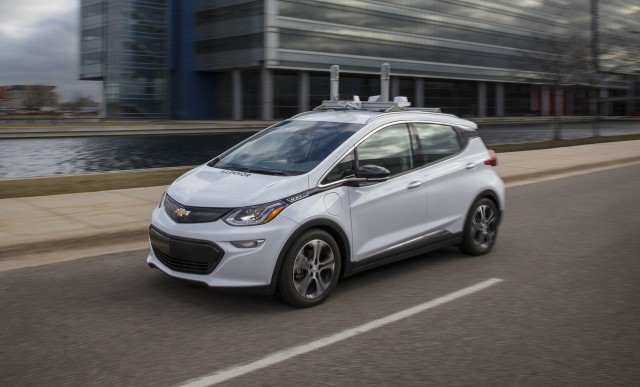
Chevrolet Bolt EV self-driving prototype

Chevrolet Bolt EV self-driving prototype

The 2017 Chevrolet Bolt EV is a crucial car for General Motors in more ways than one.

With an EPA-rated 238-mile range and $37,495 base price (before federal, state, and local incentives), the Bolt EV considered a groundbreaking electric-car game changer.
Continue reading… “‘Thousands’ of self-driving Bolt EVs to be deployed next year”

AI learns to write its own code by stealing from other programs

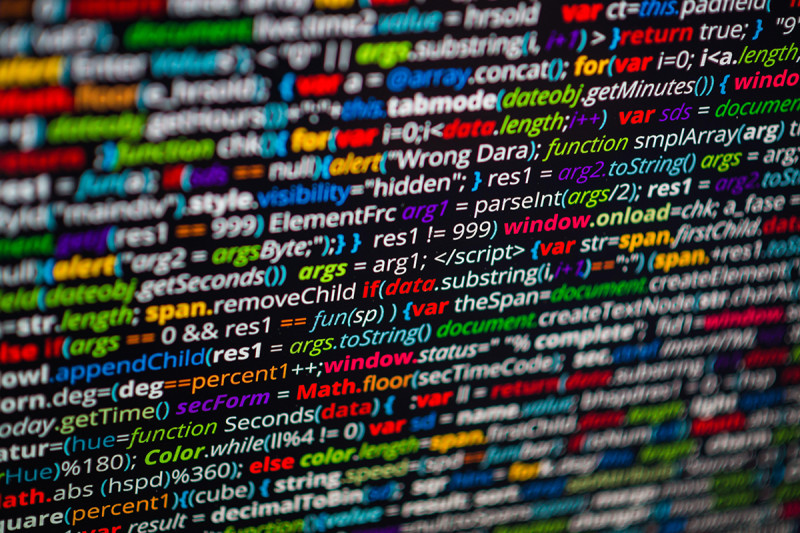
OUT of the way, human, I’ve got this covered. A machine learning system has gained the ability to write its own code.

Created by researchers at Microsoft and the University of Cambridge, the system, called DeepCoder, solved basic challenges of the kind set by programming competitions. This kind of approach could make it much easier for people to build simple programs without knowing how to write code.

Continue reading… “AI learns to write its own code by stealing from other programs”

Artificial synapse bridges the gap to brainier computers

The human brain is nature’s most powerful processor, so it’s not surprising that developing computers that mimic it has been a long-term goal. Neural networks, the artificial intelligence systems that learn in a very human-like way, are the closest models we have, and now Stanford scientists have developed an organic artificial synapse, inching us closer to making computers more efficient learners.

Continue reading… “Artificial synapse bridges the gap to brainier computers”

Ikea just launched a DIY flat-pack indoor garden that can feed a whole lot of people at once

Swedish architects Mads-Ulrik Husum and Sine Lindholm collaborated with Space10, Ikea’s innovation lab, to design a piece of living furniture that can feed quite a few people, from the looks of it.

Called the Growroom, it’s a flat-pack spherical garden that grows plants, veggies, and herbs.

“Standing tall as a spherical garden, it empowers people to grow their own food much more locally in a beautiful and sustainable way,” its designers write on Medium.

Though Space10 launched the Growroom in late 2016, the designers just made the plans open-source. You can download the instruction manual on Space10’s site.

Continue reading… “Ikea just launched a DIY flat-pack indoor garden that can feed a whole lot of people at once”

The Future of Zoos: Challenges Force Zoos to Change in Big Ways

For a mother escorting her kids through the Philadelphia Zoo, it was a close encounter of the ferocious kind. Directly in front of her as she strolled down the zoo’s main walkway was a Siberian tiger, a 400-plus-lb. carnivore capable of tearing apart a wild antelope. But rather than panic, the family laughed. The tiger was out of its lair, but its pathway was at a safe, meshed-in distance from onlookers, and after a few moments of looking around, the tiger moved on.

The tiger’s trail, dubbed Big Cat Crossing, is part of a bigger initiative called Zoo360 that has changed the way humans and animals experience the nation’s oldest zoo. There’s no question the experience is compelling for the humans. On a recent visit, I watched children drop their lunches in awe of white-faced saki monkeys hanging out in the trees. I witnessed one couple stop midconversation when a gorilla lumbered overhead, and saw more than a few families startled by the appearance of a large cat that seemed eerily close to them. But the bigger impact of Zoo360, says its chief operating officer, Andrew Baker, may be its effort to transform the experience of animals in captivity.

Continue reading… “The Future of Zoos: Challenges Force Zoos to Change in Big Ways”

Humans Can Now “Print” Genetic Code and Engineer Life

We have learned how to manipulate the code of life. Why this hasn’t received more attention is beyond me.

Synthetic Biology is a multidisciplinary field that often defies definition. Yet despite its complexity, it is a remarkably easy field to apply once you’ve learned the science behind it. From a computer, you can input your desired genetic sequence, print it out, glue it together, put it into a cell and then watch whatever you have created sprout.

Continue reading… “Humans Can Now “Print” Genetic Code and Engineer Life”

Do Robots and AI Deserve Rights?

When it comes to robot-human relations, the conversation typically centers on the welfare of the sentient. Science fiction paints us as petrified by our own creations; fears of a bot planet have influenced everything from Asimov’s “Laws of Robotics” to HAL 9000’s homicidal impulses to Skynet’s global genocide.

These human-centric anxieties are understandable. However, as our assorted bots and bits gain skills and personalities, should they be afforded some form of protection from us? It’s a question people are starting to seriously ponder.

Continue reading… “Do Robots and AI Deserve Rights?”

Now You Can Feel Wind and Temperature While in Virtual Reality

Realistic visuals and audio are essential to shaping an immersive virtual reality (VR) experience. But these researchers from the National University of Singapore believe VR shouldn’t just cater to sight and sound. For the ultimate VR experience, other senses should come into play as well.

Last year, Nimesha Ranasinghe and his team demonstrated how electrodes can be used to add a sense of taste to VR. Their latest accessory, Ambiotherm, adds another element of realism to the experience: atmosphere.

Continue reading… “Now You Can Feel Wind and Temperature While in Virtual Reality”

Living On Mars: First City on Red Planet Planned by United Arab Emirates in ‘Mars 2117’ Project

The world has set its sights on Mars — not just to visit, but to stay. Private organizations and governments have made it their mission to get to the Red Planet, and the United Arab Emirates wants to be first. The UAE said it planned to build the first city on Mars in 100 years. (Pics)

Continue reading… “Living On Mars: First City on Red Planet Planned by United Arab Emirates in ‘Mars 2117’ Project”

What software engineers are making around the world right now

A new study published by the data science team at Hired, a jobs marketplace for tech workers, shows why it’s becoming harder for software engineers to afford life in San Francisco, even while they make more money than their peers elsewhere in the U.S. and the world.

Based on 280,000 interview requests and job offers provided by more than 5,000 companies to 45,000 job seekers on Hired’s platform, the company’s data team has determined that the average salary for a software engineer in the Bay Area is $134,000. That’s more than software engineers anywhere in the country, through Seattle trails closely behind, paying engineers an average of $126,000. In other tech hubs, including Boston, Austin, L.A., New York, and Washington, D.C., software engineers are paid on average between $110,000 and $120,000.

Yet higher salaries don’t mean much with jaw-dropping rents and other soaring expenses associated with life in “Silicon Valley,” and San Francisco more specifically. Indeed, factoring in the cost of living, San Francisco is now one of the lowest-paying cities for software engineers, according to Hired’s lead data scientist, Jessica Kirkpatrick. According to her analysis, the $110,000 that an Austin engineer makes is the rough equivalent of being paid $198,000 in the Bay Area, considering how much further each dollar goes in the sprawling capital of Texas. The same is true of Melbourne, Australia, where software engineers are paid a comparatively low $107,000 on average, but who are making the equivalent of $150,000 in San Francisco.

Continue reading… “What software engineers are making around the world right now”

Discover the Hidden Patterns of Tomorrow with Futurist Thomas Frey
Unlock Your Potential, Ignite Your Success.

By delving into the futuring techniques of Futurist Thomas Frey, you’ll embark on an enlightening journey.

Learn More about this exciting program.