Voyant Photonics Unveils Affordable Carbon FMCW Lidar Sensor for Enhanced Machine Perception

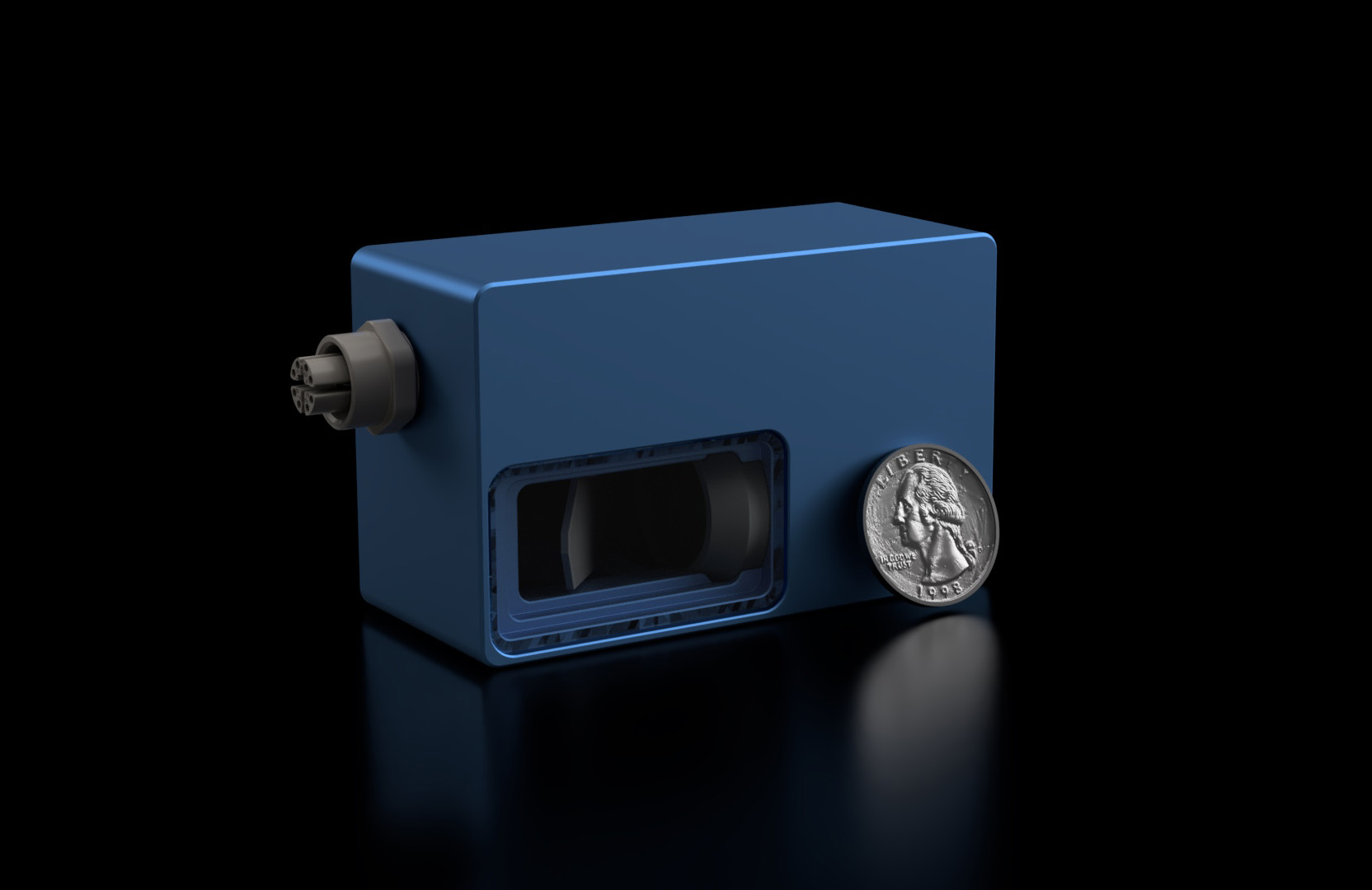
Voyant Photonics has officially launched its Carbon FMCW lidar sensor, a cutting-edge solution designed to provide affordable, high-performance lidar on a chip. This new sensor, developed for applications in industrial automation, robotics, and security, offers solid-state beam steering and high-resolution, millimeter-precision detection. The company aims to push the boundaries of machine perception with a sensor that delivers advanced capabilities at a disruptive price point.

At the heart of the Carbon sensor is a silicon photonic chip that is small enough to fit on a fingernail. Despite its compact size, the Carbon sensor offers high-resolution, real-time object detection and the ability to perform static and dynamic segmentation at distances of up to 200 meters (656 feet). Voyant integrated optics directly onto the lidar photonic integrated circuit (PIC), which allows for better performance at a fraction of the cost of traditional lidar technologies.

Continue reading… “Voyant Photonics Unveils Affordable Carbon FMCW Lidar Sensor for Enhanced Machine Perception”

Preparing for an Aging World: A Global Survey on Readiness for Population Aging

A comprehensive survey across 143 countries has highlighted how well various nations are equipped to support the world’s rapidly aging population, particularly in terms of well-being, equity, and security. As the global population ages, some countries are more prepared than others to handle the challenges and opportunities this demographic shift presents.

The aging of the world’s population is largely seen as a success story, reflecting advances in healthcare, medicine, and public health. A look back at 1950 reveals that the chances of a baby born in a high-income country surviving to 90 were just 4.8%. Today, that number has risen to 26.7%, with projections estimating that 50% of babies born today in high-income countries will reach that milestone by 2060. But with this longer life expectancy comes the question: Is the world socially and economically ready for an aging population?

Continue reading… “Preparing for an Aging World: A Global Survey on Readiness for Population Aging”

Revolutionizing Communication: Hearview Glasses Empower the Deaf Community

Hearview glasses are a groundbreaking piece of technology designed to help those with hearing impairments stay connected in real-time. The glasses connect wirelessly to a smartphone, which runs the Hearview app. This app listens to conversations around the user, transcribes speech into text using artificial intelligence, and displays the transcribed words on a tiny, see-through screen built into the glasses.

The system supports 13 languages and, while there is a slight delay in transcription, this doesn’t pose a major issue, especially if the user cannot hear the spoken words directly. For many, the real-time text display offers a smooth and accessible way to engage in conversations.

Continue reading… “Revolutionizing Communication: Hearview Glasses Empower the Deaf Community”

AVL RACETECH Unveils Groundbreaking Hydrogen-Powered Internal Combustion Engine for Motorsport

In 2022, AVL RACETECH, the motorsport division of AVL, unveiled a revolutionary prototype—a hydrogen-powered internal combustion engine (H₂-ICE) that is set to change the future of racing and automotive technology. This 2-liter turbocharged engine, designed entirely in-house by AVL RACETECH, marks a significant leap forward in motorsport innovation. The engine not only runs on hydrogen but also incorporates advanced water injection technology, pushing the boundaries of performance while contributing to the shift toward sustainable energy solutions in racing.

Unlike conventional hydrogen engines that operate with a lean-burn approach—often limiting their performance—AVL RACETECH’s hydrogen internal combustion engine uses a slightly lean-burn technique. This results in a higher power output, achieving an impressive 150 kW per liter. This performance level places the engine on par with high-performance racing engines that are close to production specifications, showcasing the potential of hydrogen as a viable fuel for motorsport.

Continue reading… “AVL RACETECH Unveils Groundbreaking Hydrogen-Powered Internal Combustion Engine for Motorsport”

kayama University Develops Nanodiamond Sensors for Advanced Quantum Sensing and Bioimaging

Researchers at Okayama University in Japan have achieved a major breakthrough by developing nanodiamond sensors with the potential to revolutionize quantum sensing and bioimaging applications. These advanced sensors could enable highly detailed and accurate images of biological systems, significantly enhancing disease detection and treatment. Additionally, they could allow scientists to detect minute atomic and molecular changes that conventional sensors cannot identify, offering new possibilities for scientific exploration.

“Both quantum sensing and bioimaging have the potential to transform healthcare, technology, and environmental management, improving the quality of life and offering sustainable solutions to future challenges,” said Masazumi Fujiwara, an associate professor at Okayama University and one of the researchers involved in the study.

Continue reading… “kayama University Develops Nanodiamond Sensors for Advanced Quantum Sensing and Bioimaging”

CATL Unveils Revolutionary Bedrock Chassis with Industry-Leading Safety Features

CATL, a Chinese leader in the battery and electric vehicle (EV) technology sector, has introduced its groundbreaking Bedrock Chassis, an ultra-safe EV platform that has passed rigorous safety tests, setting new benchmarks for automotive safety. This innovative chassis is capable of withstanding high-speed impacts and extreme crash conditions without compromising on safety, performance, or reliability.

The Bedrock Chassis has proven its resilience by successfully passing the world’s most challenging safety test: a frontal impact test at speeds of up to 120 km/h (75 mph), without the risk of fire, explosion, or thermal runaway. CATL claims this achievement redefines the safety standards for the industry, with the Bedrock Chassis offering unparalleled protection in all scenarios and across a wide range of speeds.

Continue reading… “CATL Unveils Revolutionary Bedrock Chassis with Industry-Leading Safety Features”

Breakthrough in Magnetic Materials: In-Plane Magnetic Fields Induce Anomalous Hall Effect in EuCd₂Sb₂ Films

Researchers from the Institute of Science Tokyo have made a groundbreaking discovery: in-plane magnetic fields induce an anomalous Hall effect in EuCd₂Sb₂ films. By studying how these fields alter the material’s electronic structure, the team uncovered a significant in-plane anomalous Hall effect. This finding opens new avenues for controlling electronic transport in magnetic fields, with exciting potential applications in magnetic sensors.

The Hall effect, a well-known phenomenon in materials science, occurs when an electric current in a material is subjected to a magnetic field, creating a voltage that is perpendicular to both the current and the field. While much research has been conducted on the Hall effect under out-of-plane magnetic fields, the effects of in-plane magnetic fields have been less explored. Recently, however, in-plane magnetic fields have garnered increasing attention due to their potential to unlock new material behaviors, particularly in materials with unique electronic band structures, like EuCd₂Sb₂.

Continue reading… “Breakthrough in Magnetic Materials: In-Plane Magnetic Fields Induce Anomalous Hall Effect in EuCd₂Sb₂ Films”

The Design of ZMQ-1

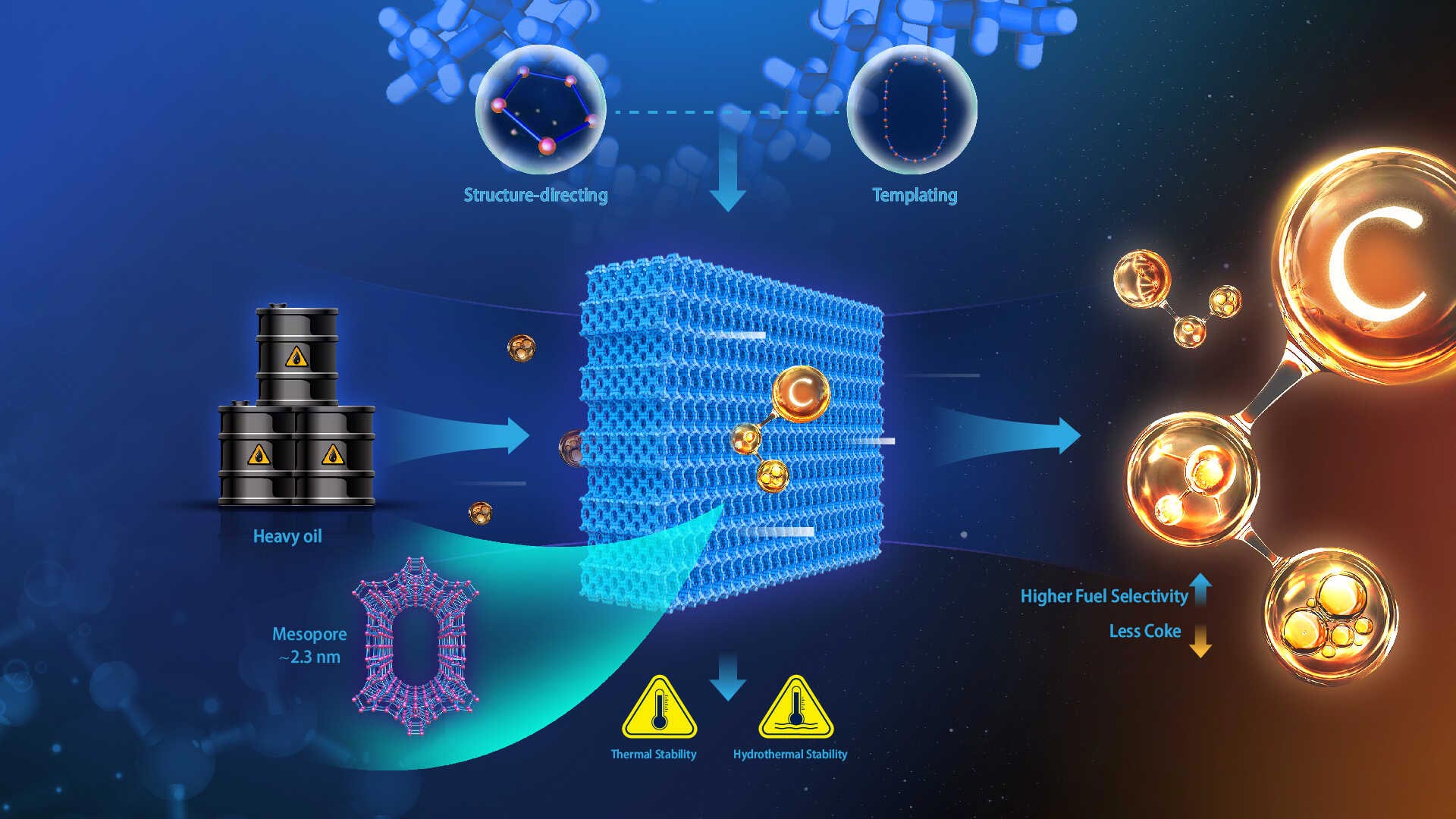
Zeolites are crystalline materials widely used in applications like ion exchange, adsorption, and catalysis. However, their microporous structure restricts their ability to process larger molecules. To overcome this challenge, researchers have developed ZMQ-1, a zeolite that incorporates intrinsic mesopores—pores larger than 20 Å—while preserving both stability and acidity.

Previous attempts to create mesoporous zeolites struggled with issues like structural instability and reduced acidity, rendering them unsuitable for industrial use. ZMQ-1, however, presents a solution to these problems. The researchers utilized a phosphonium-based organic structure-directing agent (OSDA) to form the mesoporous framework. Unlike traditional ammonium-based OSDAs, phosphonium-based OSDAs offer a stronger positive charge and greater stability, which allows for the synthesis of more robust mesoporous structures. The crystallization of ZMQ-1 was accomplished through hydrothermal synthesis with tunable silicon-to-aluminum (Si/Al) ratios, enabling the zeolite to be customized for specific applications.

Continue reading… “The Design of ZMQ-1”

Breakthrough in Quantum Sensing: Nanodiamonds with Exceptional Spin Properties Show Promise for Bioimaging and Biosensing

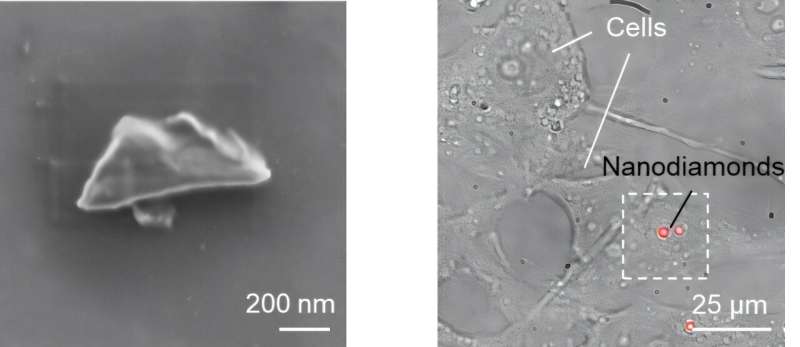
Quantum sensing is an emerging field that leverages the unique quantum properties of particles, such as superposition, entanglement, and spin, to detect subtle changes in physical, chemical, or biological systems. A particularly promising class of quantum sensors is nanodiamonds (NDs) equipped with nitrogen-vacancy (NV) centers, which offer high sensitivity to various environmental factors, including magnetic fields, electric fields, and temperature. These NV centers, created by replacing a carbon atom with nitrogen near a lattice vacancy in a diamond structure, emit photons that preserve stable spin information. By using optically detected magnetic resonance (ODMR), researchers can detect changes in these spin states, making NDs ideal for applications in quantum biosensing.

In a groundbreaking study published on December 16, 2024, in ACS Nano, scientists from Okayama University in Japan have developed a new class of nanodiamond sensors that are not only bright enough for bioimaging but also exhibit spin properties comparable to bulk diamonds. The study, led by Research Professor Masazumi Fujiwara from Okayama University, in collaboration with Sumitomo Electric Company and the National Institutes for Quantum Science and Technology, marks a significant advancement in the field of quantum sensing. “This is the first demonstration of quantum-grade NDs with exceptionally high-quality spins, a long-awaited breakthrough in the field,” says Prof. Fujiwara. “These NDs possess properties that have been highly sought after for quantum biosensing and other advanced applications.”

Continue reading… “Breakthrough in Quantum Sensing: Nanodiamonds with Exceptional Spin Properties Show Promise for Bioimaging and Biosensing”

Cyanobacteria Pave the Way for Sustainable Plastics Production Using CO2

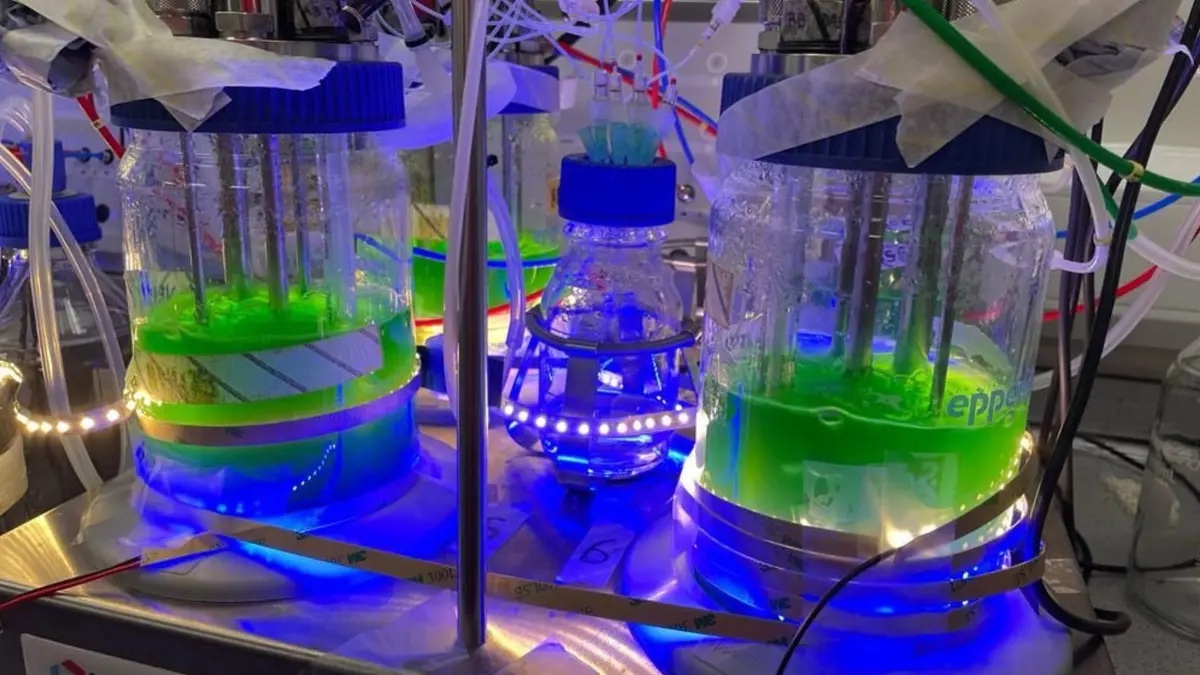
Cyanobacteria, also known as blue-green algae, have emerged as a promising tool in the development of sustainable plastics, such as Perspex, by producing citramalate—a key component in plastic production. Researchers from the University of Manchester have demonstrated that these photosynthetic microorganisms can convert CO2, a major greenhouse gas, into valuable materials. This breakthrough could accelerate the creation of eco-friendly plastic alternatives traditionally made from fossil fuel-derived chemicals, supporting the transition to a circular bioeconomy that reduces waste and carbon emissions.

Cyanobacteria are tiny organisms that harness sunlight to convert CO2 into organic matter, offering a sustainable method to produce valuable products without relying on agricultural resources like sugar or corn. Despite their potential, the slow growth and limited efficiency of cyanobacteria have hindered their large-scale industrial use.

Continue reading… “Cyanobacteria Pave the Way for Sustainable Plastics Production Using CO2”

Groundbreaking Quantum Communication Discovery Could Revolutionize Network Infrastructure

Imagine trying to float a soap bubble through a sandstorm without it popping. This is a rough analogy for the extraordinary achievement of Northwestern University researchers in the field of quantum communications. Instead of a delicate soap bubble, these scientists have successfully protected individual particles of light—carrying quantum information—from being overwhelmed by conventional internet traffic.

For years, experts believed that quantum communications would require a completely separate infrastructure, isolated from the busy highways of traditional internet traffic. However, these researchers have proven otherwise, demonstrating that quantum and classical signals can coexist on the same fiber optic cables without disrupting each other. This breakthrough is poised to accelerate the development of quantum networks, offering a more practical and cost-effective route for the future of communication.

Continue reading… “Groundbreaking Quantum Communication Discovery Could Revolutionize Network Infrastructure”

Innovative Drug Delivery System Uses Metal-Biomolecule Networks for Safer, More Effective Therapies

A team of researchers from the University of Melbourne’s Caruso Nanoengineering Group has developed an innovative drug delivery system with significant potential to revolutionize drug development. The new system, known as a metal–biomolecule network (MBN), consists of a coordination network made up entirely of metal ions and biomolecules, eliminating the need for complex drug “carriers.” This breakthrough could offer a simpler, more efficient, and safer alternative for a wide range of biomedical applications.

Published in Science Advances, the research was led by Melbourne Laureate Professor and NHMRC Leadership Fellow Frank Caruso, from the Department of Chemical Engineering, along with Research Fellows Dr. Wanjun Xu and Dr. Zhixing Lin, who share first authorship. The MBN nanoparticles are created by combining non-toxic metal ions (such as calcium and iron, which are naturally absorbed through the diet) with phosphonate biomolecules like DNA. These nanoparticles are chemically and metabolically stable, and have demonstrated antiviral, antibacterial, antifungal, anti-inflammatory, and anti-cancer properties.

Continue reading… “Innovative Drug Delivery System Uses Metal-Biomolecule Networks for Safer, More Effective Therapies”