The Hanboost C1 Wireless Ultrasonic Cutter: Precision Cutting at Your Fingertips

From soldering guns to smartphone microscopes, there are certain gadgets that immediately spark our curiosity and make us wonder how we ever lived without them. The Hanboost C1 wireless ultrasonic cutter is one of those devices that falls squarely into this category. A versatile tool with a range of applications, it’s not just aimed at DIY makers and crafters but appeals to a broader audience. Whether you’re a sculptor, 3D printer, or model builder, this gadget promises to elevate your precision cutting game with ease.

The Hanboost C1 can slice through an impressive range of materials — including wood, plastic, leather, rubber, and paper — with the utmost precision. Operating at a remarkable 40,000 vibrations per second, it cuts silently, gliding through your work without the usual tearing, scratching, or scoring you might encounter with traditional tools. The result? Clean, smooth cuts every time.

Continue reading… “The Hanboost C1 Wireless Ultrasonic Cutter: Precision Cutting at Your Fingertips”

KIMS Scientists Develop World’s First Ultra-Thin Composite Material to Absorb Over 99% of Electromagnetic Waves

A team of scientists from the Korea Institute of Materials Science (KIMS) has achieved a groundbreaking feat by developing the world’s first ultra-thin composite material capable of absorbing more than 99% of electromagnetic waves across multiple frequency bands, including 5G/6G, WiFi, and autonomous vehicle radar. This innovative material, less than 0.5mm thick, offers an extraordinary combination of low reflectance (less than 1%) and high absorbance (over 99%) across three critical frequency bands.

Electromagnetic waves emitted by electronic components can cause significant interference, degrading the performance of nearby devices. Electromagnetic shielding materials are typically used to prevent this interference, but traditional shielding methods are often not efficient enough. Conventional materials tend to reflect over 90% of electromagnetic waves, with actual absorbance levels often as low as 10%. Additionally, most materials with higher absorbance are limited to absorbing waves in a single frequency band, making them unsuitable for multi-functional applications.

Continue reading… “KIMS Scientists Develop World’s First Ultra-Thin Composite Material to Absorb Over 99% of Electromagnetic Waves”

Innovative Solutions in Seawater Desalination: OceanWell’s Modular Deep-Sea Technology

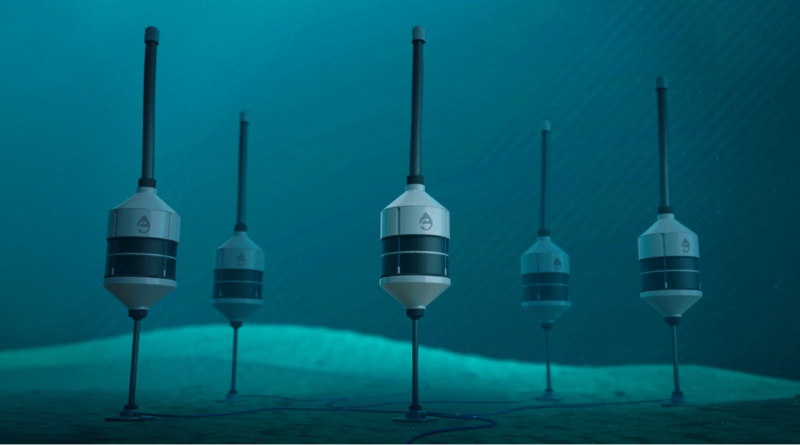
Seawater desalination systems have traditionally been large, energy-intensive, and costly structures occupying valuable coastal real estate. Yet, as freshwater resources are increasingly strained, the demand for sustainable desalination solutions continues to rise. Addressing this challenge, California-based startup OceanWell has developed a groundbreaking approach: modular desalination pods positioned deep underwater.

The desalination industry has made strides in energy efficiency and cost reduction over recent years, bolstered by the integration of renewable energy. However, the construction of large-scale desalination facilities remains resource-intensive and controversial. For example, a proposed $1.4 billion, 50-million-gallon-per-day facility in Huntington Beach, California, faced two decades of debate before the California Coastal Commission ultimately rejected it in 2022. The project’s environmental impact, power demands, and vulnerability to sea-level rise highlighted the challenges of traditional desalination efforts.

Continue reading… “Innovative Solutions in Seawater Desalination: OceanWell’s Modular Deep-Sea Technology”

Unlocking Urban Design: How Neuroscience Can Shape Sustainable Cities

A groundbreaking study led by Dar Meshi, an associate professor at Michigan State University, has revealed how the brain’s reward system can guide urban planning to foster sustainable and livable cities. Published in Nature Cities, the research utilizes insights from neuroscience to understand the relationship between human behavior and urban environments.

Urban areas often provide better access to education, healthcare, and cultural opportunities, contributing to a higher quality of life. However, rapid urbanization introduces challenges such as inadequate green spaces, traffic noise, and social inequities, underscoring the need for sustainable development strategies. Meshi’s research taps into the emerging field of neurourbanism—the study of how urban environments influence the brain—to address these challenges.

Continue reading… “Unlocking Urban Design: How Neuroscience Can Shape Sustainable Cities”

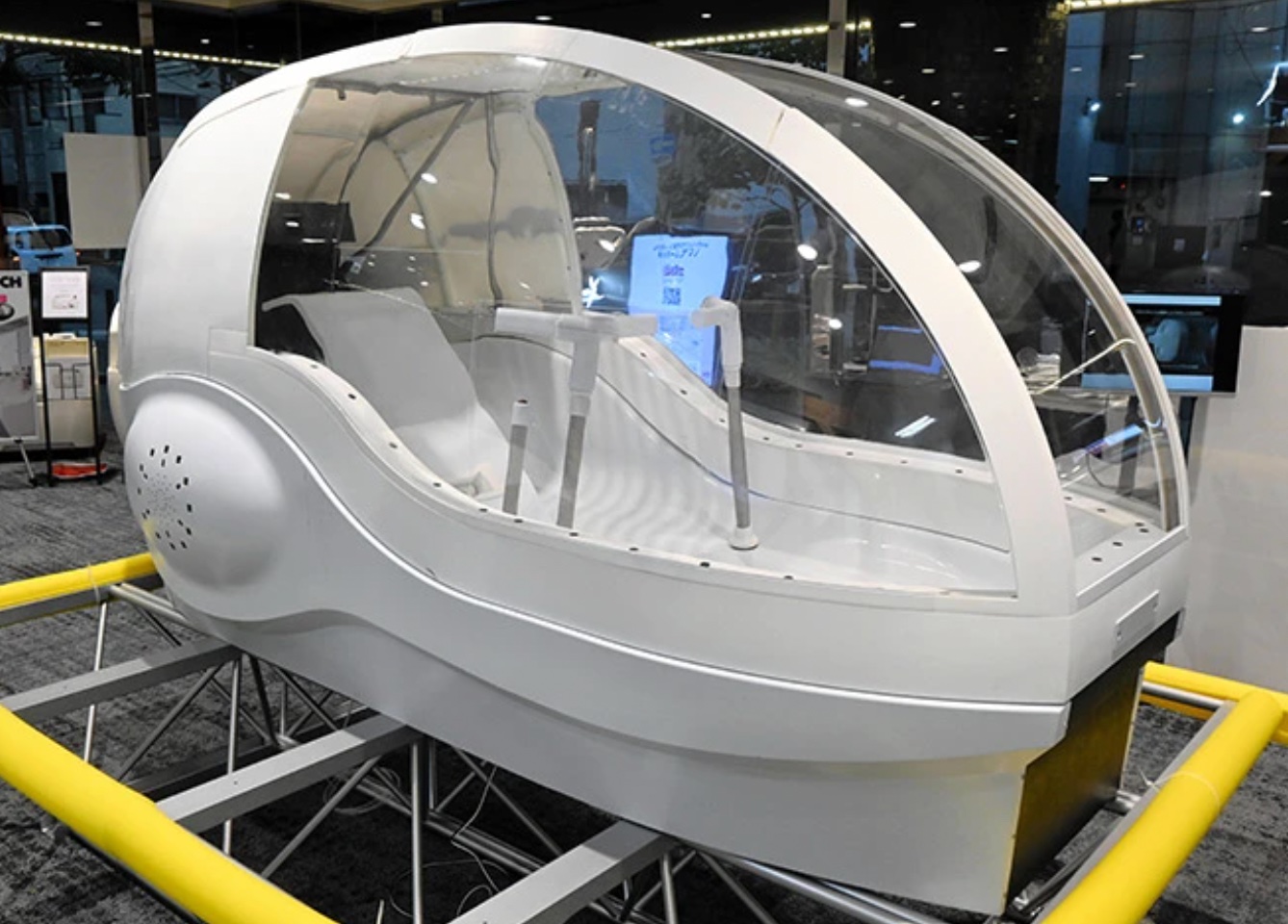
The Human Washing Machine: Japan’s Futuristic Approach to Relaxation

Move over cold plunge pools—the latest innovation in wellness might soon be a human washing machine.

An Osaka-based company called Science, known for its shower head technology, has developed a groundbreaking contraption that combines cleansing with relaxation. Resembling a cockpit, the machine immerses bathers in water while monitoring their biological data. Sensors measure vital signs like pulse, ensuring the water temperature is perfectly tailored to each individual. To enhance the experience, the device projects soothing images on the inside of its transparent cover, promoting a sense of calm and refreshment.

Continue reading… “The Human Washing Machine: Japan’s Futuristic Approach to Relaxation”

Power from Afar: Raytheon’s Wireless Energy Beaming System for the US Army

The US Army is taking a bold step toward revolutionizing battlefield logistics by awarding Raytheon a contract to develop a directed energy wireless power system. This innovative technology aims to eliminate the reliance on fuel and battery supply chains by transmitting energy directly where it’s needed using high-energy microwave beams.

Military logistics are a daunting challenge, with every soldier representing the end of a long supply chain. Fuel, batteries, food, and ammunition are essential but difficult to maintain in forward positions. Modern soldiers carry up to 140 pounds of gear, much of it consisting of batteries for electronic equipment. Heavy and cumbersome, these batteries are often discarded as quickly as possible.

Continue reading… “Power from Afar: Raytheon’s Wireless Energy Beaming System for the US Army”

The Boring Company’s Prufrock: A Tunneling Revolution

Elon Musk has spotlighted a groundbreaking innovation from The Boring Company, his tunneling startup, that could redefine how tunnels are constructed. Musk revealed that the company’s latest tunnel boring machines (TBMs) can begin excavation without prior site preparation—a significant leap forward in tunneling technology.

Earlier this month, The Boring Company shared an image of its Prufrock-3 TBM undergoing final checks on “The Monster,” a specialized machine designed to launch and retrieve Prufrock. With The Monster’s assistance, the company can rapidly initiate tunnel excavation, drastically reducing project timelines.

Continue reading… “The Boring Company’s Prufrock: A Tunneling Revolution”

China Unveils World’s Most Advanced Hypergravity Machine

China has achieved a groundbreaking milestone in scientific research with the launch of the Centrifugal Hypergravity and Interdisciplinary Experiment Facility (CHIEF)—the world’s most advanced hypergravity system. Located in Hangzhou, Zhejiang province, CHIEF boasts the largest and most powerful hypergravity centrifuge ever constructed.

When fully operational, the facility will generate gravitational forces thousands of times stronger than Earth’s gravity (1g), enabling revolutionary studies under extreme conditions. Scientists anticipate transformative applications in fields such as aerospace, energy, engineering, and material sciences.

Continue reading… “China Unveils World’s Most Advanced Hypergravity Machine”

Illuminating the Future: Scientists Create Photonic Time Crystals to Amplify Light

Researchers have achieved a groundbreaking milestone by designing realistic photonic time crystals—extraordinary materials that can exponentially amplify light. This innovation, driven by an international team of scientists, paves the way for transformative applications in communication, imaging, and sensing technologies, promising faster, more compact lasers and advanced optical devices.

“This work could lead to the first experimental realization of photonic time crystals, propelling them into practical applications and potentially transforming industries,” explains Assistant Professor Viktar Asadchy from Aalto University in Finland. “From high-efficiency light amplifiers and advanced sensors to cutting-edge lasers, this research redefines our understanding of light-matter interactions.”

Continue reading… “Illuminating the Future: Scientists Create Photonic Time Crystals to Amplify Light”

Rethinking Sleep Research: The Critical Role of Sex Differences

Biological factors may play a larger role in sleep differences than previously understood, according to new findings that could reshape the landscape of biomedical research. The study highlights a significant oversight in animal research—failure to account for sex differences in sleep behavior—which may lead to flawed data interpretations.

“Essentially, we found that the most commonly used mouse strain in biomedical research has sex-specific sleep behavior, and a failure to properly account for these differences can easily skew results,” said Grant Mannino, the study’s first author and a psychology and neuroscience graduate.

Continue reading… “Rethinking Sleep Research: The Critical Role of Sex Differences”

The Conit Runner: A Robot Revolutionizing Concrete Construction

When most people think of freshly poured concrete, they likely imagine a smooth, flawless surface left to dry. But a new wheeled robot is challenging that convention by driving right over wet concrete, gouging grooves into the material to strengthen it—while also reducing construction costs.

In traditional concrete construction, rebar is used to reinforce the material, providing additional strength to withstand tension. However, rebar is not only expensive but also adds significant weight to the structure. To mitigate the need for so much rebar, construction workers often manually add grooves to the surface of each layer while the concrete is still wet. These grooves increase the surface area for bonding with the next layer of concrete, which improves the shear strength at the interface, allowing for less rebar to be used.

Continue reading… “The Conit Runner: A Robot Revolutionizing Concrete Construction”

Groundbreaking Solar-Powered Tissues Could Transform Lab-Grown Meat and Organ Production

A team of researchers in Japan has made an astonishing breakthrough that could revolutionize the fields of regenerative medicine and lab-grown meat. In a recent study published in Proceedings of the Japan Academy, Series B, the scientists have successfully created solar-powered tissues, a development that could significantly enhance the production of lab-grown organs and meat.

The groundbreaking research centers on the creation of hybrid plant-animal cells capable of harnessing energy from sunlight, just like plants. While plants use photosynthesis to convert sunlight into energy, animals rely on mitochondria for energy production. By combining plant cells with animal cells—specifically, cells taken from hamsters—the team aimed to create a new type of tissue that could produce energy from sunlight.

Continue reading… “Groundbreaking Solar-Powered Tissues Could Transform Lab-Grown Meat and Organ Production”