Revolutionary Plasma Water Technology: A Sustainable Solution for Global Sanitation and Agriculture

In a groundbreaking development, South Korean company Palsoo has introduced a portable sterilization system that transforms ordinary tap water into a powerful sanitizing agent. Unveiled at the CES 2025 Global Media Meet-up in Seoul, this innovative technology offers a sustainable solution to critical challenges in sanitation, agriculture, and public health.

The device harnesses the power of plasma activation and solar charging, creating a unique system that can eliminate 99.8% of airborne bacteria and viruses. CEO Jang Palsoo demonstrated how the technology generates Plasma Activated Water (PAW), a remarkable substance with significant antimicrobial properties that can be used in diverse environments, particularly in regions with limited infrastructure and electricity.

Continue reading… “Revolutionary Plasma Water Technology: A Sustainable Solution for Global Sanitation and Agriculture”


Water from Thin Air: Innovative Technologies Solving Global Water Scarcity

Water is essential for human survival, yet access to safe, clean drinking water remains a critical global challenge. In the United States, water infrastructure faces unprecedented challenges, with contamination, aging systems, and environmental pressures threatening public health and well-being.

The scale of water insecurity in the United States is alarming. The Environmental Protection Agency reports that 40 percent of community water systems have documented quality violations. Nearly 15 percent of Americans depend on well water, with half of these private sources failing to meet basic quality standards. California presents a stark example, with 450,000 residents served by water systems that do not comply with the Safe Drinking Water Act.

Continue reading… “Water from Thin Air: Innovative Technologies Solving Global Water Scarcity”

Breakthrough: Self-Healing, Light-Emitting Fiber Revolutionizes Smart Technology

Researchers at the National University of Singapore (NUS) have developed a groundbreaking fiber technology that could transform the landscape of soft robotics, wearable electronics, and interactive displays. The innovative “SHINE” (hydrogel-clad ionotronic nickel-core electroluminescent) fiber represents a remarkable convergence of multiple cutting-edge technological capabilities.

The SHINE fiber emerges as an extraordinary technological achievement, simultaneously offering self-healing properties, bright light emission, magnetic manipulation, wireless powering, and extreme flexibility. Led by Associate Professor Benjamin Tee, the interdisciplinary research team from NUS’s Department of Materials Science and Engineering and Institute for Health Innovation & Technology has created a technological marvel that comprehensively addresses significant limitations in existing light-emitting fibers.

Continue reading… “Breakthrough: Self-Healing, Light-Emitting Fiber Revolutionizes Smart Technology”

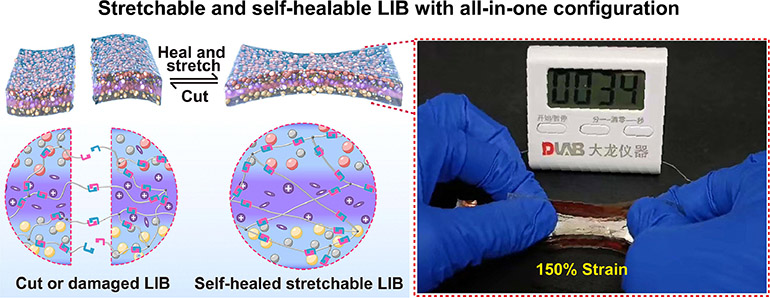
Breakthrough in Stretchable Lithium-Ion Batteries: A Self-Healing Power Source for Wearable Electronics

Stretchable lithium-ion batteries (LIBs) have emerged as a promising solution for powering wearable and flexible electronic devices, including electronic skin, soft robotics, and wearable smartphones. A new development in this field now offers a significant improvement: self-healing stretchable LIBs, which not only extend the lifespan of the battery but also enhance its reliability.

In a groundbreaking study published in the KeAi Journal of Supramolecular Materials, researchers from Jilin University in China have unveiled an innovative approach to fabricating stretchable and self-healing LIBs in an all-in-one configuration. This new strategy could revolutionize the design and performance of batteries for flexible electronics.

Continue reading… “Breakthrough in Stretchable Lithium-Ion Batteries: A Self-Healing Power Source for Wearable Electronics”

Revolutionary Carbon-14 Diamond Battery Promises Thousands of Years of Sustainable Power

In a groundbreaking development, scientists from the University of Bristol and the UK Atomic Energy Authority (UKAEA) have unveiled the world’s first carbon-14 diamond battery. This innovative energy source holds the potential to power devices for millennia, providing a sustainable and highly efficient solution for a wide range of applications.

The carbon-14 diamond battery harnesses the radioactive decay of carbon-14, a naturally occurring isotope commonly used in radiocarbon dating. This isotope emits short-range radiation, which is captured by a diamond casing—a material known for its strength and durability. The radiation is safely absorbed by the diamond structure, which generates electricity in a process similar to how solar panels convert light into power. However, instead of relying on sunlight, the diamond battery generates energy through fast-moving electrons produced by radioactive decay.

Continue reading… “Revolutionary Carbon-14 Diamond Battery Promises Thousands of Years of Sustainable Power”

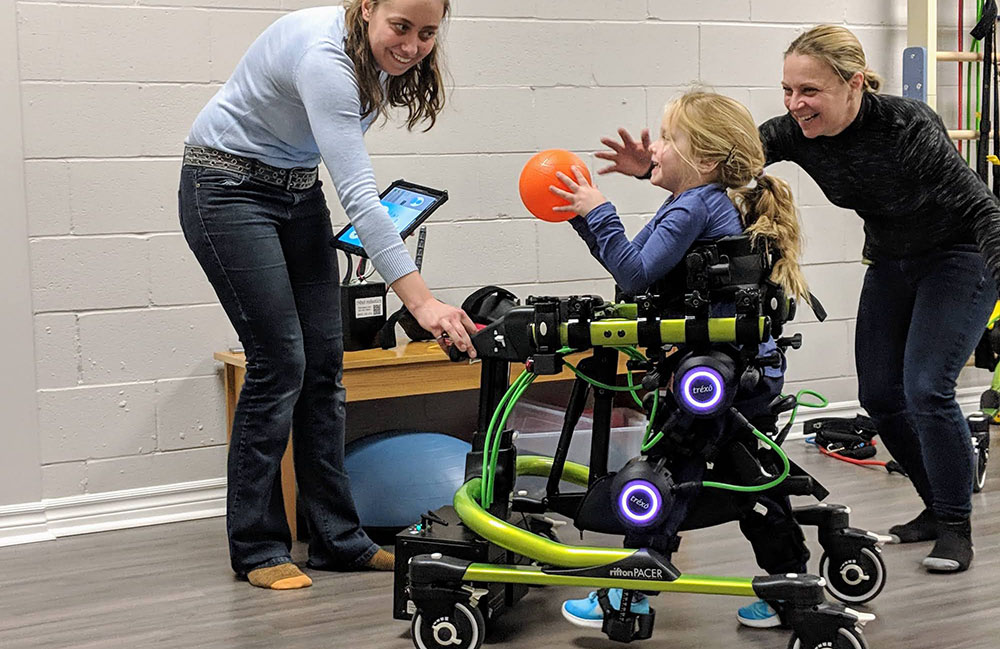
Trexo Robotics Celebrates 100 Million Steps Milestone in Helping Children Walk with Robotic Brace

Trexo Robotics has reached an incredible milestone, helping children take more than 100 million steps with its groundbreaking robotic brace. The device, designed to support children with disabilities, enables them to gain strength, endurance, and proper gait patterns. It has been a transformative tool for kids with a variety of conditions, including cerebral palsy, spinal muscular atrophy, muscular dystrophy, stroke, brain injury, hemi- and paraplegia, spinal cord injuries, Rett syndrome, and other neuromuscular disorders.

Founded in 2016 by CEO Manmeet Maggu and CTO Rahul Udasi in Ontario, Canada, Trexo Robotics was born out of a personal mission to help Maggu’s nephew. The company’s innovative brace customizes each child’s gait and adjusts over time to match the child’s progress. The device can modify gait patterns, step speed, weight-bearing capacity, and level of support, adapting to the evolving needs of each user. Additionally, Trexo’s brace offers two operational modes: endurance and strength training, ensuring that the child’s specific therapeutic needs are met.

Continue reading… “Trexo Robotics Celebrates 100 Million Steps Milestone in Helping Children Walk with Robotic Brace”

Major Breakthrough in Nuclear Safety: General Atomics Successfully Tests SiGA Nuclear Fuel Cladding

In a significant leap forward for nuclear safety, General Atomics Electromagnetic Systems (GA-EMS) has announced the successful completion of a 120-day irradiation testing period for its innovative SiGA nuclear fuel cladding. This milestone, achieved at the Advanced Test Reactor (ATR) at Idaho National Laboratory, was designed to assess the performance of SiGA cladding under extreme radiation conditions.

The rigorous testing exposed unfueled SiGA-clad rods to the intense radiation environment of a pressurized water reactor, simulating the harsh conditions they would face in a real-world nuclear power plant. According to GA-EMS, the SiGA cladding withstood the irradiation with no significant mass change, indicating excellent performance and resistance to radiation damage.

Continue reading… “Major Breakthrough in Nuclear Safety: General Atomics Successfully Tests SiGA Nuclear Fuel Cladding”

Breakthrough in Atomic Control: Scientists Revolutionize Chemical Reactions at the Molecular Level

Scientists have made a groundbreaking advancement in atomic-level control of matter, a leap that could transform both fundamental scientific understanding and practical applications, particularly in the realm of pharmaceuticals. This achievement, led by physicists at the University of Bath in collaboration with an international team, could revolutionize the way researchers develop medications, improving both precision and efficiency in chemical processes.

While controlling single-molecule reactions with specific outcomes has become standard in laboratories worldwide, this level of mastery was not always achievable. Over a decade ago, IBM researchers demonstrated the potential of atomic manipulation by creating A Boy and His Atom, the world’s smallest movie, by moving individual molecules—each comprising two bonded atoms—frame by frame. Although this was a landmark achievement, controlling chemical reactions with multiple outcomes remained elusive. This limitation has been a challenge, especially in drug synthesis, where controlling byproducts could improve efficiency.

Continue reading… “Breakthrough in Atomic Control: Scientists Revolutionize Chemical Reactions at the Molecular Level”

Idemitsu Unveils World’s First Plant-Based Racing Engine Oil with API SP Certification

Idemitsu Kosan, a leading Japanese company, has launched what it claims to be the world’s first racing engine oil made from plant-based raw materials for more than 80% of its base oil. This revolutionary product combines top-tier racing performance with API SP certification, a significant milestone in the automotive industry. According to a recent market survey conducted by Trending Future Research Institute Inc., this oil is the first of its kind for four-wheeled vehicles to combine American Petroleum Institute (API) certification, plant-based oil, and exceptional racing performance.

The survey, conducted between December 2023 and February 2024, highlighted the breakthrough in engine oil technology, confirming that Idemitsu IFG Plantech Racing oil is the only product on the market to offer both environmental benefits and high-level performance in racing conditions.

Continue reading… “Idemitsu Unveils World’s First Plant-Based Racing Engine Oil with API SP Certification”

BHMbot-B: The Agile Microrobot for Precision Navigation in Tight Spaces

Chinese researchers have developed the BHMbot-B, a highly agile 15 mm-long microrobot capable of quick forward and backward movements, making it ideal for navigating tight and confined spaces. This innovative design combines a variety of advanced technologies to offer unprecedented mobility and adaptability, enabling it to perform tasks in environments where larger machines would struggle.

The BHMbot-B achieves its remarkable versatility through a unique control mechanism. The robot’s forward and backward motion is made possible by aligning the vibratory movements of its magnet, cantilever, and linkages using a process known as vibration mode transition control. This allows the robot to switch between motion modes with precision, enabling it to maneuver through challenging environments efficiently.

Continue reading… “BHMbot-B: The Agile Microrobot for Precision Navigation in Tight Spaces”

Groundbreaking CRISPR Advancements: Focused Ultrasound Takes Gene Editing to New Heights in Cancer Treatment

Thanks to revolutionary advancements in CRISPR technology, medical specialists are on the brink of transforming the treatment and prevention of genetic disorders and diseases. CRISPR (Clustered Regularly Interspaced Short Palindromic Repeats) is a Nobel Prize-winning gene-editing tool that allows scientists to cut and modify DNA with unprecedented precision. By using the Cas9 enzyme, CRISPR can activate or deactivate genes and even insert new DNA to correct genetic abnormalities, revolutionizing our ability to address previously untreatable conditions.

Now, researchers from the USC Alfred E. Mann Department of Biomedical Engineering have taken CRISPR to the next level by incorporating focused ultrasound. This new tool enables precise targeting of CRISPR’s gene-editing abilities to specific areas of the body, significantly improving its efficiency and accuracy. The team is currently exploring how this technology can enhance cancer immunotherapy.

Continue reading… “Groundbreaking CRISPR Advancements: Focused Ultrasound Takes Gene Editing to New Heights in Cancer Treatment”

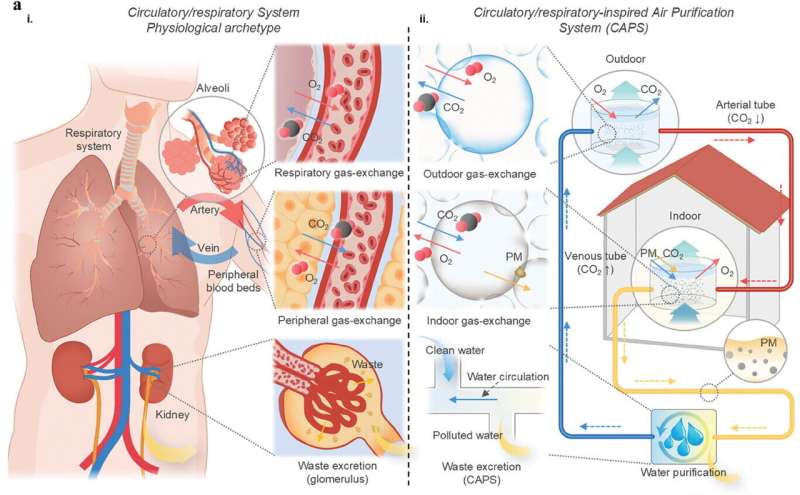
Eco-Friendly Air Purification System Uses Microbubbles for Sustainable Clean Air

A research team led by Professor Seung Hwan Ko from Seoul National University has developed an innovative, eco-friendly air purification system that utilizes microbubble filters instead of traditional solid filters. This groundbreaking technology addresses the growing need for more sustainable air purification solutions in enclosed spaces, where air quality is often compromised due to factors like reduced oxygen levels, the accumulation of carbon dioxide, fine dust, and volatile organic compounds (VOCs).

In indoor environments, traditional air purifiers often fail to effectively handle the accumulation of fine dust and volatile organic compounds. The conventional filters used in these systems tend to deteriorate over time, especially in sealed spaces, making them less effective. Furthermore, the waste generated from the need for regular filter cleaning and replacement has contributed to environmental pollution, highlighting the urgent demand for more sustainable alternatives.

Continue reading… “Eco-Friendly Air Purification System Uses Microbubbles for Sustainable Clean Air”