The Era of Enhanced Memory: How AI and Smart Glasses Will Redefine What It Means to Remember

by Futurist Thomas Frey

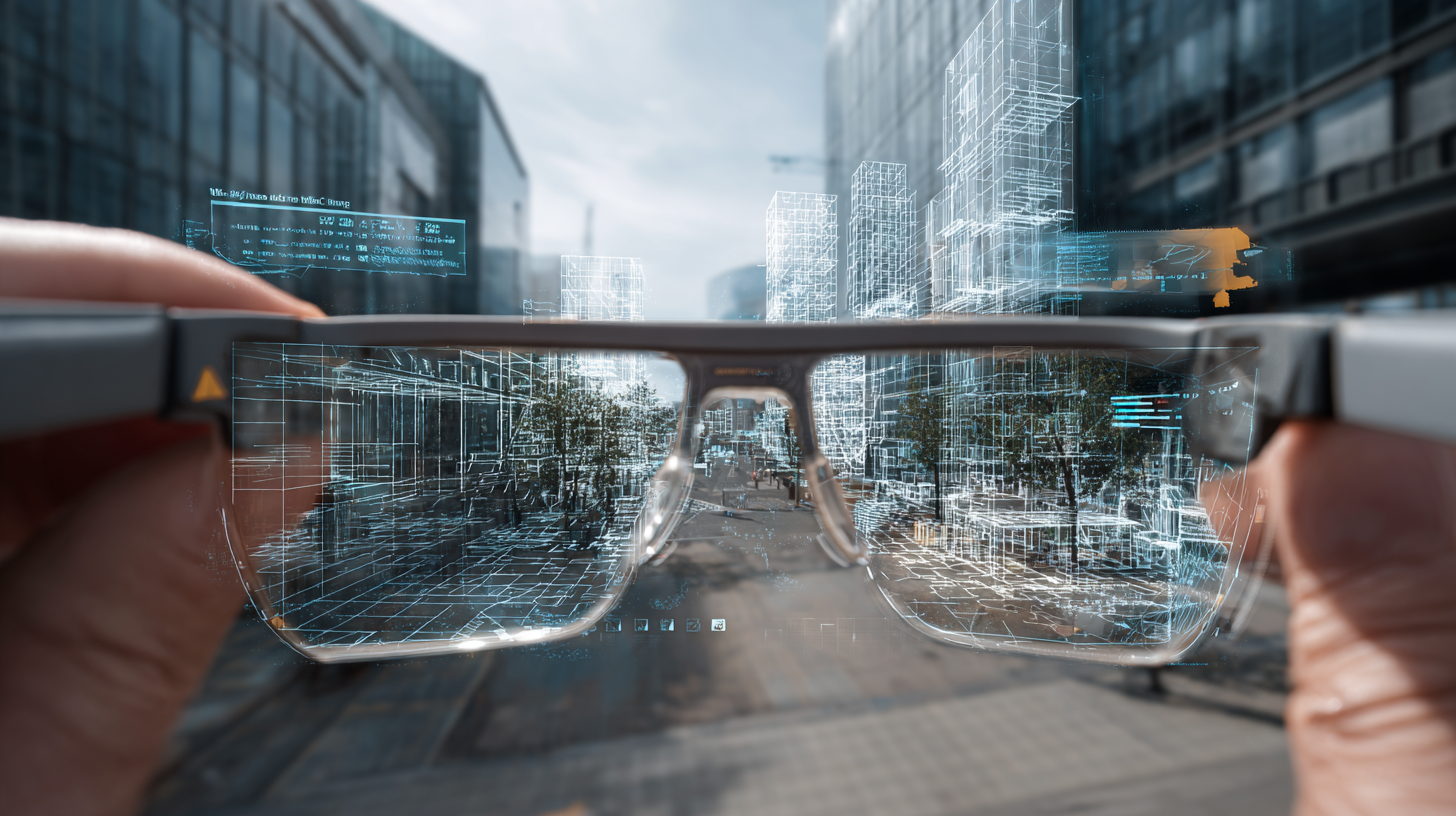
For most of human history, memory has been unreliable. We forget faces, misplace details, and misinterpret events. Our brains were never designed as perfect recorders; they were designed for survival, filtering only what seemed useful at the moment. But a revolution is coming—one that will redefine memory not as a fragile biological function but as an augmented capability, seamlessly integrated into our daily lives.

In earlier predictions, I suggested that future generations would wear smart glasses and sensors to record the totality of their life experiences. Imagine living with a complete archive of your existence—every conversation, every event, every fleeting glance captured and retrievable. It would be like carrying a second brain in the cloud, an external memory system with perfect recall.

Continue reading… “The Era of Enhanced Memory: How AI and Smart Glasses Will Redefine What It Means to Remember”

The Rise of Global Cultural Centers in the Age of Mega-Regions

By Futurist Thomas Frey

The 21st century is moving toward a world where power will no longer be concentrated in single cities or even nations, but in sprawling economic mega-regions—vast interconnected corridors of talent, infrastructure, and capital. From the BosWash corridor in the U.S. to the Pearl River Delta in China, these mega-regions are already redefining how economies function. But their influence will not stop at trade and GDP. They will also become cultural engines—places where humanity’s boldest ideas, most radical experiments, and shared future visions take physical form.

Imagine traveling across these regions in 2035 and finding not just business districts and technology parks but global cultural centers designed to inspire, provoke, and unite. These centers will act as the cathedrals of tomorrow—not religious in nature, but dedicated to the forces shaping civilization itself. Here is a glimpse at what they may include:

Continue reading… “The Rise of Global Cultural Centers in the Age of Mega-Regions”

The Hall of Future Jobs: A Living Exhibit of What AI Can’t Replace

By Futurist Thomas Frey

Step into the year 2035, and the world of work looks radically different. AI has become a co-pilot in nearly every industry, automation is woven into the fabric of daily life, and robotics has mastered an astonishing range of physical and cognitive tasks. Yet even in this hyper-automated society, there remain roles that resist full automation—jobs that require human presence, judgment, creativity, or empathy in ways machines can only support, not replace.

That’s the concept behind the Hall of Future Jobs, a provocative exhibition designed to track the frontier between what machines can do and what they can’t. Unlike a traditional museum exhibit, this hall will never be static. It will evolve as AI, robotics, and automation advance, constantly retiring old jobs once considered untouchable and adding new ones that emerge in the cracks between human ingenuity and machine efficiency.

Continue reading… “The Hall of Future Jobs: A Living Exhibit of What AI Can’t Replace”

The End of Needles? Bubble-Powered Robots May Change Medicine Forever

Imagine a future where the dreaded needle prick at the doctor’s office becomes obsolete. No more cold steel, no more anxiety, no more crying children clutching their arms. Instead, drugs could be delivered by microscopic robots that ride shockwaves from collapsing bubbles—harnessing one of nature’s most violent yet controllable forces to perform delicate medical miracles.

A joint team of American and Chinese researchers has taken the first steps toward this future by turning bubble collapse—known as cavitation—into a propulsion system for microrobots. Cavitation is usually a destructive process, the same one that chews up ship propellers and turbine blades as vapor bubbles form and implode in liquid. But when carefully controlled, the violent energy from a bursting bubble can become an engine.

Continue reading… “The End of Needles? Bubble-Powered Robots May Change Medicine Forever”

The Power of Unanswerable Questions in Shaping the Future

By Futurist Thomas Frey

For centuries, humanity has been propelled forward not just by the answers we’ve uncovered, but by the questions we dared to ask. Some of those questions seemed unthinkable at the time: Can we fly? Can we split the atom? Can machines think? Each one opened a door to a reality that was once unimaginable. And yet, lurking beyond the questions we’ve answered lies a far more provocative realm—the unanswerable ones.

Over the past two decades, I’ve dedicated a significant part of my work to exploring what I call unanswerable questions. These aren’t simply puzzles waiting for a clever scientist to crack or problems requiring more data. They are the questions that probe the limits of human understanding, stretching across science, philosophy, technology, and even the meaning of existence itself.

Continue reading… “The Power of Unanswerable Questions in Shaping the Future”

Light Is the New Silicon: The Dawn of Optical AI Chips

Artificial intelligence has become the engine of our digital age. Every face unlocked by a phone, every chatbot response, every streaming recommendation runs on algorithms that demand enormous amounts of computation. Yet behind the glamour of AI lies a hidden cost: energy consumption. Training and running advanced AI models can devour as much electricity as entire towns. The question is no longer whether AI can scale, but whether our chips can keep up without burning out the grid.

Researchers at the University of Florida may have just rewritten the script. Their prototype chip doesn’t just shuffle electrons—it harnesses light itself to compute. By embedding optical components directly into silicon, they have built a light-powered processor capable of running AI tasks up to 100 times faster while consuming only a fraction of the energy.

Continue reading… “Light Is the New Silicon: The Dawn of Optical AI Chips”

Drinking Water from Thin Air: How 3D Printing Could Solve Humanity’s Thirst

More than two billion people across the globe still lack reliable access to clean drinking water. We tend to think of water as a resource found in rivers, lakes, or deep underground, but the atmosphere itself holds more water than all the rivers on Earth combined. What if the very air around us could be tapped like an invisible reservoir?

That’s exactly what two students at Münster University of Applied Sciences have set out to do. Their project, Water from Air, takes a futuristic approach to one of humanity’s oldest problems—using 3D printing and advanced materials to harvest water directly from the atmosphere.

Continue reading… “Drinking Water from Thin Air: How 3D Printing Could Solve Humanity’s Thirst”

The Future Creates the Present

Bt Futurist Thomas Frey

We like to imagine time as a straight arrow—yesterday shaping today, today shaping tomorrow. But what if that’s backwards? What if the future is actually pulling us forward, shaping our choices in the present?

This isn’t just philosophy. It’s the engine behind nearly every innovation, invention, and bold decision in human history. The future isn’t some distant horizon—it’s a gravitational force, bending today’s reality toward what could be. When I say, “the future creates the present,” I mean that our vision of what’s ahead is already dictating what we build, what we prioritize, and how we act right now.

Continue reading… “The Future Creates the Present”

The Unwritten Rules of Driverless Cars

By Futurist Thomas Frey

The driverless car is no longer science fiction—it’s here, humming quietly in test fleets, edging into city streets, and waiting for regulators to catch up. But while engineers have solved many of the mechanical and digital challenges, society hasn’t even begun to grapple with the social ones.

Here’s a simple but unsettling question: How young is too young to ride alone in a driverless car? Imagine a six-year-old, buckled into a fully autonomous pod at home, ferried ten minutes to school, and greeted by a waiting teacher at the other end. Is that safe? Is it ethical? Is it legal? And if ten minutes seems fine, what about thirty? What about an hour-long commute across town?

We don’t have answers yet—because the rules haven’t been written.

Continue reading… “The Unwritten Rules of Driverless Cars”

The Billion-Person Problem: How the Next Fortune Will Be Built

The road to the next trillion-dollar industry won’t be paved by niche apps, luxury products, or one-off unicorns. It will be built by solving what futurist Peter Diamandis calls “billion-person problems.” The idea is simple but radical: the greatest wealth is created when you provide massive value to massive numbers of people. In other words, if you want to make a billion dollars, solve a problem that touches a billion lives.

This isn’t theory—it’s already happened. Think about Google organizing the world’s information, Facebook connecting billions of people, or Tesla pushing mass adoption of electric mobility. Each tackled inefficiencies or unmet needs that were global in scale. The new frontier? Problems bigger than social media or search engines. Problems that affect humanity at its core.

Continue reading… “The Billion-Person Problem: How the Next Fortune Will Be Built”

The Democracy Upgrade We Desperately Need: How Rated Voting Could Save American Politics

By Futurist Thomas Frey

American democracy is broken. Not gradually deteriorating or showing signs of wear—utterly, systemically broken in ways that threaten the foundation of our republic. We’re trapped in a political system that forces 330 million diverse Americans into two rigid camps, rewards extremism over pragmatism, and makes governing nearly impossible. But there’s a solution hiding in plain sight, one so elegantly simple yet revolutionary that it could transform American politics overnight: rated voting.

Imagine an electoral system where you could support your favorite candidate without “wasting” your vote. Where politicians built coalitions instead of bases. Where compromise became a virtue rather than betrayal. Where governing majorities emerged from actual consensus rather than barely-winning pluralities. This isn’t utopian fantasy—it’s the proven reality of rated voting systems already working in cities across America.

Continue reading… “The Democracy Upgrade We Desperately Need: How Rated Voting Could Save American Politics”

How Age Reversal Could Solve the Global Underpopulation Crisis

For decades, headlines warned us about overpopulation. From Paul Ehrlich’s dire Population Bomb predictions in the 1960s to endless talk of resource exhaustion, the narrative has been one of too many people crowding into a finite world. But here’s the plot twist: the real threat isn’t overpopulation—it’s underpopulation.

New data is rewriting the story. The United Nations once projected global population to peak at 10.9 billion by 2100. But The Lancet recently published a study showing the peak will likely come earlier—9.7 billion by 2064—before dropping back down to 8.8 billion by the end of the century. That means billions fewer people and a global demographic implosion decades sooner than expected.

Continue reading… “How Age Reversal Could Solve the Global Underpopulation Crisis”
Discover the Hidden Patterns of Tomorrow with Futurist Thomas Frey
Unlock Your Potential, Ignite Your Success.

By delving into the futuring techniques of Futurist Thomas Frey, you’ll embark on an enlightening journey.

Learn More about this exciting program.