Key facts as India surpasses China as the world’s most populous country

The recent news that India has surpassed China to become the world’s most populous country has generated significant attention and discussion. According to a recent article in Pew Research Center’s Fact Tank, India’s population is currently estimated to be around 1.39 billion, while China’s is estimated to be around 1.36 billion.

The article quotes various experts and provides important context about India’s population growth and its potential implications. For example, it cites Sanjay Kumar, director of the Centre for the Study of Developing Societies in Delhi, who notes that India is experiencing significant demographic changes, including a growing youth population and a declining fertility rate. He suggests that these changes could have important implications for India’s economy and social development in the coming decades.

Continue reading… “Key facts as India surpasses China as the world’s most populous country”

Scientists propose a fourth light on traffic signals for self-driving cars

A proposal by researchers at the University of Waterloo in Canada to add a fourth light to traffic signals that would be specifically for communicating with self-driving cars.

The proposed light, which would be blue in color, would indicate to autonomous vehicles that they have been detected by the traffic signal system and that it is safe to proceed through the intersection. This would help ensure that self-driving cars are able to navigate through intersections safely and efficiently, without relying on human drivers to interpret traditional traffic signals.

According to the researchers, the addition of a fourth light to traffic signals could help facilitate the widespread adoption of autonomous vehicles and improve overall traffic flow. However, they note that more research is needed to evaluate the effectiveness of this approach and to determine how it would be implemented in practice.

Continue reading… “Scientists propose a fourth light on traffic signals for self-driving cars”

Autonomous steering system keeps human drivers engaged

The Attention-Driven Steering (ADS) system, which aims to improve driver engagement and awareness in semi-autonomous vehicles, was developed by researchers at the University of Waterloo in Canada, including Krzysztof Czarnecki, a professor in the Department of Electrical and Computer Engineering.

In a research paper titled “Attention-Driven Steering for Semi-Autonomous Vehicles,” the team provides technical details about the system’s design and implementation. According to Czarnecki, “ADS uses a camera to track the driver’s eye movements and a machine learning algorithm to predict the direction they are looking in. The system then adjusts the vehicle’s steering angle to keep it moving in the same direction as the driver’s gaze.”

Continue reading… “Autonomous steering system keeps human drivers engaged”

Engineers devise a modular system to produce efficient, scalable aquabots

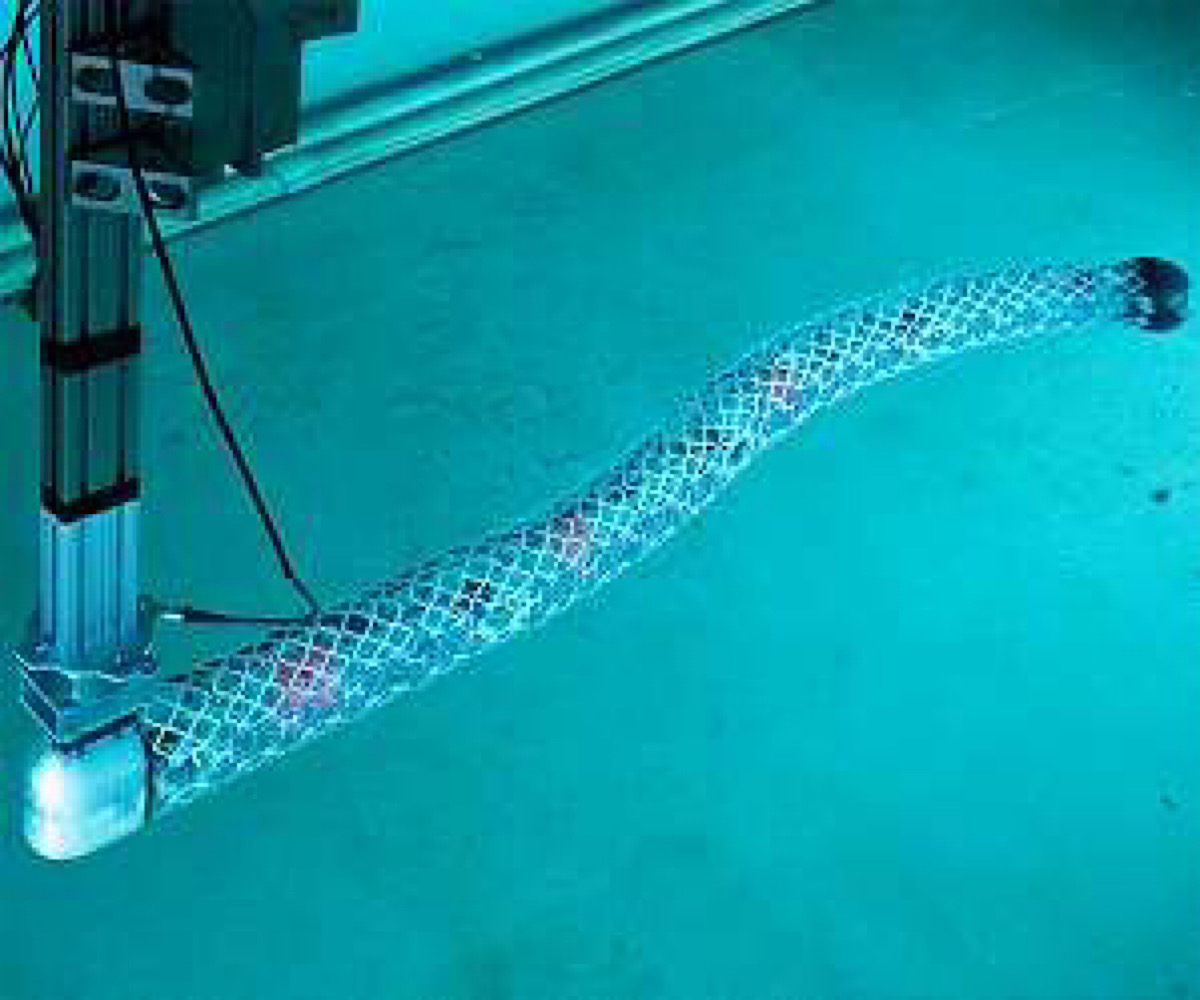
As reported on Space Daily’s website, a team of engineers has developed a modular system to create efficient and scalable aquatic robots, or “aquabots.” The system was developed by a team of researchers from the Harvard John A. Paulson School of Engineering and Applied Sciences (SEAS) and the Wyss Institute for Biologically Inspired Engineering at Harvard University.

The system is designed to enable the creation of aquabots that can adapt to different tasks and environments, allowing for greater efficiency and scalability in their production. In describing the system, the article states that “The modular design allows for rapid design and fabrication of a range of different robotic platforms, including single- and multi-limbed robots, biomimetic robots, and soft robots.”

Continue reading…Engineers devise a modular system to produce efficient, scalable aquabots

Carnegie Mellon’s AI-Powered FRIDA Robot Collaborates With Humans To Create Art

FRIDA, a robotic arm with a paintbrush taped to it, uses artificial intelligence to collaborate with humans on works of art. Here, it works on a portrait of Ruth Bader Ginsburg.

The Carnegie Mellon University School of Computer Science has unveiled its latest robotic creation, named Frida. This humanoid robot is designed to interact with people and perform tasks that require physical dexterity, such as picking up and manipulating objects.

According to Manuela Veloso, Dean of the School of Computer Science, “Frida is a significant step forward in our quest to create robots that can collaborate with humans in a natural and intuitive way.”

Frida has a sophisticated sensor system that allows her to perceive her environment and react to changes in real-time. She can also recognize and respond to human gestures and expressions, making her a highly adaptable and versatile robot.

Continue reading… “Carnegie Mellon’s AI-Powered FRIDA Robot Collaborates With Humans To Create Art”

A NEW AI-POWERED PLATFORM IS ABOUT TO CHANGE THE WAY WE SHOP FOR FOOD

By curating groceries based on personal taste, you’ll never buy the wrong thing again

Spoon Guru, a new AI-powered platform, is set to revolutionize the way we shop for food. According to Markus Stripf, co-founder of Spoon Guru, the platform is designed to cater to every dietary preference and make the entire grocery shopping experience more inclusive. By using AI algorithms to personalize food recommendations based on users’ dietary needs, preferences, and restrictions, Spoon Guru makes it easier for customers to find the products they need.

The platform has already been adopted by major retailers such as Tesco and Woolworths. Paul Wilkinson, Director of Tesco Group, stated that Spoon Guru helps customers find products that meet their individual needs and preferences. Meanwhile, Martin Woolley, Head of Product Development at Woolworths, believes that the technology will enable customers to easily find the products they need, while also discovering new ones that they might not have considered before.

Continue reading… “A NEW AI-POWERED PLATFORM IS ABOUT TO CHANGE THE WAY WE SHOP FOR FOOD”

Scientists reproduced a gravity field- 1,000 times stronger than Earth’s gravity

The study overcomes the effects of Earth’s gravity, replicating conditions on other planets, stars.

A recent discovery has shed new light on one of the most intriguing phenomena in the universe. Astronomers have found an incredibly strong gravity field, approximately 1,000 times more potent than Earth’s gravity, surrounding a rare type of neutron star known as a magnetar.

The magnetar in question is located approximately 30,000 light-years away from Earth and was discovered by a team of scientists from the University of Amsterdam and the University of Cambridge. The researchers used observations from the European Space Agency’s XMM-Newton satellite to measure the strength of the magnetar’s gravity field.

Continue reading… “Scientists reproduced a gravity field- 1,000 times stronger than Earth’s gravity”

Machine Learning May be Key to Tracking Space Debris

Tiny fragments of space debris pose threats to operating satellites and spacecraft. Researchers are building a platform to track them and predict their movements. Image: NASA

An article published on the ASME (American Society of Mechanical Engineers) website discusses how machine learning can be utilized to track space debris. The author quotes Dr. Moriba Jah, an associate professor of aerospace engineering and engineering mechanics at the University of Texas at Austin, who stresses the significance of tracking space debris. Dr. Jah warns that space debris is becoming an increasingly pressing issue that will compromise our ability to use space in the future.

Dr. Jah further explains that conventional approaches to tracking space debris are insufficient, and machine learning has the potential to significantly enhance our ability to monitor and forecast the movements of objects in space. The author also mentions the work of Dr. Mark Matney, an orbital debris scientist at NASA, who is leading a project to leverage machine learning to track debris in geostationary orbit. Dr. Matney emphasizes the importance of machine learning, stating that “machine learning is going to be essential for helping us stay ahead of the debris problem and protect our valuable space assets.”

Continue reading… “Machine Learning May be Key to Tracking Space Debris”

FRIDA’s robot arm attempts to bring DALL-E-style AI art to real-world canvases

Frida, a robotic arm developed by the startup ArtLab, is attempting to bring AI-generated art from the virtual world to the physical realm. The robot arm uses a combination of algorithms and machine learning to replicate the style of the digital artist Dall-E onto real-world canvases.

According to ArtLab’s co-founder and CEO, Sophia Lee, the robot arm is designed to “challenge the boundaries between AI and art, and to show that these two fields can work together to create something truly unique and beautiful.”

The Dall-E AI, developed by OpenAI, gained widespread attention in recent years for its ability to generate highly realistic images of objects and scenes that do not exist in the real world. ArtLab’s Frida takes the process one step further by physically reproducing these images using a variety of paints and materials.

Continue reading… “FRIDA’s robot arm attempts to bring DALL-E-style AI art to real-world canvases”

Ford CEO: Future EVs will be “radically simplified,” use smaller batteries

Ford CEO Jim Farley recently shared his perspective on the future of electric vehicles in an interview with CNBC. According to Farley, the future of EVs will be characterized by “radically simplified” technology and smaller battery sizes.

In the interview, Farley discussed how Ford’s new electric vehicle, the Mustang Mach-E, was designed with a focus on simplicity. He stated, “It’s not about a lot of software features that people can’t use. It’s about the ones they can use.” Farley believes that EV technology will become more simplified as automakers focus on creating vehicles that are easy to use and understand for customers.

Regarding battery size, Farley stated that smaller battery sizes will become the norm in the future of EVs. He stated, “We don’t need the range that’s in the market today, we just need to right-size it for the use case. And that’s what we’re doing.” Farley believes that automakers should focus on creating EVs with the appropriate battery size for their intended use, rather than trying to create vehicles with the longest range possible.

Continue reading…Ford CEO: Future EVs will be “radically simplified,” use smaller batteries

Solar panels and water canals could form a real power couple in California

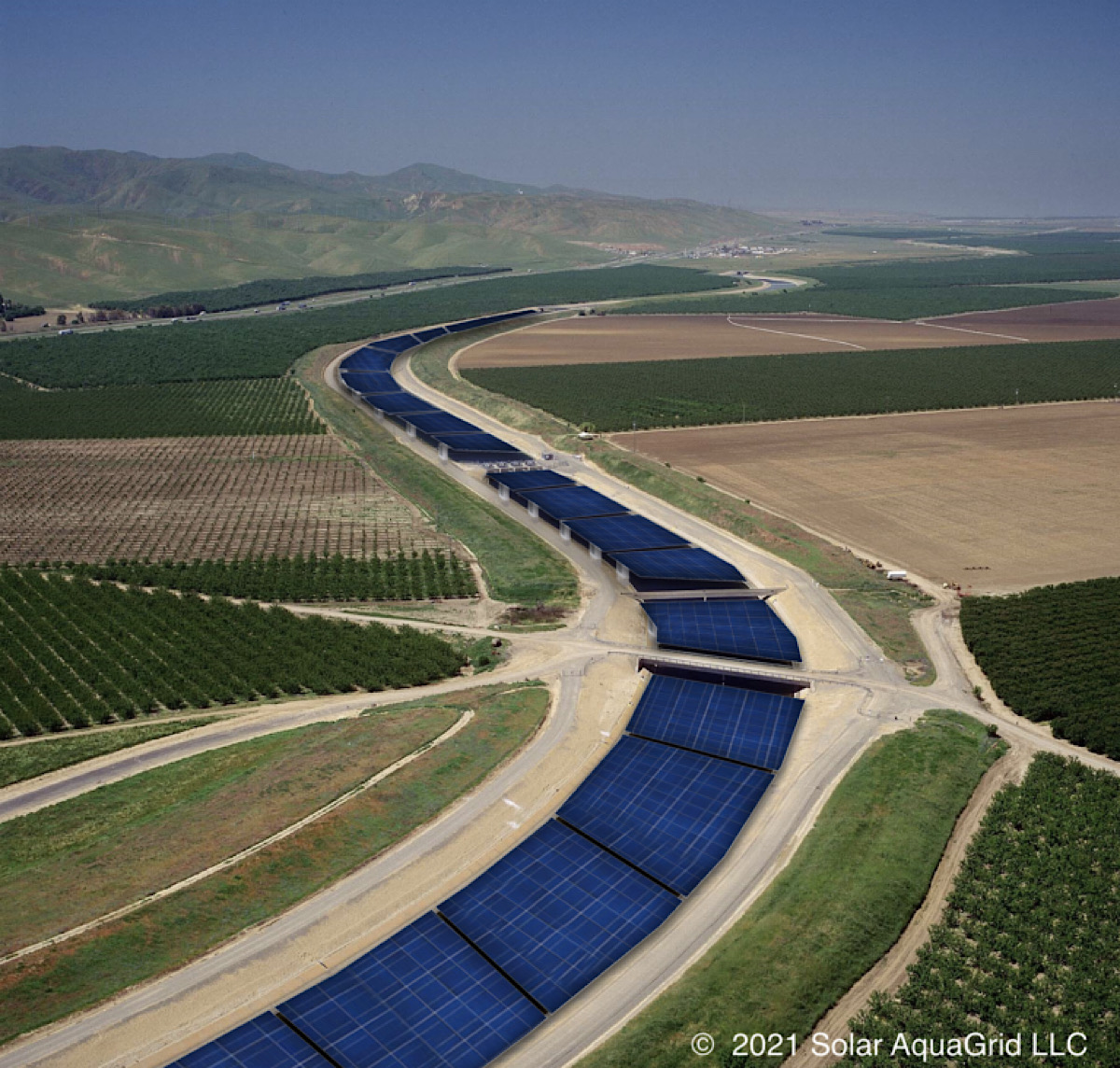
Solar canals save water, create energy, and protect natural lands all at the same time.

Solar panels are becoming increasingly popular as a source of renewable energy, but they can take up a lot of space. That’s why a growing number of cities and countries are turning to an innovative solution: covering canals with solar panels.

One city that has implemented this strategy is Ahmedabad, India. In 2012, the city began covering a 750-meter stretch of the Sabarmati River with solar panels. The project was a success, and the city has since installed similar systems in other parts of the river. According to Kartikeya Sarabhai, the director of the Center for Environmental Education in Ahmedabad, the benefits of this approach are twofold.

“By covering the canal with solar panels, we can reduce the amount of water lost to evaporation,” Sarabhai said in an interview with Popular Science. “At the same time, we’re able to generate clean energy that can be used to power nearby homes and businesses.”

Continue reading… “Solar panels and water canals could form a real power couple in California”

The incredible FLOATING city: Futuristic concept village would see 50,000 people living on 25 acres of interconnected platforms

A futuristic floating city concept has been unveiled, showcasing interconnected platforms that could house up to 50,000 people. The design was created by British firm AT Design Office and it is called “The Floating City.”

The design features a series of hexagonal platforms, interconnected with one another to form a network of streets, parks, and residential areas. The platforms would be anchored to the ocean floor, with a central main structure serving as a hub for transportation, utilities, and other services.

According to the designers, The Floating City would be a self-sustaining ecosystem, with renewable energy sources such as wind, solar, and wave power. The city would also have its own food production and waste management systems.

The concept of floating cities has been gaining attention in recent years as a potential solution to overcrowding in urban areas and the threat of rising sea levels due to climate change. In an interview with The Guardian, AT Design Office founder Phil Pauley said, “The Floating City is not just a design concept, it’s a real-world solution to some of the biggest problems facing our planet today.”

Continue reading… “The incredible FLOATING city: Futuristic concept village would see 50,000 people living on 25 acres of interconnected platforms”