Moneyball for business: How AI is changing talent management

IMG_8413

Fifteen years after Billy Beane disrupted Major League Baseball by applying analytics to scouting, corporations are rewriting the rules of recruiting.

The online games were easy–until I got to challenge number six. I was applying for a job at Unilever, the consumer-goods behemoth behind Axe Body Spray and Hellmann’s Real Mayonnaise. I was halfway through a series of puzzles designed to test 90 cognitive and emotional traits, everything from my memory and planning speed to my focus and appetite for risk. A machine had already scrutinized my application to determine whether I was fit to reach even this test-taking stage. Now, as I sat at my laptop, scratching my head over a probability game that involved wagering varying amounts of virtual money on whether I could hit my space bar five times within three seconds or 60 times within 12 seconds, an algorithm custom-built for Unilever analyzed my every click. With a timer ticking down on the screen . . . 12 . . . 11 . . . 10 . . . I furiously stabbed at my keyboard, my chances of joining one of the world’s largest employers literally at my fingertips.

More than a million job seekers have already undergone this kind of testing experience, developed by Pymetrics, a five-year-old startup cofounded by Frida Polli. An MIT-trained neuroscientist with an MBA from Harvard, Polli is pioneering new ways of assessing talent for brands such as Burger King and Unilever, based on decades of neuroscience research she says can predict behaviors common among high performers. “We realized this combination of data and machine learning would be hugely powerful, bringing recruiting from this super-antiquated, paper-and-pencil [process] into the future,” explains Polli, sitting barefoot on a couch at her spartan office near New York’s Flatiron District on a humid May morning, where about four dozen engineers, data scientists, and industrial-organizational psychologists sit behind glowing iMacs.

Continue reading… “Moneyball for business: How AI is changing talent management”

A new way to ‘freeze’ water could help transform organ preservation

IMG_8405

Freezing can be a great way of preserving assorted foodstuffs or biological tissues and organs, but it’s not without its risks. The formation of sharp ice crystals can damage cell membranes, while the defrosting process comes with its own potential dangers.

Scientists from Massachusetts General Hospital (MGH), the original and largest teaching hospital at Harvard Medical School, may have changed the game with a new piece of research, however. They have developed a method of maintaining water and water-based solutions in their liquid form for long periods of time, at temperatures far below the usual freezing point. The breakthrough could have major implications for long-term safe preservation of everything from blood cells and organs to the food we eat.

Continue reading… “A new way to ‘freeze’ water could help transform organ preservation”

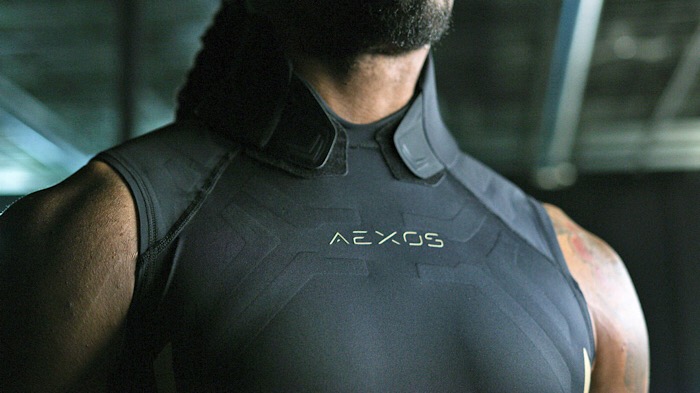
HALO collar promises to reduce concussions in contact sport

IMG_8401

Its invisible tech could be a real game-changer.

When it comes to high impact sports, sprains and strains are almost inevitable. The NFL has been equipping players with durable, shock-absorbent helmets for years to guard against traumatic injuries, but quick head movements often leave athletes susceptible to other kinds of damage like concussion. Enter HALO, a new form of wearable tech which could help to bridge that gap.

Continue reading… “HALO collar promises to reduce concussions in contact sport”

Don’t bug out: Spider-like microbots will get under your skin … in a good way

It might sound like the beginning of a nightmare, but researchers are developing a line of small, insect-inspired robots that could one day crawl into your body and help fix broken bits. They’re suspicious in their squishiness. Soft, flexible, and shaped like spiders. But their creators think future versions could be designed to perform tasks that are out of reach of humans.

In a paper published recently in the journal Advanced Materials, a team of roboticists from Harvard University’s Wyss Institute for Biologically Inspired Engineering, Harvard John A. Paulson School of Engineering and Applied Sciences (SEAS), and Boston University report that they’ve created these multifunctional microbots thanks to a new fabrication process that lets them build millimeter-scale machines with micrometer-scale features. Similarly sized robots have been created before, but not ones as dynamic as this. To demonstrate their breakthrough, they created a transparent spider bot modeled off of the brilliant Australian peacock spider.

Continue reading… “Don’t bug out: Spider-like microbots will get under your skin … in a good way”

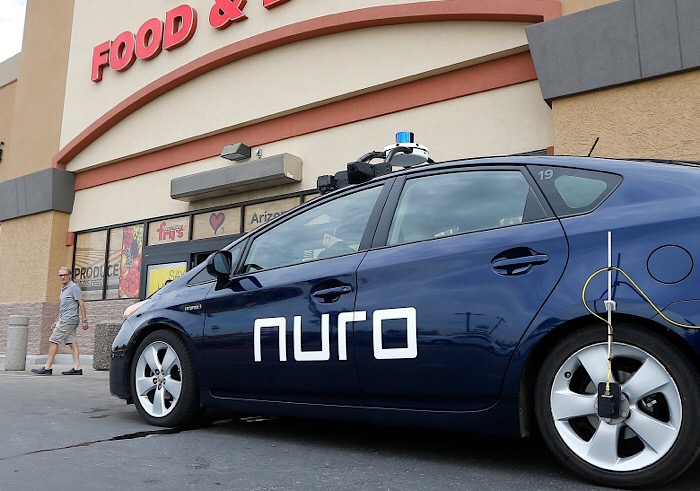
Kroger rolls out driverless cars for grocery deliveries

Kroger Self Driving Grocery Delivery

SCOTTSDALE, Ariz. — At a time when big-box retailers are trying to offer the same conveniences as their online competitors, the biggest U.S. grocery chain is testing the use of driverless cars to deliver groceries in a Phoenix suburb.

Kroger’s pilot program launched Thursday morning with a robotic vehicle parked outside one of its own Fry’s supermarkets in Scottsdale. A store clerk loaded the back seat with full grocery bags. A man was in the driver’s seat and another was in the front passenger seat with a laptop. Both were there to monitor the car’s performance.

Continue reading… “Kroger rolls out driverless cars for grocery deliveries”

America’s hottest export? Sperm

IMG_8383

Sperm from the US and Denmark dominate the market because those countries currently have the most supply, experts say.

Ella Rasmussen’s doctors started to prod her about children when she turned 30. She was single, suffered from endometriosis, and contemplated a hysterectomy. After several years, the nudges took hold. Because she wasn’t a good candidate to freeze only her eggs, she was advised to undergo IVF and freeze fertilized embryos.

Continue reading… “America’s hottest export? Sperm”

This company embeds microchips in its employees, and they love it

IMG_8388

Last August, 50 employees at Three Square Market got RFID chips in their hands. Now 80 have them.

When Patrick McMullan wants a Diet Dr Pepper while he’s at work, he pays for it with a wave of his hand. McMullan has a microchip implanted between his thumb and forefinger, and the vending machine immediately deducts money from his account. At his office, he’s one of dozens of employees who have been doing likewise for a year now.

McMullan is the president of Three Square Market, a technology company that provides self-service mini-markets to hospitals, hotels, and company break rooms. Last August, he became one of roughly 50 employees at its headquarters in River Falls, Wisconsin, who volunteered to have a chip injected into their hand.

Continue reading… “This company embeds microchips in its employees, and they love it”

The way you get TV and internet at home is about to change drastically — for the better

IMG_8375

Verizon and other internet providers are going to start rolling out 5G internet this year.

It will change how we get TV and internet in our homes.

Instead of drilling holes for cable everywhere, you’ll get a modem and a subscription to a streaming TV service.

Continue reading… “The way you get TV and internet at home is about to change drastically — for the better”

Will we ever have trillionaires?

21st Annual HRC National Dinner

Do you know what you’d do with a trillion dollars? Would you buy a fleet of private jets or dune buggies or maybe dine on gold-plated chicken wings ? Or would you just withdraw a huge pile of cash and burn it for fun ?

Some sums of money are so large, they defy imagination: a trillion dollars is just shy of Mexico’s gross domestic product. So, for some perspective: to accrue a billion dollars on the median US household income of just under $60,000 would take more than 16,000 years, assuming you spent none of it. To make a trillion would take you over 16 million years.

Apple recently became the first US-listed company with a market value of $1 trillion . So how long will it be before an individual passes the same milestone, and what will they have to do to get so filthy rich?

Continue reading… “Will we ever have trillionaires?”

The five universal laws of human stupidity

IMG_8370

In 1976, a professor of economic history at the University of California, Berkeley published an essay outlining the fundamental laws of a force he perceived as humanity’s greatest existential threat: Stupidity.

Stupid people, Carlo M. Cipolla explained, share several identifying traits: they are abundant, they are irrational, and they cause problems for others without apparent benefit to themselves, thereby lowering society’s total well-being. There are no defenses against stupidity, argued the Italian-born professor, who died in 2000. The only way a society can avoid being crushed by the burden of its idiots is if the non-stupid work even harder to offset the losses of their stupid brethren.

Continue reading… “The five universal laws of human stupidity”

The first graphene jacket is here, and it’s magical

IMG_8367

At 595 euros ($695) a pop, Vollebak’s new graphene jacket isn’t for everyone. But if even half of what its creators promise is true, it could be worth every cent. According to the company, it shares many of the magical properties of graphene–absorbing heat and then warming you up over time, conducting electricity, repelling bacteria, and dissipating your body’s excess humidity. According to Vollebak, it’s the world’s first jacket made out of the notoriously difficult-to-manufacture material.

Graphene is the thinnest possible form of graphite, which you can find in your everyday pencil. It’s purely bi-dimensional, a single layer of carbon atoms that has unbelievable properties that will one day revolutionize everything from aerospace engineering to medicine. Its diverse uses are seemingly endless: It can stop a bullet if you add enough layers. It can change the color of your hair with no adverse effects. It can turn the walls of your home into a giant fire detector. “It’s so strong and so stretchy that the fibers of a spider web coated in graphene could catch a falling plane,” as Vollebak puts it in its marketing materials.

Continue reading… “The first graphene jacket is here, and it’s magical”

Blockchain trends for 2018

IMG_8359

While the mainstream viability of cryptocurrency remains in question, one of the technologies that has emerged in its wake is primed to do big things.

Blockchain continues to grow in popularity as people across multiple industries find new applications for it. Recently, Deloitte released a report entitled, ‘2018 Global Blockchain Survey’. In it, they explore several relevant, blockchain trends that are worth paying attention to in 2018 and onward.

If you are interested in exploring what blockchain can do for your business or whether your startup idea can benefit from this versatile and secure technology, the prospects are rather promising.

Continue reading… “Blockchain trends for 2018”

Discover the Hidden Patterns of Tomorrow with Futurist Thomas Frey
Unlock Your Potential, Ignite Your Success.

By delving into the futuring techniques of Futurist Thomas Frey, you’ll embark on an enlightening journey.

Learn More about this exciting program.