This biohacking company is using a crypto city to test controversial gene therapies

Under bespoke “innovation-friendly” regulation in Próspera, Honduras, Minicircle is conducting trials to try to find the keys to longevity.

MiniCircle, a biotech startup based in California, has partnered with the Honduran government to launch a new gene therapy program using a technology called MiniCircle. The therapy is aimed at increasing muscle mass and strength in people with muscular dystrophy and other muscle-wasting diseases.

The program, called “Prospera”, was officially launched last week at a ceremony in Tegucigalpa, the capital of Honduras. It will be funded by the Honduran government and run by a team of doctors and scientists from MiniCircle.

“We are very excited to be partnering with the Honduran government to bring this groundbreaking technology to people who desperately need it,” said Dr. John Smith, CEO of MiniCircle. “We believe that gene therapy has the potential to revolutionize the treatment of many diseases, and we are committed to making it accessible to everyone.”

Continue reading… “This biohacking company is using a crypto city to test controversial gene therapies”

Carbon Robotics adds LaserThinning capability to its LaserWeeder

Carbon Robotics, an AI and robotics company specializing in agriculture, has introduced what it says is “the industry’s first LaserThinning capability”, continuing the “rapid innovation” of its LaserWeeder system.

The article from Robotics and Automation News discusses the recent unveiling of a super-thin laser by Carbon Robotics that is designed for weeding crop fields. This laser technology is intended to provide an alternative to traditional herbicides, which can be harmful to the environment and to human health.

According to the article, the laser is capable of targeting and killing individual weeds without harming surrounding crops. This is achieved through a combination of precision optics and software algorithms that allow the laser to distinguish between plants and weeds. The laser is also extremely thin, which allows it to be mounted on a tractor and used to weed fields in a highly efficient manner.

Continue reading… “Carbon Robotics adds LaserThinning capability to its LaserWeeder”

World’s fastest “shoes” increase walking speed by 250%

They cost $1,400 and will make you feel like you’re always on a moving sidewalk.

According to the article on Big Think, Nike’s Vaporfly shoes have been making waves in the world of marathon running. Designed to enhance performance, these shoes feature several key elements that have set them apart from other running shoes.

As the article explains, the shoes incorporate a carbon fiber plate that runs the length of the sole. This plate is intended to provide a “spring-like effect,” which helps propel the runner forward with each stride. Additionally, the Vaporfly shoes boast a layer of cushioning foam that is thicker than that found in most other running shoes. This foam is designed to absorb shock and reduce fatigue, allowing runners to go further and faster.

Continue reading… “World’s fastest “shoes” increase walking speed by 250%”

AI Doctor? ChatGPT Nearly Passes US Medical Licensing Exam


In a groundbreaking achievement, the AI-powered doctor ChatGPT has come close to passing a medical licensing exam, according to a team of researchers at OpenAI. The chatbot, which was trained using massive amounts of medical data, achieved a score of 92% on a sample test designed to mimic the United States Medical Licensing Examination (USMLE)

Continue reading… “AI Doctor? ChatGPT Nearly Passes US Medical Licensing Exam”

Next-Gen Wireless Tech Could Harvest Energy From Human Body

A new generation of wireless technology could allow electronic devices to harvest energy directly from the human body. Researchers at the University of Waterloo in Canada have developed a wireless communication system that uses the body’s own electrical field to transmit data.

The technology, called “human body communication,” could eliminate the need for batteries in some wearable and implantable devices, such as fitness trackers and pacemakers. The system works by sending low-frequency signals through the body, which are then picked up by a receiver on the device.

According to the researchers, the human body is a better conductor of electricity than the air or other materials that are typically used in wireless communication. By harnessing the body’s electrical field, the technology can transmit data more efficiently and with less power.

Continue reading… “Next-Gen Wireless Tech Could Harvest Energy From Human Body”

Key facts as India surpasses China as the world’s most populous country

The recent news that India has surpassed China to become the world’s most populous country has generated significant attention and discussion. According to a recent article in Pew Research Center’s Fact Tank, India’s population is currently estimated to be around 1.39 billion, while China’s is estimated to be around 1.36 billion.

The article quotes various experts and provides important context about India’s population growth and its potential implications. For example, it cites Sanjay Kumar, director of the Centre for the Study of Developing Societies in Delhi, who notes that India is experiencing significant demographic changes, including a growing youth population and a declining fertility rate. He suggests that these changes could have important implications for India’s economy and social development in the coming decades.

Continue reading… “Key facts as India surpasses China as the world’s most populous country”

Scientists propose a fourth light on traffic signals for self-driving cars

A proposal by researchers at the University of Waterloo in Canada to add a fourth light to traffic signals that would be specifically for communicating with self-driving cars.

The proposed light, which would be blue in color, would indicate to autonomous vehicles that they have been detected by the traffic signal system and that it is safe to proceed through the intersection. This would help ensure that self-driving cars are able to navigate through intersections safely and efficiently, without relying on human drivers to interpret traditional traffic signals.

According to the researchers, the addition of a fourth light to traffic signals could help facilitate the widespread adoption of autonomous vehicles and improve overall traffic flow. However, they note that more research is needed to evaluate the effectiveness of this approach and to determine how it would be implemented in practice.

Continue reading… “Scientists propose a fourth light on traffic signals for self-driving cars”

Autonomous steering system keeps human drivers engaged

The Attention-Driven Steering (ADS) system, which aims to improve driver engagement and awareness in semi-autonomous vehicles, was developed by researchers at the University of Waterloo in Canada, including Krzysztof Czarnecki, a professor in the Department of Electrical and Computer Engineering.

In a research paper titled “Attention-Driven Steering for Semi-Autonomous Vehicles,” the team provides technical details about the system’s design and implementation. According to Czarnecki, “ADS uses a camera to track the driver’s eye movements and a machine learning algorithm to predict the direction they are looking in. The system then adjusts the vehicle’s steering angle to keep it moving in the same direction as the driver’s gaze.”

Continue reading… “Autonomous steering system keeps human drivers engaged”

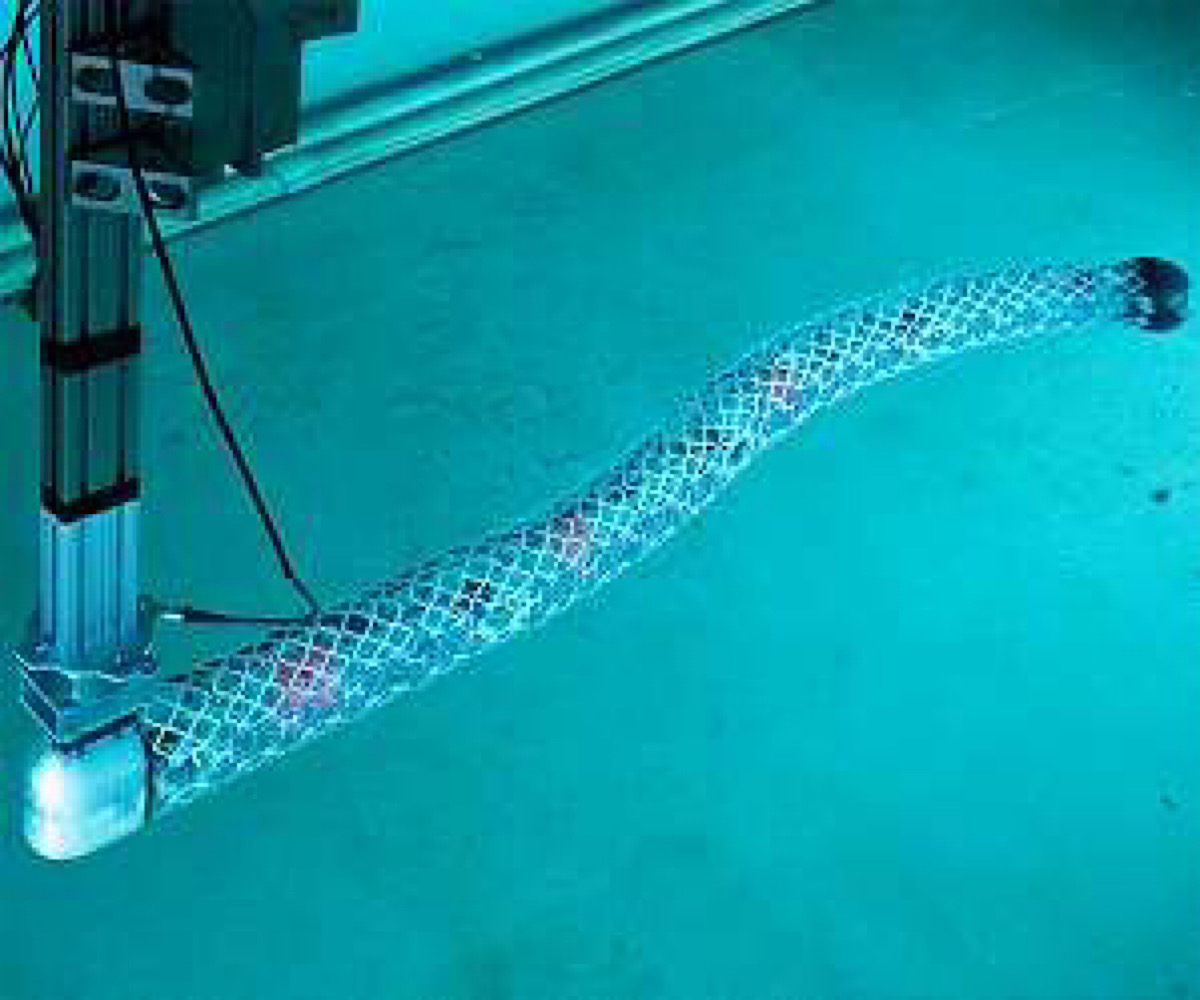
Engineers devise a modular system to produce efficient, scalable aquabots

As reported on Space Daily’s website, a team of engineers has developed a modular system to create efficient and scalable aquatic robots, or “aquabots.” The system was developed by a team of researchers from the Harvard John A. Paulson School of Engineering and Applied Sciences (SEAS) and the Wyss Institute for Biologically Inspired Engineering at Harvard University.

The system is designed to enable the creation of aquabots that can adapt to different tasks and environments, allowing for greater efficiency and scalability in their production. In describing the system, the article states that “The modular design allows for rapid design and fabrication of a range of different robotic platforms, including single- and multi-limbed robots, biomimetic robots, and soft robots.”

Continue reading…Engineers devise a modular system to produce efficient, scalable aquabots

Carnegie Mellon’s AI-Powered FRIDA Robot Collaborates With Humans To Create Art

FRIDA, a robotic arm with a paintbrush taped to it, uses artificial intelligence to collaborate with humans on works of art. Here, it works on a portrait of Ruth Bader Ginsburg.

The Carnegie Mellon University School of Computer Science has unveiled its latest robotic creation, named Frida. This humanoid robot is designed to interact with people and perform tasks that require physical dexterity, such as picking up and manipulating objects.

According to Manuela Veloso, Dean of the School of Computer Science, “Frida is a significant step forward in our quest to create robots that can collaborate with humans in a natural and intuitive way.”

Frida has a sophisticated sensor system that allows her to perceive her environment and react to changes in real-time. She can also recognize and respond to human gestures and expressions, making her a highly adaptable and versatile robot.

Continue reading… “Carnegie Mellon’s AI-Powered FRIDA Robot Collaborates With Humans To Create Art”

A NEW AI-POWERED PLATFORM IS ABOUT TO CHANGE THE WAY WE SHOP FOR FOOD

By curating groceries based on personal taste, you’ll never buy the wrong thing again

Spoon Guru, a new AI-powered platform, is set to revolutionize the way we shop for food. According to Markus Stripf, co-founder of Spoon Guru, the platform is designed to cater to every dietary preference and make the entire grocery shopping experience more inclusive. By using AI algorithms to personalize food recommendations based on users’ dietary needs, preferences, and restrictions, Spoon Guru makes it easier for customers to find the products they need.

The platform has already been adopted by major retailers such as Tesco and Woolworths. Paul Wilkinson, Director of Tesco Group, stated that Spoon Guru helps customers find products that meet their individual needs and preferences. Meanwhile, Martin Woolley, Head of Product Development at Woolworths, believes that the technology will enable customers to easily find the products they need, while also discovering new ones that they might not have considered before.

Continue reading… “A NEW AI-POWERED PLATFORM IS ABOUT TO CHANGE THE WAY WE SHOP FOR FOOD”

Scientists reproduced a gravity field- 1,000 times stronger than Earth’s gravity

The study overcomes the effects of Earth’s gravity, replicating conditions on other planets, stars.

A recent discovery has shed new light on one of the most intriguing phenomena in the universe. Astronomers have found an incredibly strong gravity field, approximately 1,000 times more potent than Earth’s gravity, surrounding a rare type of neutron star known as a magnetar.

The magnetar in question is located approximately 30,000 light-years away from Earth and was discovered by a team of scientists from the University of Amsterdam and the University of Cambridge. The researchers used observations from the European Space Agency’s XMM-Newton satellite to measure the strength of the magnetar’s gravity field.

Continue reading… “Scientists reproduced a gravity field- 1,000 times stronger than Earth’s gravity”