Drone delivery service using Starlink launched in Japan

    A delivery drone flies in a mountainous area in Chichibu, Saitama Prefecture

    Terra Drone, a Japanese drone delivery company, has partnered with Starlink, a satellite internet service provided by SpaceX, to bring high-speed internet and drone deliveries to rural and remote areas in Japan. The joint venture will enable Starlink to offer internet connectivity through its high-bandwidth, low-latency satellite network, while Terra Drone will use its fleet of drones to deliver supplies to areas that are difficult to access.

    “Terra Drone is proud to partner with Starlink to provide essential services to people living in remote areas of Japan,” said Toru Tokushige, the CEO of Terra Drone. “By leveraging our expertise in drone logistics and Starlink’s advanced satellite technology, we hope to make a meaningful difference in people’s lives.”

    Continue reading… “Drone delivery service using Starlink launched in Japan”

    New Way to Help Aging Cells Produce Collagen

    This treatment significantly reduced wrinkles in mice.

    According to a recent press release by Life Extension Advocacy Foundation (LEAF), a team of scientists from Insilico Medicine and Wize Pharma have discovered a new way to help aging cells produce collagen, a key protein that provides structure and support to the skin, bones, and other tissues.

    “Collagen plays a crucial role in maintaining the health and youthfulness of our body, but its production declines with age, leading to a range of age-related issues,” said Dr. Alex Zhavoronkov, founder and CEO of Insilico Medicine. “Our team has identified a novel approach to enhance collagen synthesis in aging cells, which could have significant implications for the field of regenerative medicine.”

    The researchers used an artificial intelligence (AI) system called GENTRL to design small molecules that can activate a specific pathway in the cells called the TGF-β signaling pathway, which is known to stimulate collagen production. They then tested these molecules on human skin fibroblasts and found that they could boost collagen synthesis by up to 300%.

    Continue reading… “New Way to Help Aging Cells Produce Collagen”

    Solar panel cleaning robot can be dropped off and picked up by drone

    Dirty solar panels reduce global solar energy output as much as 5 per cent, but a start-up in Israel has tested drone delivery of a new autonomous robot to clean rooftop arrays

    In an article published by New Scientist, a new solar panel cleaning robot has been introduced that can be deployed and retrieved by a drone. According to a statement by Dr. Aaron Bestick, the CEO of the company behind the technology, “The robot is designed to work in off-grid locations and can be deployed by a small drone, making it easy to clean solar panels in remote or hard-to-reach locations.” The robot, developed by U.S. startup Aerial Power, is equipped with brushes and nozzles that use water and detergent to clean solar panels. The drone drops off the robot at the site, and the robot cleans the solar panels before returning to the same location to be retrieved by the drone.

    Continue reading… “Solar panel cleaning robot can be dropped off and picked up by drone”

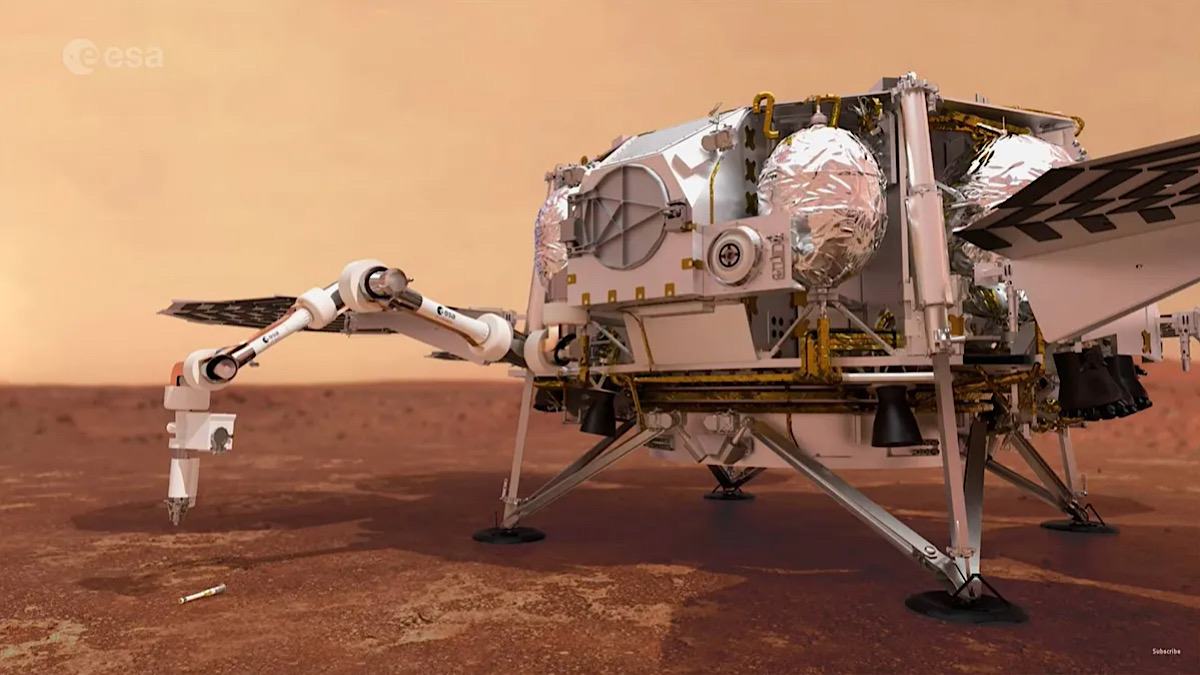
    NASA’s Perseverance rover is exploring Mars, searching for signs of ancient life and collecting rock samples.

    HOWEVER, GETTING THOSE SAMPLES BACK TO EARTH IS A COMPLEX AND CHALLENGING PROCESS. TO HELP WITH THIS TASK, NASA HAS DEVELOPED A ROBOTIC ARM THAT WILL PLAY A KEY ROLE IN THE MARS SAMPLE RETURN MISSION.

    The Sample Caching System on board the Perseverance rover includes a seven-foot-long robotic arm equipped with a drill and a coring mechanism. The arm can collect rock samples from the Martian surface, seal them in special tubes, and deposit them in a storage system located inside the rover.

    Once the samples are safely stored, the rover will deposit them on the surface of Mars for future retrieval by a follow-up mission. That mission, called the Mars Sample Return campaign, will launch a spacecraft to Mars to collect the samples and bring them back to Earth.

    Continue reading… “NASA’s Perseverance rover is exploring Mars, searching for signs of ancient life and collecting rock samples.”

    Chinese startup Xpeng Inc. has unveiled the world’s largest autonomous electric cargo airplane, the AT200.

    Pelican Cargo offers a range of up to 200 miles and a payload capacity of 400 pounds.

    THE CARGO PLANE HAS A LENGTH OF 41 METERS AND A WINGSPAN OF 38 METERS, MAKING IT THE LARGEST AIRCRAFT OF ITS KIND. IT CAN CARRY A MAXIMUM PAYLOAD OF 1.5 METRIC TONS AND FLY FOR UP TO 1,200 KILOMETERS ON A SINGLE CHARGE.

    The AT200 is designed to reduce the operating costs and carbon footprint associated with air freight. Its electric motors are more efficient and generate less noise and pollution than traditional jet engines, and the autonomous technology allows for more precise and efficient flight paths, reducing fuel consumption.

    The cargo plane comes equipped with advanced safety features, including backup systems for key components and real-time monitoring of flight data. Xpeng has reportedly conducted extensive testing and plans to enter commercial service in 2022.

    The AT200 has already attracted investment from leading Chinese delivery services, including SF Express and XAG. XAG plans to use the cargo plane for agricultural transport and will partner with Xpeng to develop additional autonomous technology for use in the agriculture industry.

    Continue reading… “Chinese startup Xpeng Inc. has unveiled the world’s largest autonomous electric cargo airplane, the AT200.”

    Researchers at the University of California, Santa Barbara, have developed a special drone that can collect environmental DNA (eDNA) from trees.

    THE EDNA CONTAINS GENETIC MATERIAL SHED BY ORGANISMS IN THE ENVIRONMENT AND CAN PROVIDE VALUABLE INSIGHTS INTO THE BIODIVERSITY AND HEALTH OF ECOSYSTEMS.

    The drone, called the Spectral Phenotyping and Environmental Reconnaissance (SPEAR) system, is equipped with a hyperspectral camera and a custom-built eDNA sampler. The camera captures detailed images of the tree canopy, while the eDNA sampler collects genetic material from the leaves.

    By analyzing the eDNA, researchers can identify the species of trees in the area, as well as the animals and insects that interact with them. This information can help scientists better understand the complex relationships between different species and the health of the ecosystem as a whole.

    The SPEAR system has already been tested in a variety of environments, including tropical rainforests and oak woodlands. The drone’s ability to collect eDNA from trees offers a non-invasive and highly effective method for monitoring biodiversity and ecosystem health.

    Continue reading… “Researchers at the University of California, Santa Barbara, have developed a special drone that can collect environmental DNA (eDNA) from trees.”

    Autonomous Ride Hailing: A Future of Transportation Driven by Machines

    The transportation industry is undergoing a major transformation, and ride hailing services such as Uber and Lyft are leading the charge. With the advent of autonomous vehicles, the future of ride hailing is rapidly becoming one of machines driving us to our destinations.

    As technology continues to advance, the deployment of autonomous vehicles is becoming increasingly viable. Companies like Waymo, Tesla, and Cruise are at the forefront of developing self-driving cars that have the potential to revolutionize the way we move around our cities. These vehicles will provide a more convenient, efficient, and safer alternative to traditional forms of transportation.

    One of the key benefits of autonomous ride hailing services is the elimination of the need for a human driver. This not only makes the service more affordable, but also significantly reduces the risk of accidents caused by human error. Autonomous vehicles are equipped with advanced sensors and algorithms, such as those developed by Mobileye, that allow them to navigate complex road conditions and avoid potential hazards.

    Continue reading… “Autonomous Ride Hailing: A Future of Transportation Driven by Machines”

    A miniature robot for diagnosing lung cancer

    This tiny soft robot can be steered through the branches of the lungs without causing damage for safer diagnosis.

    In recent years, soft robotics has garnered a spotlight in the surgical field due to their scalability, flexibility, and the potential for safer interactions with biological tissues. These aspects of soft robotics are particularly beneficial in minimally invasive surgical procedures where surgeons must be able to perform many tasks within limited spaces.

    Interventional bronchoscopy procedures stand to benefit greatly from the development of soft robots because of the challenging paths that a bronchoscope must traverse. Coupled with the small diameters of the lung branches, this makes it very difficult with traditional tools to reach deeper in the lungs, where early tumors are generally found.

    However, when a robot is made smaller to fit in tighter spaces, it produces smaller forces before failing. This is especially relevant when the robot is made of soft materials.

    Continue reading… “A miniature robot for diagnosing lung cancer”

    Japan’s Digital Ad Company Will Use AI for Large-Scale Production of 3D Ads

    A HOLOGRAPHIC IMAGE OF FISH, MAKES A 360 DEGREE ROTATION IN THE “HOLOAD,” A THREE-DIMENSIONAL HOLOGRAPHIC ADVERTISEMENT PLAYER FROM INNOVISION LABS, AT THE 2011 INTERNATIONAL CONSUMER ELECTRONICS SHOW JANUARY 8, 2011 IN LAS VEGAS, NEVADA. CES, THE WORLD’S LARGEST ANNUAL CONSUMER TECHNOLOGY TRADESHOW RUNS THROUGH JANUARY 9 AND IS EXPECTED TO FEATURE 2,700 EXHIBITORS SHOWING OFF THEIR LATEST PRODUCTS AND SERVICES TO ABOUT 126,000 ATTENDEES.

    By April Fowell

    The AI-generated ads will be highly customized.

    CyberAgent, a Japanese digital advertising company, has announced that they will start creating large volumes of video ads with the use of artificial intelligence, as reported by Nikkei Asia.  

    The video ads will contain 3D avatars of celebrity figures, with their mannerisms and remarks suited to each individual viewer. CyberAgent aims to complete large-scale production within the year.

    Continue reading… “Japan’s Digital Ad Company Will Use AI for Large-Scale Production of 3D Ads”

    Samsung-backed scientists create robot dog that can jog on sand

    Why not take Raibo robot dog for walkies?

    By Saqib Shah

    The droid can adjust itself while on the move to handle different types of terrain, including hard and soft ground. 

    Scientists with backing from Samsung have developed a new robotdog that can move at speeds of up to three metres per second on sand.

    The four-legged droid is the brainchild of a research team from the Korea Advanced Institute of Science and Technology (KAIST). Its creators claim the robot has the stability to traverse rough surfaces, and can agilely tackle soft ground without losing its balance.

    The bot’s systems, including an advanced neural network that allows it to make decisions on the move, could be harnessed by other robots to effectively tackle all types of terrain, according to the KAIST team.

    The droid follows in the footsteps of robotics firm Boston Dynamics’ canine Spot, which caused a stir when it was briefly used by New York police to assist at crime scenes, and later, the French military during training drills. On the cuddlier side, Sony has its small companion pup named Aibo that you can teach to sit, lay down, take a picture, and even sing happy birthday.

    Scientists trained the new robot, called “RaiBo“, using a technique called AI-reinforcement learning. This saw them use a variety of simulations that mirrored physical trials, consequently reducing the time needed for an AI to optimise itself for its intended goals, according to Popular Science.

    The team created a new artificial neural network capable of adjusting in real-time to the type of ground it was walking on, which then fed that info back to the robot. They also created a new contact modelling based on the robot’s pressure interacting with various unstable terrain, such as sand.

    Continue reading… “Samsung-backed scientists create robot dog that can jog on sand”

    MightyFly unveils its Cento second-generation cargo drone

    By Bruce Crumley

    San Francisco Bay Area cargo UAV developer MightyFly has unveiled the second generation of its hybrid-powered vertical takeoff and landing (VTOL) drone, Cento, which it plans to produce and operate for end-to-end freight services on flights of up to 600 miles.

    Formerly known as the potentially wise-crack generating MF-100, the new Cento version of MightyFly’s cargo drone has already begun testing following the Federal Aviation Administration (FAA) issuing the craft a Special Airworthiness Certificate and a Certificate of Authorization (COA) for long-range operation. The company says the approval to begin demonstrations of autonomous VTOL flights of up to 600 miles with 100 pounds of freight aboard is “unprecedented in the industry.”

    Founded in 2019, MightyFly is wasting no time in getting its innovative approach to air freight transport aloft.

    Mightyfly says presentation of its Centro cargo drone comes less than two years since the company raised $5.1M seed funding for the second-generation VTOL, and just nine months after its initial concept stage. The 13.1 x 16.7-foot autonomous UAV is made up of a high wing carbon fiber airframe, eight electric vertical lift fans, one forward propulsion propeller, and a 6 x 1 x 1- foot internal payload bay that can hold 96 small USPS packages.

    The cargo drone’s hybrid powertrain shifts between an internal combustion engine that recharges depleted batteries that will otherwise be used for flight, enabling Centro to make multiple deliveries along a route, or single long-haul run, that MightyFly will operate from start to finish as a seamless service to customers.

    The relatively compact size of the craft requires limited landing and takeoff space, while an automated conveyor belt handling loading and offloading of packages obviates the need for human intervention.

    Continue reading…MightyFly unveils its Cento second-generation cargo drone

    How these new electric aircraft could disrupt the $49 billion helicopter industry

    Why United Airlines-backed Archer Aviation thinks eVTOLs could replace helicopters

    By Andrew Evers

    Vertical lift aircraft have existed for more than a century in the form of helicopters. But the $49 billion industry faces a rapidly emerging threat.

    An estimated 200 companies are working to build electric vertical takeoff and landing vehicles (eVTOLs), a new type of small passenger aircraft designed for transportation within congested urban environments.

    “Helicopters are very expensive to operate for a number of reasons, but the biggest reason is that they have multiple points of failure, which eVTOL aircraft won’t,” said Michael Leskinen, president of United Airlines Ventures, which has invested in startups in the space called Eve and Archer Aviation. “The electrification makes the aircraft safer. Safer aircraft also becomes less costly to maintain.”

    Continue reading… “How these new electric aircraft could disrupt the $49 billion helicopter industry”