
No one can predict how the future will shake out, but we can make some educated guesses. Get ready to step into the future.
No one can predict how the future will shake out, but we can make some educated guesses. Get ready to step into the future.

The first thing I learned about Cozmo is that it doesn’t like to stay put very long. Roused from slumber, the little robot’s face illuminates, and it begins zooming around the table in front of me. A moment later, it notices I’m watching and turns to greet me, saying my name with a computerized chirp.

Researchers have created a machine that they claim can tell if a person is a convicted criminal simply from their facial features. The artificial intelligence, created at Shanghai Jiao Tong University, was able to correctly identify criminals from a selection of 186 photos nine out of 10 times by assessing their eyes, nose and mouth.
Continue reading… “Minority Report-style AI learns to predict if people are criminals”

Can’t stand the sight of anything with eight legs? New technology could cure arachnophobes as scientists have worked out how to remove specific fears from the human brain.
Continue reading… “Scientists can remove fears from your brain”

Arconic (NYSE: ARNC), a global technology, engineering and advanced manufacturing company, launched a global campaign about the next world-changing innovations in the sky, on the road and in our cities–and how Arconic might help bring those technologies to life.
Continue reading… “Justin Lin’s “The World of ‘The Jetsons,’ Reimagined””

Earlier this year there was an unprecedented collaboration between ING, Microsoft and TU Delft, with the willing participation of Dutch museums Mauritshuis and Rembrandthuis, to teach an artificial intelligence to paint a Rembrandt.
Continue reading… “AI to compose an original Rembrandt painting”

Dietmar Exler, chief executive of Mercedes-Benz USA, believes that driverless cars are likely to be ‘bullied’ by human drivers when the two are sharing road space.
Continue reading… “Mercedes chief warns that humans ‘will bully robot cars’”

A team of researchers at Oxford University have coaxed an artificial intelligence program into an impressive leap forward and towards our own obsolescence. The program, known as LipNet, is showing particularly promising ability to read lips in video clips, thanks to machine learning and a novel way of approaching the data.
Continue reading… “AI taught itself to read lips better than humans”

Imagine never having to cook ever again but still having the luxury of eating, fine, restaurant quality dishes, within the comfort of your own home. And no, we are not talking about a personal chef here. As early as 2018 we could all be seeing and getting our hands on the world’s first intelligent cooking robot. A little device that could save you hours slaving away over a hot stove could be yours sooner than you think!
Continue reading… “Never cook again when the world’s first robotic chef comes to market”
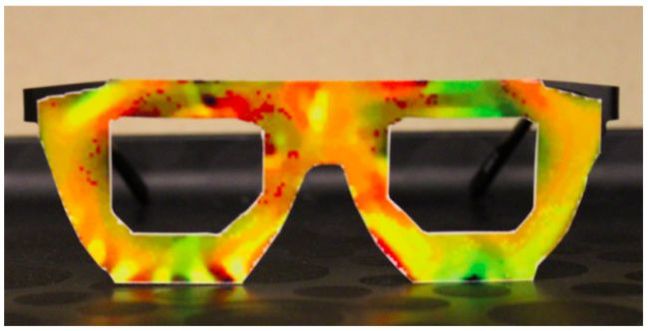
Researchers armed with some nifty algorithms and a set of paper glasses frames have found a way to trick facial recognition systems. Users can either evade being recognized – or more interestingly, impersonate another individual – with up to at least 80 per cent success rate, the researchers from Carnegie Mellon University and the University of North Carolina Chapel Hill boasted.

The internet is about to become a vicious, chaotic battlefield, and Elon Musk says advanced A.I. could make the carnage even worse. According to a short exchange on Musk’s Twitter today, the systems that keep the internet running are particularly vulnerable to simple, brute-force computing attacks — the kind of cyberwarfare that artificial intelligence excel at.
Continue reading… “Elon Musk believes advanced A.I. could “Take Down the Internet””

New research published in the journal Suicide and Life-Threatening Behavior shows how machine learning can help identify suicidal behavior using a person’s spoken or written words. The technology was able to pinpoint which participants in the study were suicidal, mentally ill but not suicidal, or neither in the vast majority of cases.
Continue reading… “Study: 93% of suicidal patients detected with machine learning algorithms”